Our Lady of the Rosary: The October 7th feast and its history

Our Lady of the Rosary is the title by which the Church venerates Mary as the Mother who teaches us to contemplate Christ through the prayer of the Rosary. Her feast day is celebrated on October 7th. This guide explains the origin of the title and the feast.
The Origin of the Feast
The feast was established by St. Pius V after the Christian victory in the Battle of Lepanto (October 7, 1571), attributed to Mary’s intercession invoked through the Rosary by the entire Christianity. Initially called “Our Lady of Victory,” it became “Our Lady of the Rosary.” It is also under this title that Mary appeared in Fátima (1917), requesting prayer through the Third Hour.
Devotion and Its History
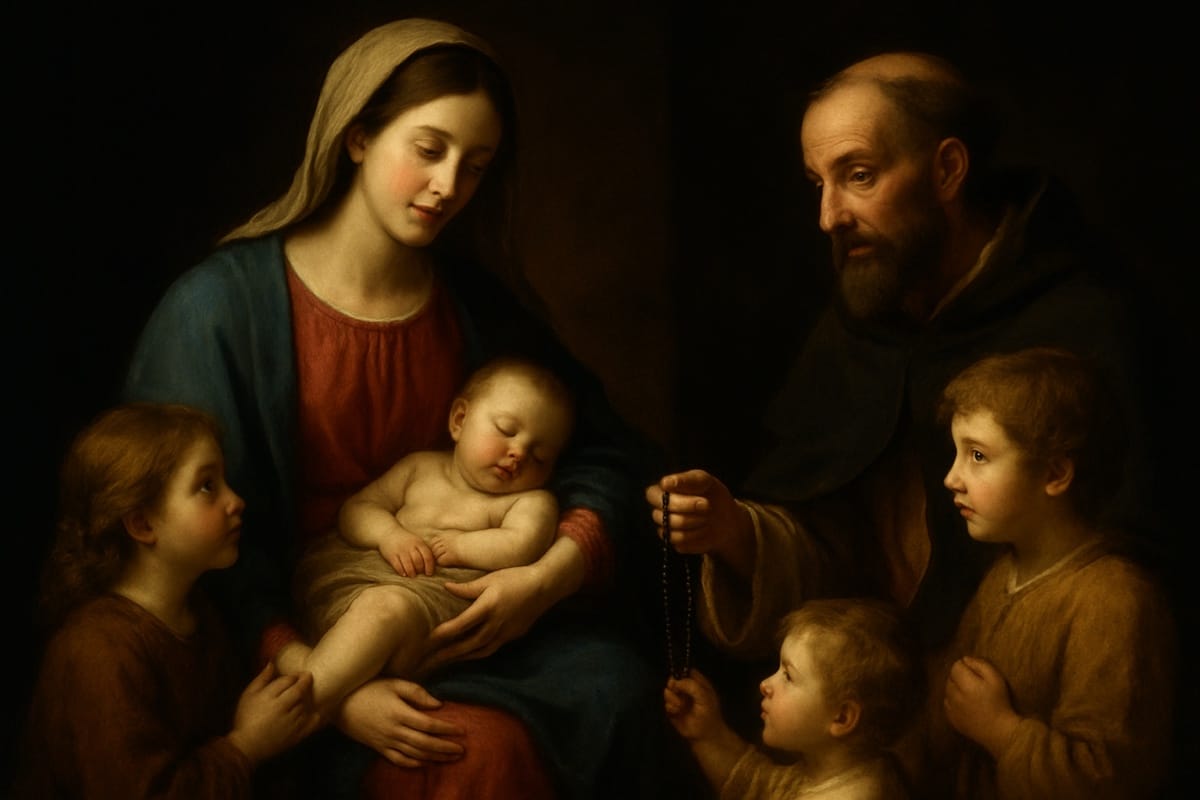
Tradition associates the spread of the Rosary with St. Dominic and the Order of Preachers. Rosary Confraternities played a significant role—in Brazil, the Irmandades de Nossa Senhora do Rosário dos Homens Pretos (Brotherhoods of Our Lady of the Rosary of Black Men) were central to the experience of faith and Afro-Brazilian culture, with their festivals, congadas (processions), and coronations.
Meaning
Honoring Our Lady of the Rosary is embracing the prayer that walks, with Mary, through the mysteries of Christ’s life. It is a school of simple yet profound contemplation.
Frequently Asked Questions
When is the feast of Our Lady of the Rosary?
October 7th.
Why this date?
It commemorates the victory of Lepanto (1571), attributed to the prayer of the Rosary.
See Also
Would you like to study Mariology seriously?
This article draws on the works of the Locus Mariologicus library. The Postgraduate Programme in Mariology takes you to the same sources with academic guidance: Scripture, the Church Fathers and the Magisterium, from the first dogma to contemporary questions.
Responses