Sacred Family
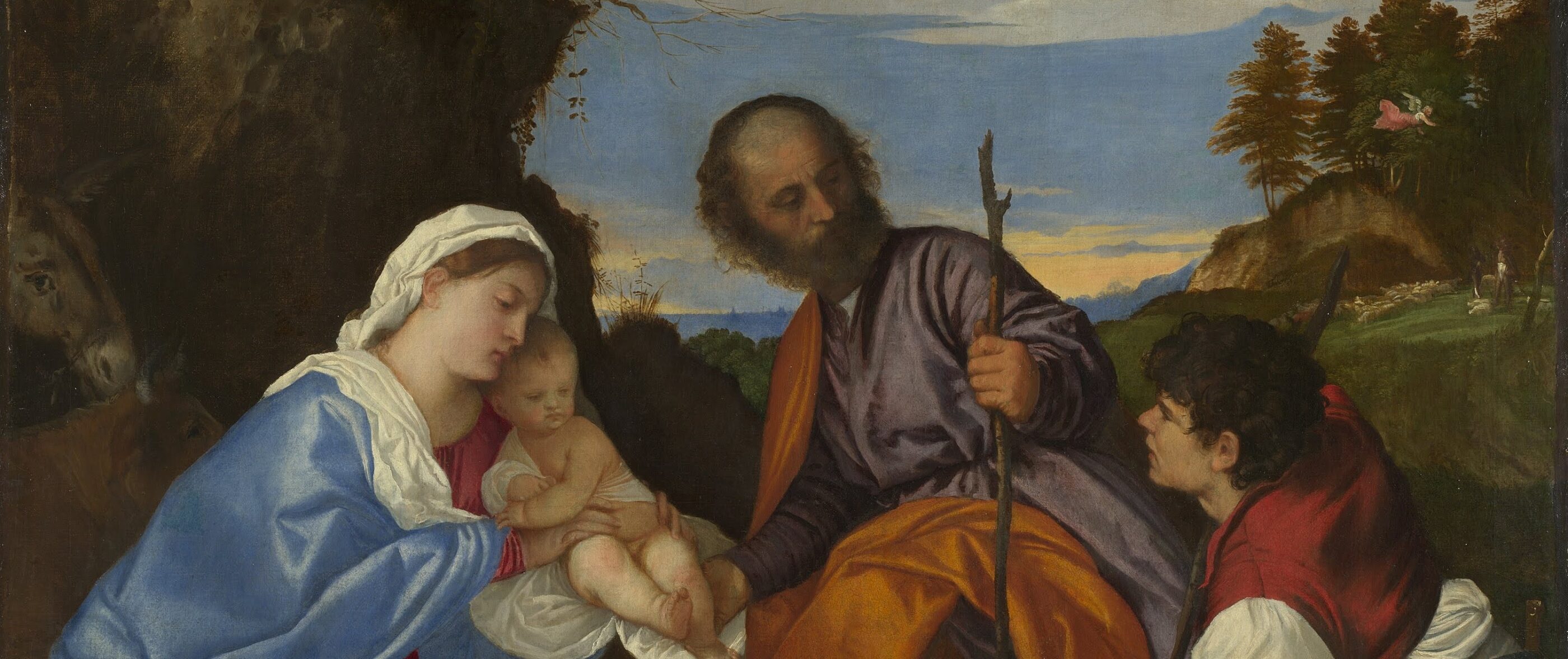
Mary, Joseph and Jesus: A Model for Christian Families
The family of Nazareth, composed of Mary, Joseph, and Jesus, represents a unique and inspiring model for Christian families of all ages. Their shared life demonstrates the beauty and complexity of the family vocation, revealing how love, obedience, and communion can flourish even in the most challenging circumstances.A Community of Love and Obedience
In Nazareth, Mary embraces motherhood as a divine mission, while Joseph, in an act of generosity, dedicates his life to caring for and protecting her and the Son. Jesus, in turn, lives out His divinity in a discreet manner, through obedience and work, becoming an example of humility. This dynamic shows that the family is not just a union of individuals but a community where each member has a unique and essential role.The unity in Nazareth does not mean uniformity but rather a harmony based on the acceptance of differences. Mary, Joseph, and Jesus together bring their distinct personalities, but their communion makes them a powerful force. This idea is a powerful message for modern families, encouraging them to celebrate their uniqueness while working together for a common good.Rebirthing Love and Hope
Life in Nazareth is a testament to the transformative power of divine love. The family faces challenges, such as the flight to Egypt and the loss of Jesus in adulthood, but overcomes each obstacle with faith and unity. These experiences not only strengthen their bond but also demonstrate that the family can be a safe refuge amid adversities.The presence of Mary is crucial in this context. She is the central figure who unites the family and ensures the continuity of love and hope. Her devotion and obedience inspire other members to follow the path of faith. Thus, Nazareth becomes a symbol of how families can find strength and purpose amidst difficulties.### Divine Vocation and Renunciation for LoveThe family of Nazareth teaches us that marriage and family life are divine vocations. Joseph, by renouncing his personal plans to care for Mary and Jesus, demonstrates a *kenosis* (renunciation) out of love. This attitude inspires families to place love above individual ambitions, prioritizing the well-being of others.The family vocation is not merely a responsibility, but also an opportunity for spiritual growth. Just as Mary embraces motherhood as a mission given by God, modern parents can see the raising of children as a path to holiness and union with the divine. This perspective transforms daily tasks into sacred moments.Inspiring Contemporary Families
The example of Nazareth offers valuable lessons for today’s families. Here are some practical applications:1. **Communion and Acceptance:** Families should cultivate an atmosphere of acceptance and unconditional love, where each member is valued for their uniqueness. 2. **Family Vocation:** Parents are called to see marriage and the raising of children as divine vocations, requiring dedication and total surrender. 3. **Renewal of Love:** Just as in Nazareth, families should seek moments to reignite passion and love, healing wounds and strengthening bonds. 4. **Obedience and Humility:** The humility and obedience demonstrated by Jesus are virtues to be cultivated in all aspects of family life. 5. **Transformation of the Ordinary:** Families can find extraordinariness in the everyday, transforming common tasks into opportunities for spiritual growth.### ConclusionThe family of Nazareth is a beacon that illuminates the path of Christian families. By studying and imitating their life, we can create homes where divine love flourishes, communion is deep, and the family vocation is fully lived. As Scripture says, “Unless the Lord builds the house, those who build it labor in vain” (Psalms 127:1). May Nazareth continue to be an inspiration for families seeking their heavenly vocation.Graduate Studies in Mariology
Wishing to deepen your formation in Mariology? Discover the Graduate Studies in Mariology from Locus Mariologicus, an academic formation that combines theological rigor, spiritual life, and the living tradition of the Church.

Responses