The relationship between the Holy Spirit, Mary, and the priest.
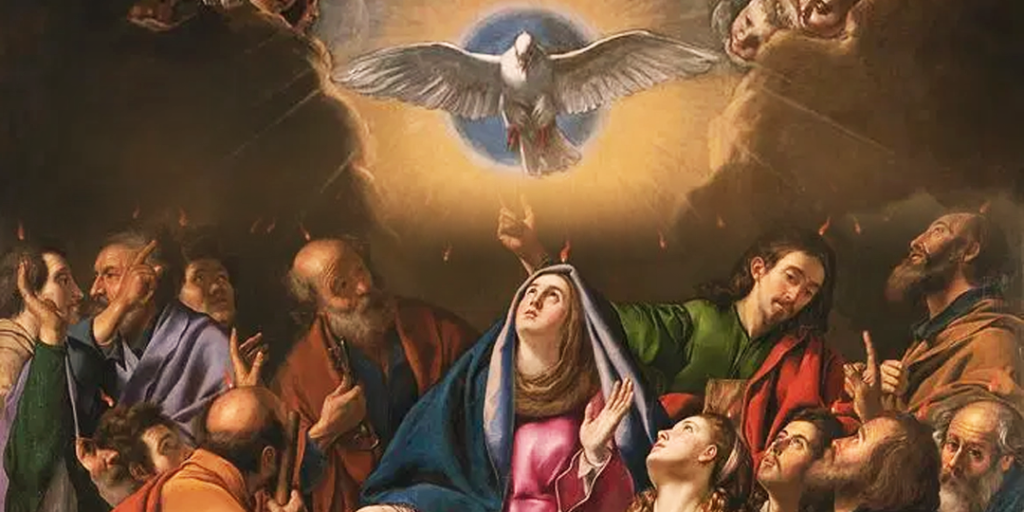
The understanding of the relationship between the Holy Spirit and Mary is fundamental to deepen the mystery of the Virgin as the Spouse of the Spirit and model of consecrated life. This connection reveals a rich dimension in Marian spirituality and priestly theology.
Redescobrindo a Dimensão do Espírito Santo na Vida de Maria
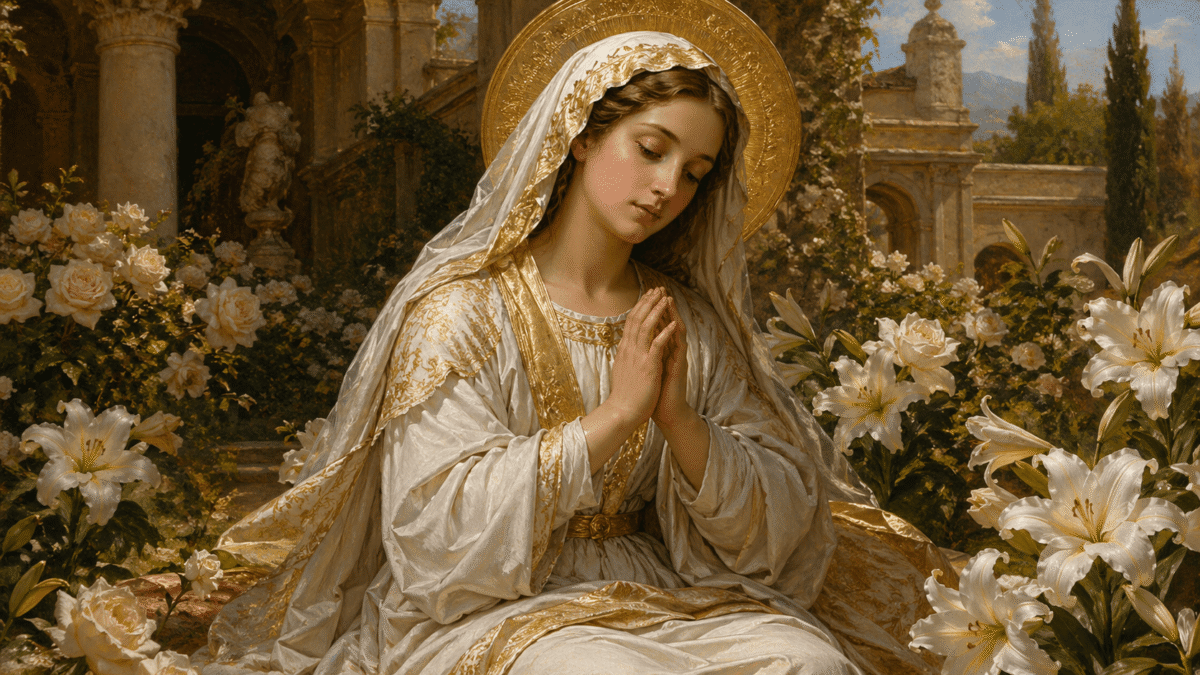
Upon rediscovering the presence of the Holy Spirit in Mary’s life, she emerges as the one who was taken by the Spirit to conceive Christ virginally and fulfill the “new heart” prophesied. This concept is drawn from the book of Ezekiel (36:26): “I will give you a new heart and put a new spirit within you.”
With Mary, a new creation begins, marking the transition from the old Law of Moses to the new regime of grace. Like Zechariah and Elizabeth, her faithful representatives, Mary overcomes the hardness of Israel’s heart, unable to say yes to God. Her total response is in the Spirit, anticipating Pentecost.
A Relação com o Espírito Santo e o Sacerdócio
This relationship with the Holy Spirit underpins the concept of priesthood, which is a consecration in the Spirit. The grace that comes through the laying on of hands transforms priesthood into a charism, and not merely an institution:
- 1 Timóteo 4:14: “Não negligencieis o carisma que está em vocês…”
- 2 Timóteo 1:6: “Por esse motivo, eu exorto a reavivar a chama do dom de Deus que recebeste pela imposição das minhas mãos.”
- 2 Timóteo 2:11: “Eis uma verdade absolutamente certa: Se morrermos com ele, com ele viveremos.”
The Holy Spirit, in founding the priestly institution, cannot be imprisoned. Thus, when priests are in tune with the Spirit and live their priesthood as Mary did, in union with the Holy Spirit, then the priesthood becomes pneumatic.
Participação na Exousia e Renovação Espiritual
The participation in the exousia, or spiritual power of Christ, guides the life of priests toward eschatological reconciliation. This transforms them from employees to ministers of the Spirit, promoting the building of the new humanity.
The priest, like a ship in the ocean of existence, must move to the rhythm of the breath of the Spirit. This breath must be united with holiness, and to resurrect the grace transmitted through the imposition of hands is to live according to the Spirit and build a new humanity.
O Problema Político e a Defesa dos Direitos Humanos
The text addresses the political problem, suggesting that the task of the priest is not a directive function or political office, but to defend fundamental human rights and promote justice and peace. The priest must strive for this, living out his priesthood in the Spirit, with a view to building a new humanity.
Renovação da Espiritualidade Sacerdotal
In the light of the Marian paradigm lies the desired renewal of priestly spirituality. Priests, aware of Mary’s presence in the life of the Church, should follow her example:
- Ministerialidade como serviço e não domínio.
- Vocação, eleição, missão e peregrinação de Maria como modelo do sacerdócio.
- Os sacerdotes como discípulos do Senhor, irmãos entre irmãos, servos dos homens.
- Promotores da presença de Deus na história, assim como Maria nas Bodas de Caná.
Recursos Adicionais
For a deeper understanding, it is recommended to read the Encyclical Redemptoris Mater by John Paul II on Mary in the life of the Church. Also explore Mariology, Marian Theology, Marian Apparitions, and the Postgraduate Program in Mariology to deepen your studies.
Master’s in Mariology
Wishing to deepen your formation in Mariology? Discover the Master’s in Mariology from Locus Mariologicus – an academic formation that combines theological rigor, spiritual life, and the living tradition of the Church.
Would you like to study Mariology seriously?
This article draws on the works of the Locus Mariologicus library. The Postgraduate Programme in Mariology takes you to the same sources with academic guidance: Scripture, the Church Fathers and the Magisterium, from the first dogma to contemporary questions.
Responses