Peace be with you: Mary and the peace that the world cannot give
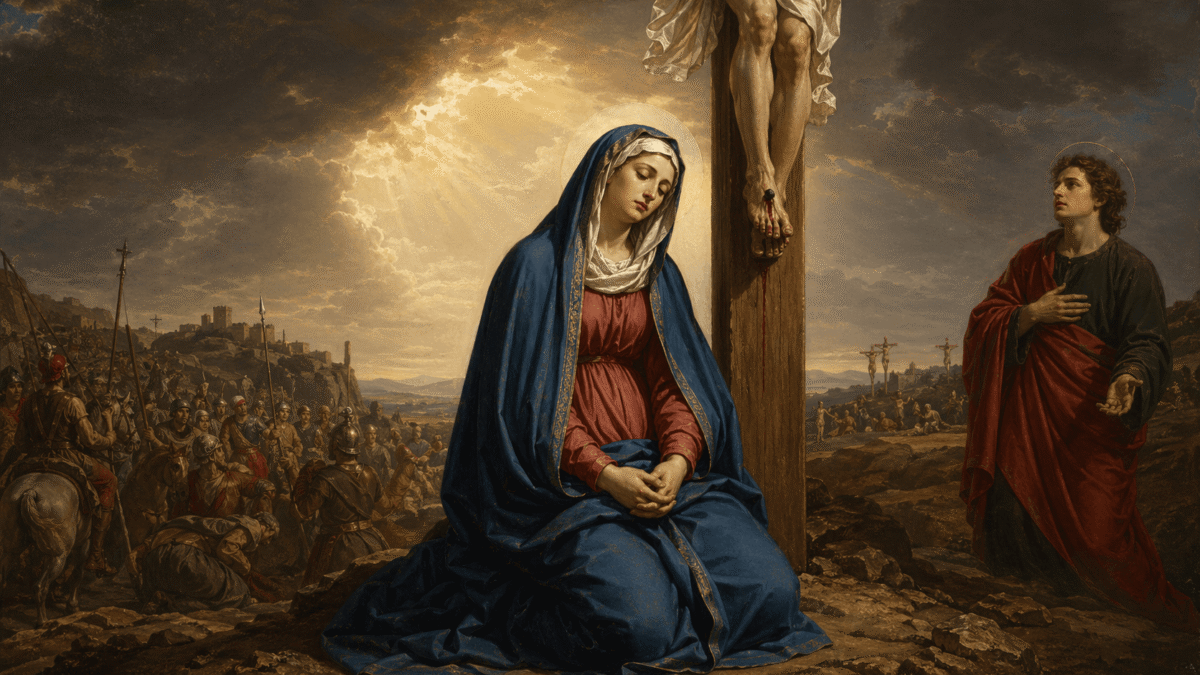
Pacem relinquo vobis: The Peace of Jesus and the Mariological Tradition
> “I leave you peace. My peace I give to you: not as the world gives it.” (Jn 14,27)This verse from Jn 14,27 is a powerful statement in Jesus’ farewell discourse, revealing the unique nature of the peace He offers. Unlike worldly peace, which is transient and dependent on external circumstances, Jesus promises His disciples “my peace,” a peace that comes from an intimate relationship with the Son.The Distinction between Jesus’ Peace and Worldly Peace
The Hebrew word *shalom*, translated as “peace,” is far more comprehensive than merely the absence of conflict. It signifies fullness, integrity, and total well-being, being linked to harmony with God, oneself, and others. The Jewish liturgical greeting *shalom aleichem* (“peace be upon you”) expresses the desire for such integral fullness.Jesus distinguishes His peace from the peace offered by the world. Worldly peace is contingent, based on favorable external circumstances. In contrast, Jesus’ peace is unshakable, not dependent on external factors but on an internal relationship with the Son. This peace is described as something that “no tribulation, nor distress, nor persecution” can break (Rom 8,35).The Christian mystical tradition has identified this peace of Jesus with concepts such as *serenity* and *spiritual consolation*, which coexist with suffering. It is a divine gift received as we open ourselves to the Spirit.Mary, “Stabat” by the Cross
Jn 19,25 describes Mary’s presence at the Cross: “She stood… in the posture of one who prays, in the stance of the faithful who remains steadfast before the mystery that surpasses all human comprehension.” This “standing” symbolizes her resistance to pain and loss, not through stoicism, but with a pure and unshakable faith.The *Stabat Mater*, a medieval hymn, expresses this idea of Mary as the one who stands firm in sorrow, experiencing the “dark night of faith.” This radical experience of faith is the model for all souls who traverse the nights of faith with the peace promised by Jesus.Eschatological Serenity and the Intercession of Mary
Jesus exhorts his disciples in Jn 14,27: “Let not your hearts be troubled, nor let them be afraid.” The disturbance of the heart is the common human response to fear and uncertainty, while true faith resists these responses. After the Annunciation, Mary initially experienced disturbance, but soon responded with the *fiat*, learning to transform disturbance into peace through her life with the Son.The serenity of Mary is described as a supernatural gift, fruit of grace. It is the peace that surpasses all understanding (Phil 4:7), and which she shares as Queen of Peace. The title *Regina Pacis* was attributed to the Virgin Mary to highlight her role in distributing the peace of the Son to his spiritual children.In the 20th century, the apparitions of Fátima, with their call for conversion and peace, echoed as the cry of the Queen of Peace in a world at war. Her intercession for peace is urgent and relevant in today’s world, as conflicts continue. Mary, as Our Advocate, intercedes for the eschatological peace, anticipating the definitive *shalom* of the Kingdom of God.References: – John Paul II, *Redemptoris Mater*, nn. 44-47 (1987). – Second Vatican Council, *Gaudium et Spes*, n. 78 (1965). – St. John of the Cross, *Ascent of Mount Carmel*, II, 1-3. – X. Léon-Dufour, *Reading the Gospel according to John*, vol. III (1993). – A. Frossard, *Do not be afraid!* Dialogue with John Paul II (1982).Graduate Studies in Mariology
Desire to deepen your formation in Mariology? Discover the Graduate Studies in Mariology from Locus Mariologicus – an academic formation that combines theological rigor, spiritual life, and the living tradition of the Church.
Would you like to study Mariology seriously?
This article draws on the works of the Locus Mariologicus library. The Postgraduate Programme in Mariology takes you to the same sources with academic guidance: Scripture, the Church Fathers and the Magisterium, from the first dogma to contemporary questions.

Responses