Unless I see: Thomas, Mary, and the faith that touches the wounds
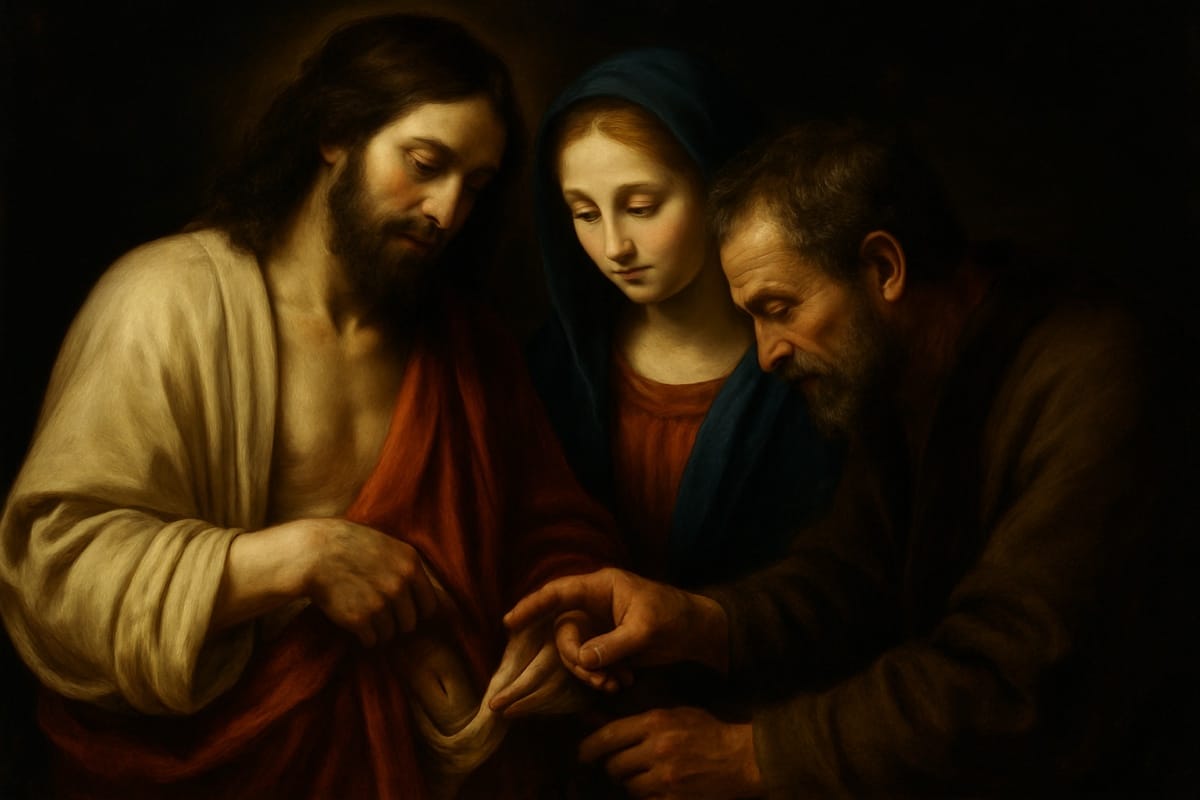
Quote:Thomas said to them, “Unless I see in his hands the mark of the nails, and put my finger into the mark of the nails, and put my hand into his side, I will not believe.” (John 20:25)Celebration of Saint Thomas Apostle (July 3rd):The Feast of Saint Thomas Apostle celebrates one of the most human and theologically rich episodes in the Paschal cycle: Thomas’ doubt, Jesus’ appearance specifically to him, and the confession that follows his encounter with the wounds, “My Lord and my God!” (John 20:28), the most explicit profession of faith in all Johannine literature. Tradition has called Thomas “Didymus” (the twin) and made him the apostle to India. Popular devotion dubbed him “the unbeliever,” but a careful reading of John’s text reveals that Thomas is not a case of pathological incredulity; he is a disciple who asks for the same experience as the others had.The Detail of Time: Eight Days Later (John 20:26):The temporal detail, “eight days later,” is the most disturbing aspect of the narrative. Thomas spent eight days in doubt. For eight days, while the other disciples told him, “We have seen the Lord,” he did not believe. For eight days of spiritual solitude within a community celebrating Easter. The mercy of Jesus who “came, though the doors were shut” (John 20:26), who returned especially for Thomas, reveals a God who does not abandon those in doubt but meets their doubt with the experience they seek. The Risen One did not demand from Thomas faith he did not yet possess; instead, He offered him what he needed to have the faith the others already had.I. “Nisi videro”: Honest Doubt“Unless I see in his hands the mark of the nails, and put my finger into the mark of the nails, and put my hand into his side, I will not believe.” (John 20:25) Thomas’ condition is triple and escalating: to see, to stick his finger in, to put his hand. The escalation suggests both the intensity of resistance and desire: Thomas does not want to be misled; he does not wish to believe in a ghost; he seeks the concrete evidence that others have experienced.Modern exegesis has found in Thomas a sympathetic figure precisely because of this honesty of doubt. The “honest agnostic” who does not accept faith without proof is a figure valued by modernity, and Thomas seems to embody it. However, John’s narrative offers a more nuanced reading: Jesus does not rebuke Thomas for his condition but for his resistance after the encounter, “If you have seen me, you believe; blessed are those who have not seen and yet believe.” (John 20:29). The beatitude is for those who believe without direct experience of the wounds. Thomas was mercifully treated as an exception, but the norm is faith that does not depend on direct vision.“Blessed are those who have not seen and yet believe,” this is the beatitude that inaugurates the Church age, the era subsequent to the appearances of the Risen One. The disciples of future generations, including all Christians of every century, will not experience what Thomas did; they will not see the wounds, nor stick their finger in them. Their faith will necessarily be mediated, through Scripture, Tradition, sacraments, and community testimony. Jesus declares “blessed” those who accept this mediation without demanding direct experience, just as Thomas had done.Mary lived this beatitude before the letter: on Calvary, when the Son was dead and there had been no appearance to confirm faith, Mary stood firm. On Holy Saturday, during the “eight days of Thomas” before the appearances, Mary was the “blessed one who did not see (the Risen One) and yet believed.” Mary’s faith on Holy Saturday is the model of “faith without seeing” that Jesus declares blessed: a faith that has not yet experienced the touched wounds but trusts in God’s word who promised the Resurrection.
II. The Wounds of the Risen One: Identity Through the Cross
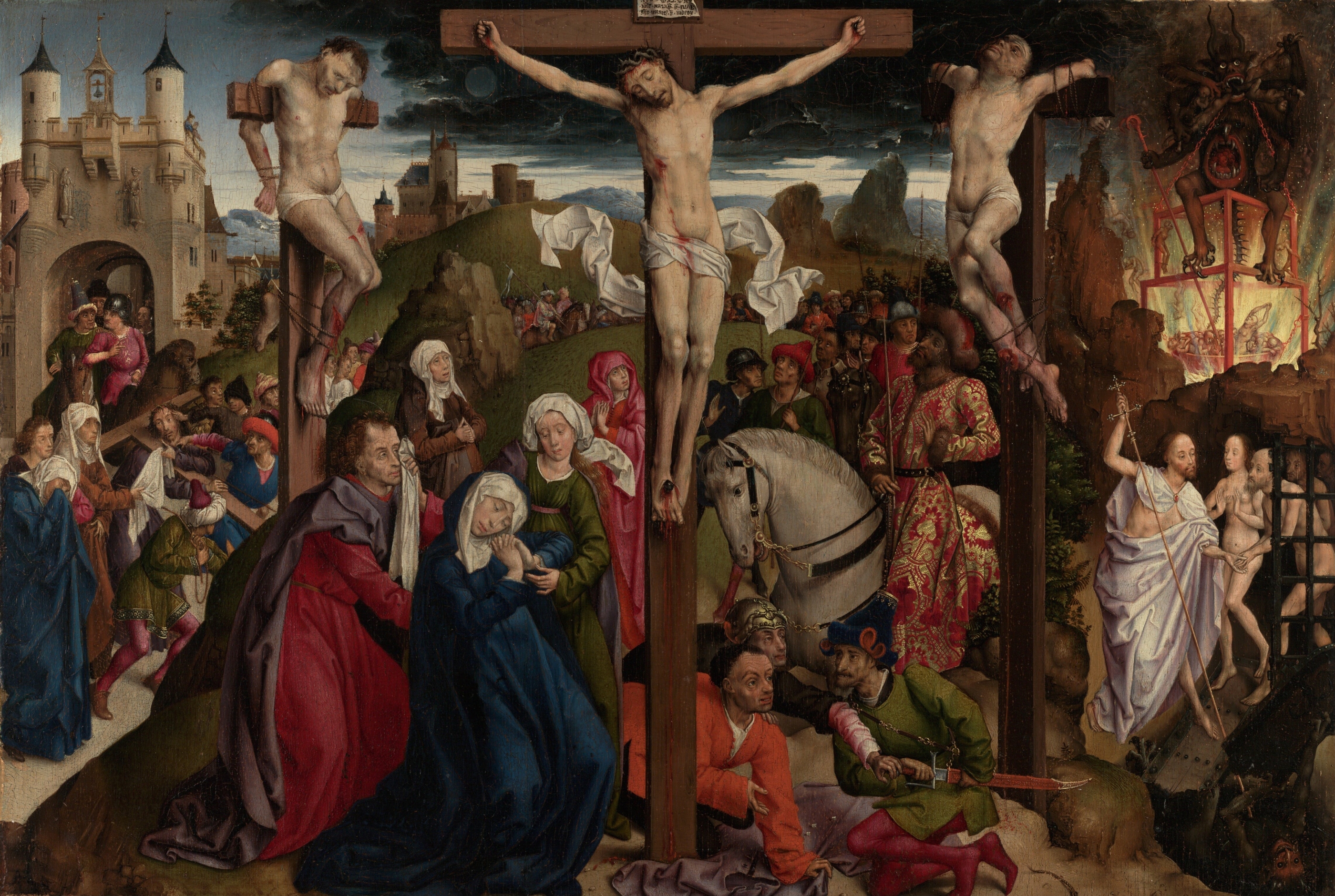
“See my hands. Put your finger here and see my hands. Stretch out your hand and put it into my side. And do not be unbelieving, but believe” (John 20:27), Jesus responds to Thomas’s conditions by fulfilling them precisely: He offers the wounds, invites the touch, and asks for the resulting faith. The wounds of the Risen One are theologically crucial: the Risen One is not a new creation that erased the Crucified. He is the same Jesus who died on the Cross, with the visible and tangible marks of His Passion. Resurrection did not cancel out the Cross; it assumed it in glory.The persistence of the wounds in the Risen One is one of the deepest elements of Paschal christology. Augustine of Hippo pondered whether the saints resurrected will have their glorified wounds marked as “ornaments of virtue.” The wounds of Jesus on the Risen One are simultaneously proof of identity (the one who died is the one who lives) and revelation of the logic of salvation (glory passes through the Cross, it does not bypass it). Thomas, by touching the wounds, did not merely verify identity; he touched the theology of salvation in glorified flesh.“My Lord and my God!” (John 20:28), Thomas’s confession is the most explicit in the New Testament. Not “You are the Christ” (Peter in Matthew 16:16) nor “truly You are the Son of God” (disciples in Matthew 14:33): but “my Lord and my God,” a direct affirmation of Jesus’ divinity with the two titles of God from the Old Testament (Kyrios and Theos, equivalent to YHWH and Elohim). Thomas’s doubt, when resolved, produced the highest confession of faith in the Gospels. Honest doubt that led to the experience of the wounds produced the highest theology, what Paul VI called “the fruit of the Cross.”Mary was the first to contemplate the wounds of the Son, not glorified in the Risen One but open on Calvary. The wounds Thomas touched in the Risen One, Mary had seen open on Calvary. And as Thomas emerged from his experience with “my Lord and my God,” Mary emerged from Calvary not with doubt but with faith that survived the Cross—the faith that was not destroyed on Holy Saturday, the faith that recognized in the Risen One the same Son whose wounds she had contemplated at Golgotha.III. Mary on Holy Saturday: Faith That Thomas Did Not Have
In the liturgical tradition, Holy Saturday, the day between death and resurrection, is seen as the moment when only Mary maintained her faith. The disciples were hidden “out of fear of the Jews” (John 20:19). Thomas was absent from the first appearance and doubted. Mary, not mentioned in John’s accounts of the Resurrecting Jesus, was the only human being who, according to tradition, did not need a vision to believe: she believed from the Cross, from the wounds she saw opened, from the promise that the Son had made and which she kept “in her heart” (Luke 2:51).The “blessing” of John 20:29, “Blessed are those who have not seen and yet have believed,” precisely describes Mary’s position on Holy Saturday: she had not yet seen the Risen Lord, but she believed. Mary’s faith during this dark interval was not naivety nor a denial of what she had witnessed at the Cross; it was trust in God who “does mighty deeds” (Luke 1:49), who promised that the kingdom of the Son “will have no end” (Luke 1:33), who sent angels to announce the Birth, and who knew what he was doing with the Cross.The contrast between Thomas’ “doubt” and Mary’s “faith on Holy Saturday” is not a critique of Thomas; Jesus treated him with mercy and he eventually reached the highest confession. Rather, it emphasizes that Mary represents the ideal of faith “that does not see and yet believes,” the faith that does not require the touch of wounds to persist, the faith declared blessed in John 20:29. Christians throughout history who believe without having touched the wounds are closer to Mary than Thomas, and Mary is the model that accompanies them in this “unseen” faith.“Nisi videro,” “if I do not see,” is the human condition before mystery: the demand for evidence that modern man shares with Thomas. Jesus’ response to this condition is twofold: mercy that meets honest doubt (as it did with Thomas), and the blessing that declares blessed those who believe without direct experience. Mary is the model of this second response, the faith that remained on Holy Saturday without a vision, without wounds touched, without empirical proof, sustained only by the Word of the Son and by the grace of the Spirit that dwelt in her from the Annunciation (Dictionary of Mariology: Announcement).Post-Graduate Studies in Mariology
Want to deepen your formation in Mariology? Discover the Post-Graduate Studies in Mariology by Locus Mariologicus – an academic formation that combines theological rigor, spiritual life, and the living tradition of the Church.
Would you like to study Mariology seriously?
This article draws on the works of the Locus Mariologicus library. The Postgraduate Programme in Mariology takes you to the same sources with academic guidance: Scripture, the Church Fathers and the Magisterium, from the first dogma to contemporary questions.

Responses