Luminous Mystery: The Five Mysteries of Light in the Rosary
Os cinco mistérios luminosos do Rosário, propostos por São João Paulo II em 2002, são:
- O Batismo de Jesus no rio Jordão (Mateus 3:13-17)
- A autorrevelação de Jesus nas Bodas de Caná (João 2:1-11)
- O anúncio do Reino de Deus com o convite à conversão (Marcos 1:14-15)
- A Transfiguração do Senhor no monte Tabor (Mateus 17:1-8)
- A instituição da Eucaristia na Última Ceia (Lucas 22:14-20, 1 Coríntios 11:23-26)
Traditionally, the Rosary is prayed on Thursdays. This article explains its origin, the meaning of each mystery and how to meditate on them.
Origem dos Mistérios Luminosos: João Paulo II e o Rosário (2002)
The Luminous Mysteries were added to the Rosary by John Paul II in the Apostolic Letter Rosarium Virginis Mariae (October 16, 2002), marking the beginning of the Year of the Rosary 2002-2003. Before this addition, the Rosary included only 15 traditional mysteries (joyful, sorrowful, glorious). John Paul II introduced five new mysteries focusing on the public ministry of Jesus, calling them “Luminous Mysteries” because they reveal Jesus as the “light of the world” (Jn 8:12). This addition was widely accepted and integrated into Catholic devotional practice.
Os Cinco Mistérios Luminosos
1. O Batismo de Jesus no Jordão (Mateus 3:13-17)
In this mystery, Jesus is baptized by John the Baptist and the Father proclaims: “This is my beloved Son, with whom I am well pleased”. The Holy Spirit descends upon Him in the form of a dove. Baptism publicly inaugurates Jesus’ messianic mission. John Paul II invites us to contemplate in this mystery the proclamation of Jesus’ divine filiation and the grace of Christian baptism.
2. As Bodas de Caná (João 2:1-11)
The first public miracle of Jesus, performed at the request of Mary. The water turned into wine manifests the glory of Jesus and reveals the intercessory role of Mary: “Do whatever He tells you” (Jn 2:5). John Paul II sees in this event the active presence of Mary in the ministry of the Son and the beginning of the revelation of His divine glory.
3. O Anúncio do Reino de Deus (Marcos 1:14-15)
Jesus proclaims: “The kingdom of God is at hand. Repent and believe in the Gospel.” This mystery invites us to contemplate all of Jesus’ preaching, his parables, the Sermon on the Mount, and his love for sinners. John Paul II emphasizes that in this mystery lies the essence of Jesus’ catechesis.
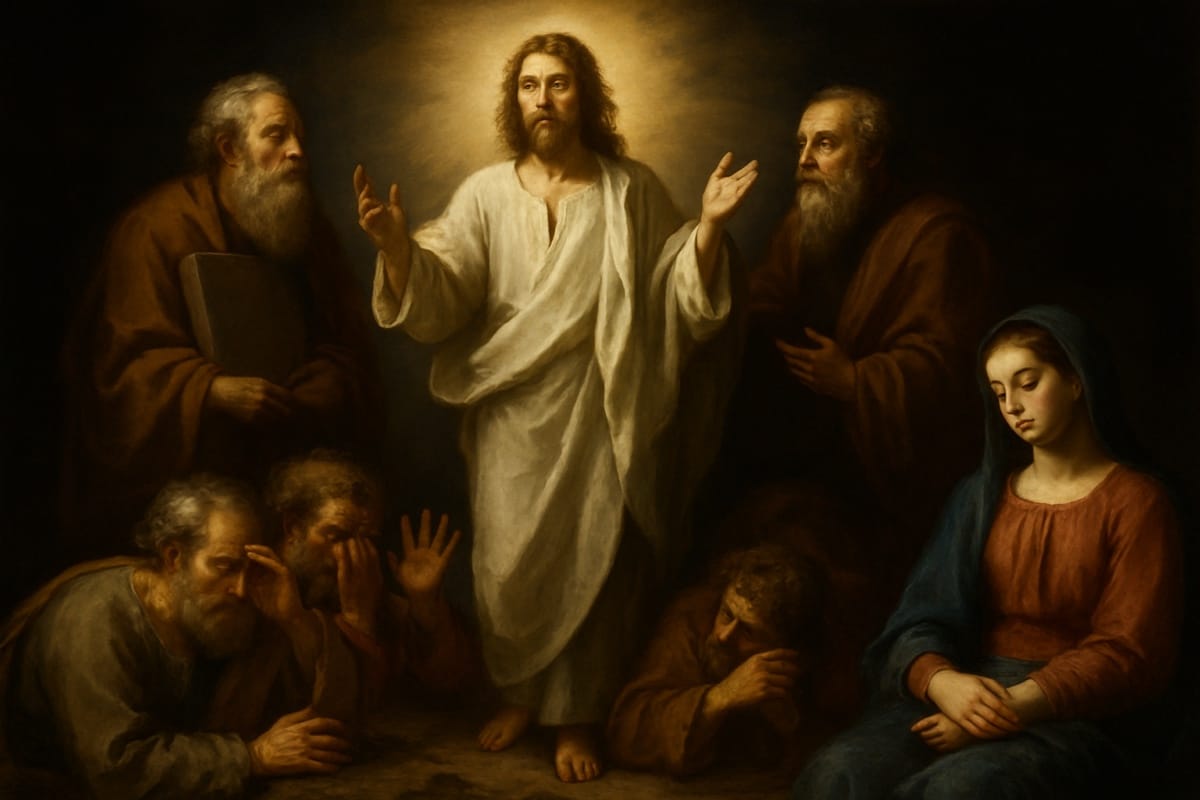
4. A Transfiguração (Mateus 17:1-8)
Jesus transfigures on Mount Tabor before Peter, James, and John. His face shines like the sun. Moses and Elijah appear conversing with Him. The Father proclaims again: “This is my beloved Son.” This mystery reveals the glory of Jesus’ divinity, preparing the disciples for the scandal of the Cross.
5. A Instituição da Eucaristia (Lucas 22:14-20, 1 Coríntios 11:23-26)
At the Last Supper, Jesus institutes the sacrament of His Body and Blood: “This is my Body given up for you. Do this in memory of me”. The Eucharist is the permanent memorial of the Passion and the axis of all Christian life. John Paul II chose the Eucarist as the fifth luminous mystery due to its central role in faith and liturgy.
Maria nos Mistérios Luminosos
Although the Luminous Mysteries focus on Jesus’ public ministry, Mary is not absent. John Paul II highlights her presence at the Wedding at Cana (2nd Mystery) as a model of active faith and intercession. In the Rosarium Virginis Mariae, n. 21, it is stated that even in the mysteries where Mary does not appear explicitly, she ponders in her heart “all that pertains to her Son” (Luke 2:51). The Rosary is contemplated with the eyes of Mary, learning to see as she does.
Rezar os Mistérios Luminosos às Quintas-Feiras
The Luminous Mysteries are habitually prayed on Thursdays, replacing the Joyful Mysteries that were previously prayed on that day. This scheme allows one to contemplate throughout the week the entire mystery of Christ: Monday and Saturday (Joyful), Tuesday and Friday (Sorrowful), Wednesday and Sunday (Glorious), Thursday (Luminous).
To deepen your studies, explore topics such as Mariology, the Rosary of Mary, Marian Theology, the Wedding at Cana, and the Postgraduate Program in Mariology.
Graduate Studies in Mariology
Deepen your formation in Mariology? Discover the Graduate Studies in Mariology from Locus Mariologicus, an academic formation that combines theological rigor, spiritual life, and the living tradition of the Church.
Rosary Resources at Locus
- Rosarium Virginis Mariae (2002): John Paul II’s Apostolic Letter
- Original Latin Text and the Luminous Mysteries
- The Luminous Mysteries in Rosarium Virginis Mariae
- Canan Wedding: The Second Luminous Mystery
- John Paul II and the Rosary
- Rosary – Entry in the Mariological Dictionary
- Leo XIII: The Thirteen Encyclicals on the Rosary
FAQ
What are the Luminous Mysteries? Baptism in the Jordan, Wedding at Cana, Proclamation of the Kingdom, Transfiguration, and Institution of the Eucharist.
Who created the Luminous Mysteries? Pope John Paul II, in 2002 (Rosarium Virginis Mariae).
When are they prayed? Traditionally on Thursdays.
How many mysteries are there in the Rosary? Twenty, divided into four sets: Joyful, Luminous, Sorrowful, and Glorious.
{
“@context”: “https://schema.org”,
“@type”: “FAQPage”,
“mainEntity”: [
{
“@type”: “Question”,
“name”: “What are the Luminous Mysteries?”,
“acceptedAnswer”: {
“@type”: “Answer”,
“text”: “Baptism in the Jordan, Wedding at Cana, Proclamation of the Kingdom, Transfiguration, and Institution of the Eucharist.”
}
},
{
“@type”: “Question”,
“name”: “Who created the Luminous Mysteries?”,
“acceptedAnswer”: {
“@type”: “Answer”,
“text”: “Pope John Paul II, in 2002 (Rosarium Virginis Mariae).”
}
},
{
“@type”: “Question”,
“name”: “When are they prayed?”,
“acceptedAnswer”: {
“@type”: “Answer”,
“text”: “Traditionally on Thursdays.”
}
},
{
“@type”: “Question”,
“name”: “How many mysteries are there in the Rosary?”,
“acceptedAnswer”: {
“@type”: “Answer”,
“text”: “Twenty, divided into four sets: Joyful, Luminous, Sorrowful, and Glorious.”
}
}
]
}
📖 Want to study this seriously? Check out the Graduate Studies in Mariology at Locus – rigorous academic formation for theologians, priests, religious, and laity.
Learn how to pray the Rosary step by step with our guide: How to Pray the Rosary.
Responses