Could Mary have said no?
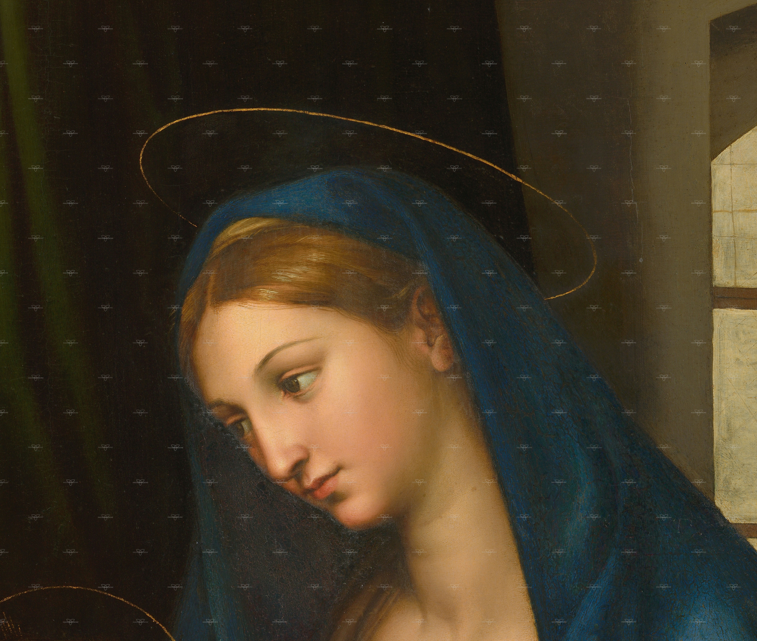
Mary, the Truly Free Woman
Mary lives and fulfills her freedom by giving herself to God and receiving the gift of God. The Supreme Pontiffs repeatedly presented Mary of Nazareth as the supreme expression of human freedom in cooperation between humanity and God, who, in the sublime event of the Incarnation of the Son, entrusted the free and active ministry of a woman. The convergence between the data of faith and the data of anthropological sciences, when these turned their attention to Mary of Nazareth, made it clearer that the Virgin is at the same time the highest historical realization of the Gospel and the woman who, through her self-mastery, sense of responsibility, openness to others, spirit of service, strength, and love, fulfilled herself most fully in the human plane. All of Mary’s life was a free, courageous, and confident “yes” to God. In this “yes,” we can discover the secret of her freedom and, therefore, of her fully realized humanity.As affirmed by Benedict XVI: “in presenting herself in total dependence on God, Mary expresses in truth an attitude of full freedom, founded on the full respect for her dignity”. Mary’s “yes” is born from a deep and conscious reflection within her conscience. From this reflection arises her “here I am”, totally free to the Word of God, understood and therefore accepted. The Pontiff himself writes: “she speaks and thinks with the Word of God. The Word of God becomes her word, and her word is born from the Word of God. Thus, it also reveals that her thoughts are in harmony with the thoughts of God, that her will is a will together with God. Being intimately penetrated by the Word of God, she can become mother of the Incarnate Word”.This constant meditation helps Mary to overcome her own individuality and open herself to the understanding and acceptance of God’s mysterious plan that wants her, alongside Christ, as Mother, Companion, and Disciple, entrusting her with a universal mission. Mary becomes increasingly aware that each of her acts and choices involves all humanity, and it is in this awareness that lies the very foundation of her freedom, full realization, glorification, and royalty. In Mary’s life experience, therefore, we discover the full encounter between two freedoms: the highest and most authentic expression of human freedom, namely, the freedom to choose definitively the path of Truth, and the most surprising manifestation of divine freedom that expresses God’s deep and ardent desire to establish, in Christ, a relationship of friendship with man.We bear witness to the wondrous and ineffable fusion of two “yeses,” the divine and the human, whose fruit is the fullness of new life in Christ, the God-Man of the eternal “yes.” Jesus of Nazareth is the fruit of the absolute freedom of God who, in His infinite goodness, chose to establish with His creature a relationship of friendship. Mary’s “yes” fits into that definitive and foundational “yes” which is the salvation of Christ, as St. Paul reminds us: “The Son of God, Jesus Christ, whom we preach among you, was not ‘yes’ and ‘no,’ but in Him there was the ‘yes.'” The freedom of Mary and true humanity are born from this encounter: realized humanity.Mary, paradigm of rationality, freedom, and faith
In the Apostolic Exhortation *Redemptoris Mater*, Pope John Paul II writes: “Totally dependent on God and entirely oriented toward Him by the impulse of faith, Mary, alongside her Son, is the most perfect icon of the freedom and liberation of humanity and the cosmos.” In Mary, the true woman, innocent and free from any alienation, shine together the sincere qualities of true humanity and true faith, which every human being, called to rebirth in Christ, where God’s original plan for His creature is translated into reality, must possess and practice.God’s Revelation, which calls for true fullness, drives men and women to achieve their liberation by following the example of the “yes” of the Woman of Nazareth. Echoing an identical “yes” in their lives, they discover, as Pascal rightly stated, that “man infinitely surpasses man,” that the deepest longings of their hearts are limitless, and that he is made to live in the freedom of God, which is God’s Love in Himself. By responding to God with a conscious act of freedom, as Mary did, the human being moves toward his complete and full realization, soaring on the wings of faith and reason toward the full knowledge of Truth.Human freedom is the power of man to self-determine himself, to be the author of his own actions, responding to the attraction of values that perfect him, fully realize him as a spirit and in the world. The essence of freedom is the ability to walk towards the fullness of Good, adhere to it, love it without external or internal restrictions. In the encounter with the Good, freedom finds itself in its element, achieves its full realization, recognizes itself fully. Moving away from this perspective of full realization, man is no longer free but self-destructs, does not realize himself, does not achieve his fullness.The contemporary man, overwhelmed by subjectivism, seems unable to understand and live his true freedom in this way. His concept of freedom, in fact, claims the absolutization of the self, that is, the ability to suffice unto oneself, prevail over others, and no longer need God. Mary teaches that it is not in the divinization of subjectivity that we find our true freedom, but rather in the open and conscious confrontation with the Other, becoming a Partner understood and accepted for an authentic dialogue of life. In the face of many modern misunderstandings about what freedom is and where it resides, Mary shows us that true freedom—that which liberates and fully realizes—comes from total surrender to God in love and faith.Conclusion
May Mary, the true woman, image of the feminine world, help the women and men of our time, in this arduous transition from one anthropological era to another, not to lose themselves in emptiness but to know how to find the right paths to open themselves to the knowledge of God and interpret life with the delicate and strong, conscious and decided categories of their femininity. In this world so superficial, marked by intemperance and the distortions of reason, She, image not only of the new woman but of the new humanity preserved from the mirages of false liberations, teach us how to be truly free.To deepen the theological reflection on Mary’s free consent in the Annunciation, consult Pope John Paul II’s Encyclical *Redemptoris Mater*. Also explore Mariology, Marian Theology, Marian Apparitions, and the Postgraduate Program in Mariology for a deeper understanding of this fascinating topic.Graduate Studies in Mariology
Wishing to deepen your formation in Mariology? Discover the Graduate Studies in Mariology from Locus Mariologicus, an academic formation that combines theological rigor, spiritual life, and the living tradition of the Church.
Would you like to study Mariology seriously?
This article draws on the works of the Locus Mariologicus library. The Postgraduate Programme in Mariology takes you to the same sources with academic guidance: Scripture, the Church Fathers and the Magisterium, from the first dogma to contemporary questions.
Responses