Mary in the Announcement: Dogmatic-liturgical analysis
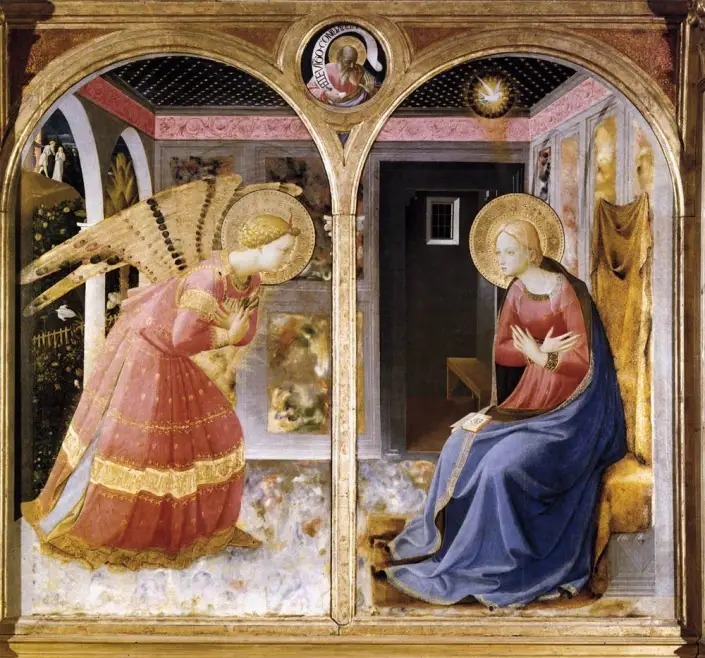
Maria na Anunciação: análise dogmático-litúrgica
On this second day of the Novena, one contemplates the promise of the Covenant fulfilled in Mary directly, celebrated liturgically on March 25th, nine months before Christmas, on the fourth Sunday of Advent.
In Marian shrines, in celebrating this crucial moment of salvation history, the Incarnation of the Word is celebrated in Mary’s womb and thus the creation of the first Christian sanctuary: Mary’s womb. This Sanctuary was the result of a Yes.
In the first reading we hear Isaiah who, during the reign of King Ahaz, whether he wanted it or not, proclaims through the prophet: “God will give you a sign: the Virgin will conceive and give birth to a Son who will be called Emmanuel. God with us.”
This sign is not merely a demonstration of God’s power but the gift of the Father’s will. The lowly man is reluctant to ask for a sign, the exalted God determines a sign. In the Old Testament, each “sign” made visible in history the invisible YHWH in such a way that visibility was always mediated, because no one could see God directly.
The manifestations of God in history have not ceased; the signs of His presence remain. If before Mary God was veiled, transcendent, known only through His actions, now, from the house of Nazareth, once and for all, He is visible, has a face, family, culture, time, and above all, becomes man, making us God. This is the covenant. The Son of God pitched His tent in human history because the Word became flesh in the womb of Mary through the work of the Holy Spirit.
To deepen the dogmatic-liturgical analysis of Mary in the Annunciation, consult the encyclical Redemptoris Mater by John Paul II, which dedicates extensive reflection to the moment of the Annunciation as the starting point of Mary’s faith.
Deepen your studies: explore Mariology, Mariana Theology, Marian apparitions and the Postgraduate in Mariology.
Graduate Studies in Mariology
Wishing to deepen your formation in Mariology? Discover the Graduate Studies in Mariology from Locus Mariologicus – an academic formation that combines theological rigor, spiritual life, and the living tradition of the Church.
Would you like to study Mariology seriously?
This article draws on the works of the Locus Mariologicus library. The Postgraduate Programme in Mariology takes you to the same sources with academic guidance: Scripture, the Church Fathers and the Magisterium, from the first dogma to contemporary questions.

Responses