Mary leads the priest to the service
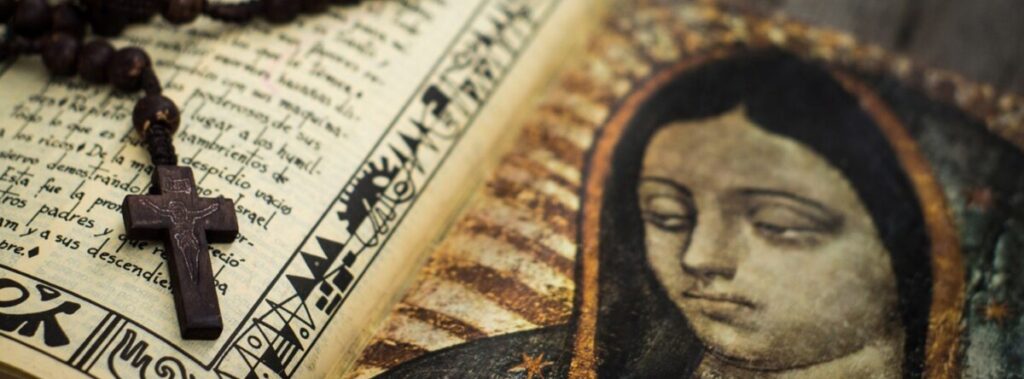
A presença de Maria no culto da Igreja introduz-nos a uma espiritualidade de serviço.
Repete-se várias vezes que “a Igreja é uma Igreja servidora e pobre, que a autoridade é serviço”.
However, the main temptation of the priest throughout history may have been to follow the models of society subject to sin, which sees authority as domination, rather than the model of Christ who is shepherd and servant.
A development is noted in this regard: in the Middle Ages, the priest was totally immersed in the people of God to the point of imitating them in vice and ignorance. After the Council of Trent, the dignity of the presbyter was recalled along with his power, through which the presbyter gradually becomes the “reverend,” that is, one who should be revered, but more difficultly one who should serve.
And yet, precisely at the time of the Catholic Reformation, the thought of the dignity of the priest was united with the Marian slavery vow of all members of the Church. Gradually, however, this sense of service was lost and today we need to recover it. The Virgin Mary who stands out among “the poor” of the Lord in the Old Testament introduces precisely this mentality of service. Twice she defined herself as the servant of the Lord (Lk 1,38 and 48), indeed, she is the only woman in the New Testament who is called thus.
This service is not something depressing of personality nor deprivation of personality, as it may seem in light of today’s cultural meaning. In Sacred Scripture, *servant of God* means to have the honor of participating in the design of salvation with a particular mission. Precisely for this reason, Mary is the *blessed*: while the curse separates her from the people of God and the inheritance of promises, the blessing of Mary inserts her into the context of salvation history as a collaborator.In *the servant of the Lord*, converge the most important elements of spiritual service: call or election, mission, response. Mary is chosen by God at the initiative of His love, so the priest cannot assume his task without the *call of the servant of the Lord*. Just as divine motherhood does not prevent Mary from defining herself as *the servant of the Lord*, so the distinction between laity and ministerial priests does not elevate the latter to a category of rulers (cf. 1 Peter 5:3 *“not acting as dominators over those entrusted to you, but as examples for the flock”*), but designates them to serve the elected faith (cf. Titus 1:1 *“Paul, a servant of God and an apostle of Jesus Christ, according to the faith of the chosen ones and the knowledge of the truth, which is in accordance with godliness”*).Above all, Mary indicates to the priest the implications of spiritual service:– absolute availability or need for a total yes to God. – radical poverty of one who knows themselves to be a useless servant, working in the pure goodness of the Lord (cf. Luke 17:10 *“in the same way, when you are done everything that is commanded of you, say, ‘We are useless servants; we have only done what was our duty’”*). – suffering and total self-denial to enter into the interests of the Lord (cf. Luke 12:37 *“blessed are those servants whom the Lord finds watching when he comes! Truly I tell you, he will gird himself, make them stand, and serve them”*; Acts 20:19 *“serve the Lord with all humility and tears, severely tested by plots of the Jews”*). – collaboration or commitment of one’s own resources to the designated service.Divine motherhood appears as a charism, that is, a gift for service, or better, the fundamental service rendered to the Church.To deepen the theme of Mary and priesthood, consult Pope John Paul II’s encyclical *Redemptoris Mater* on Mary as Mother of the Church and model of service.Deepen your studies: explore Mariology, Marian Theology, Marian Apparitions, and Postgraduate Studies in Mariology.Graduate Studies in Mariology
Desire to deepen your formation in Mariology? Discover the Graduate Studies in Mariology from Locus Mariologicus – an academic formation that combines theological rigor, spiritual life, and the living tradition of the Church.
Would you like to study Mariology seriously?
This article draws on the works of the Locus Mariologicus library. The Postgraduate Programme in Mariology takes you to the same sources with academic guidance: Scripture, the Church Fathers and the Magisterium, from the first dogma to contemporary questions.

Responses