Mary at the Cross
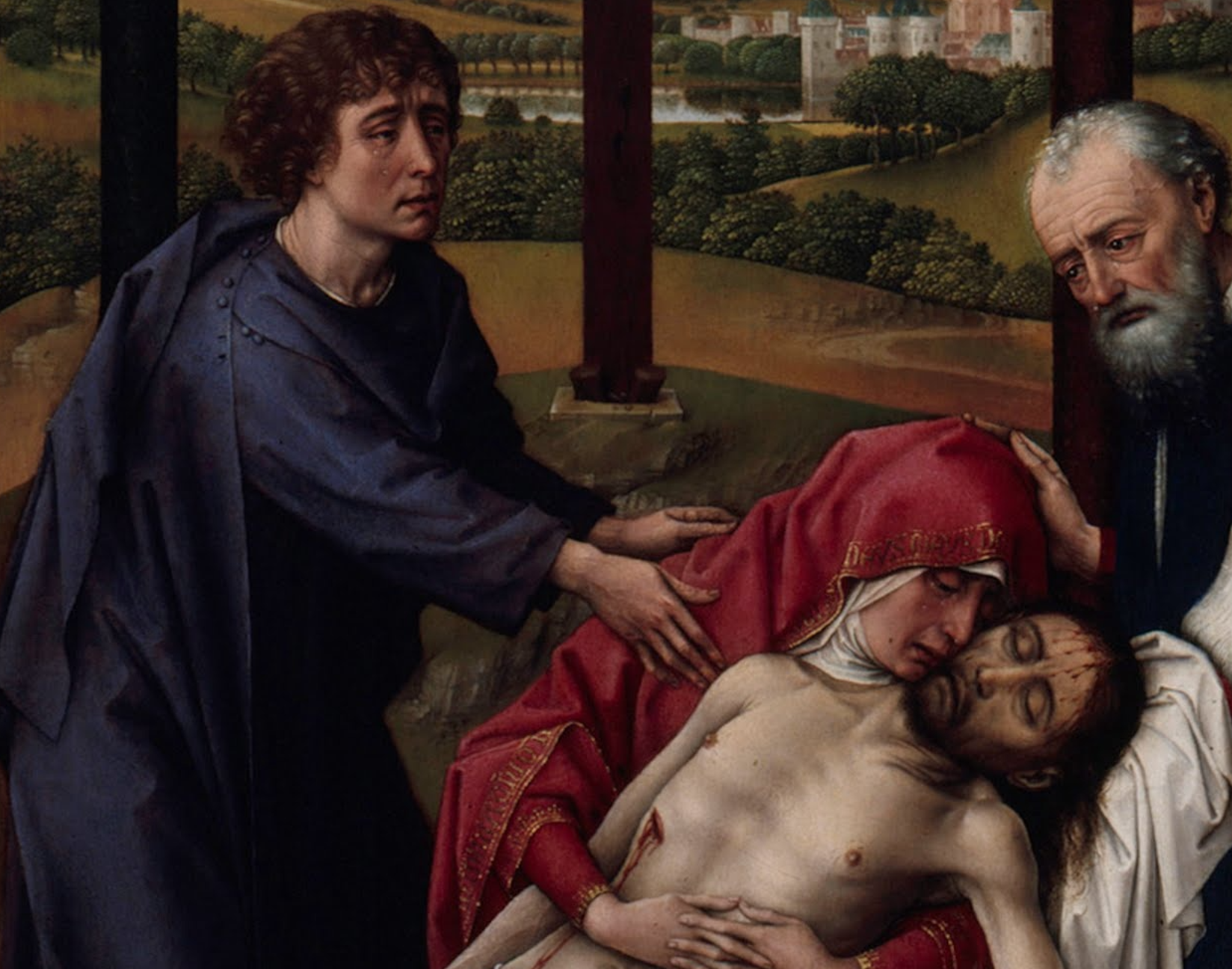
From Cana to Calvary: The Pericope of Jn 19,25-27
The scene described in Jn 19,25-27 is a notable passage, situated at the heart of Christ’s paschal mystery. Its importance arises from its textual density, temporal context, and connection to the episode of Cana. We will begin with the latter.The Context of Cana and Calvary
The narrative of the wedding at Cana (Jn 2:1-12) not only announces and anticipates but also reaches its full meaning and reveals an exceptional density. Positioned at the beginning and end of the Gospel, these two scenes are crucial for understanding the figure and role of Mary, as well as the overall Johannine message. Both present evident parallels:– **Characters:** Jesus, the mother of Jesus (Mary), the disciples, and a “beloved disciple.” – **Time:** The beginning and fulfillment of Jesus’ work. – **Title:** In Cana, Mary is referred to as the “mother of Jesus,” while on Calvary, she is called “woman” and later as the mother of the “disciple.” – **Message:** In both cases, it speaks of Jesus’ hour that, in Cana, had not yet come, and on Calvary, was complete.The Comparison between Cana and Calvary
The scene of Jn 19,25-27, inserted within the context of the “acts” of Jesus on the cross (Jn 19:17-37), reveals its theological density. There are five episodes that make up the final phase of the passion:1. **Inscription on the Cross** (vv. 19-22) 2. **Division of the Garments** (vv. 23-24) 3. **Words to the Mother and the Disciple** (vv. 25-27) 4. **Fulfillment of the Work Entrusted by the Father** (vv. 28-30) 5. **Piercing of the Side** (vv. 31-37)Our pericope, as seen, is at the center of the supreme events of Jesus’ hour, all carrying symbolism and theological importance. It is necessary to emphasize the unity of these episodes and their definitive paschal revelation.The Motherhood of Mary and the Beloved Disciple
The most prominent figure in the scene is Mary, whose presence and role are emphasized. She initially appears as the mother of Jesus but also as a “woman,” mother of the beloved disciple. The latter title and relationship require theological explanations.The Beloved Disciple: Symbolism and Representation
The “beloved disciple” is not just a follower of Jesus but someone deeply connected to Him. The words of Jesus on the cross have the same meaning as the priestly prayer in Jn 17, where He prays for His disciples, including those who will come through His word. The beloved disciple represents all believers, symbolizing the new people of God, the redeemed by the sacrifice of the Lamb.Mary: Mother of All the Redeemed
Mary, in welcoming the mother of Jesus, becomes a symbol of the covenant community, mother of the children of God once scattered and now gathered in unity. Her motherhood is not only individual but universal, encompassing all believers. She is the “daughter of Zion” who is fully realized in the new Zion, the community of the New Testament.Conclusion: The Acceptance of the Mother
The acceptance of the mother by the beloved disciple marks a crucial theological moment. It is a free and vital decision that symbolizes true adherence to following Christ. With this acceptance, Jesus’ work is completed, sealing the fulfillment of Scripture.For a deeper understanding, it is recommended to explore Mariology, Marian Theology, Marian Apparitions, and the Postgraduate Program in Mariology. The Encyclical “Redemptoris Mater” by Pope John Paul II offers valuable insights into Mary at the cross and her participation in the redemptive mystery of the Son.Graduate Studies in Mariology
Wishing to deepen your formation in Mariology? Discover the Graduate Studies in Mariology from Locus Mariologicus – an academic formation that combines theological rigor, spiritual life, and the living tradition of the Church.
Would you like to study Mariology seriously?
This article draws on the works of the Locus Mariologicus library. The Postgraduate Programme in Mariology takes you to the same sources with academic guidance: Scripture, the Church Fathers and the Magisterium, from the first dogma to contemporary questions.



Responses