Mary in H. U. von Balthasar
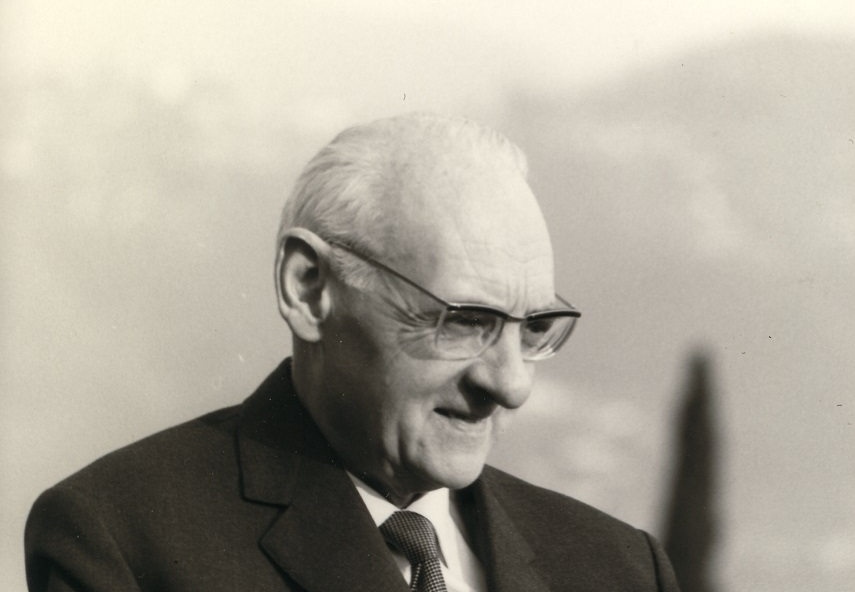
The work of von Balthasar provides ample space for the Mother of the Lord, and Mariology becomes in him a fertile field for new paths of application and verification, such as theological aesthetics and theodramatic. All of von Balthasar’s theology unfolds in a triptych that includes the following moments: 1. Theological Aesthetics, or theophany, as the perception of divine revelation in the world, therefore vision and encounter with God. 2. Drama, or theodramatic, as the reality of God’s action in and over the world. 3. Logic, or theology, as the description of God’s revelation and action in the form of concepts and words. We will focus on the first two parts to understand how the author articulates the discourse about Mary. In Theology, Volume I and Volume II, indeed, there is a lack of Marian reference.
Maria: Figura Central na Revelação e na Salvação
The Mariology, the study about the Virgin Mary, acquires a deep and theological dimension through the perspective of Hans Urs von Balthasar, one of the most influential theologians of the 20th century. In his work, Mary is presented as a multifaceted figure who transcends simple devotion or symbolism, assuming a central role in the narrative of salvation.
Estética Teológica: Beleza e Revelação em Maria
Von Balthasar begins his reflection on Mary within the framework of Theological Aesthetics, where beauty is seen as a window to the divine. For him, Mary is not merely an aesthetic image but a living figure who reveals the glory of God. Marian beauty is theological because it reflects the nature of Trinitarian love and its manifestation in human history.
The Virgin Mary, with her “yes” to the plan of God, becomes the archetype of the Church, the ideal form of the community of believers. Her spiritual motherhood is an image of the fruitfulness of divine love, where creation and salvation are intertwined. The beauty of Mary, therefore, is not superficial but reveals the depth of Christian revelation.
Teodramática: Maria no Drama Salvífico
The approach of von Balthasar is rooted even more deeply in the Theo-Drama, where he analyzes the history of salvation as a theological drama. In this context, Mary emerges as a central character, whose existence is marked by dramatic tensions.
Tensão entre Paraíso e Queda:
Mary, at the same time both human and holy, navigates between continuity with fallen humanity and her own holiness. Her fleshly motherhood connects her to the lineage of Adam, while her virginity elevates her above the fall.
Tensão entre Antiga e Nova Aliança:
The life of Mary is a series of events that reveal her participation in the drama of salvation. Her “refusal” at Cana and the harsh words to Jesus at his mother’s weddings show an apparent distance but hide a deep union. The spiritual motherhood of Mary over the faithful is revealed on the cross, where she gives birth to the Shoot of the Messiah in the pains of temporality.
Tensão entre Tempo e Eternidade:
The eschatology is the culmination of the tension in which Mary is immersed. As the mother of Christ, she is the synthesis of human and divine history, uniting time and eternity. Her existence is a passage from the Old to the New Testament, where God’s initiative meets the free response of the creature.
Conclusão: Maria como Chave para a Teologia Cristã
For von Balthasar, Mary is not a theological theme but a key to understanding the essence of Christian faith. Her figure reveals the beauty and drama of revelation, the unity between grace and freedom, and the profound truth of the relationship between God and humanity.
The encyclical Redemptoris Mater by John Paul II in 1987 further emphasizes the role of Mary in the economy of salvation, complementing Balthasar’s vision and offering a magisterial perspective on contemporary Mariology.
Continue your Marian studies: Explore our resources on Mariology, Marian Theology, and Marian Apparitions. Learn about the Master’s Program in Marianology offered by the Locus Mariologicus Institute.
Master’s Program in Marianology
Wishing to deepen your studies in Mariology? Discover the Master’s Program in Marianology at Locus Mariologicus – an academic formation that combines theological rigor, spiritual life, and the living tradition of the Church.
Would you like to study Mariology seriously?
This article draws on the works of the Locus Mariologicus library. The Postgraduate Programme in Mariology takes you to the same sources with academic guidance: Scripture, the Church Fathers and the Magisterium, from the first dogma to contemporary questions.

Responses