Magnificat: Mary’s Song
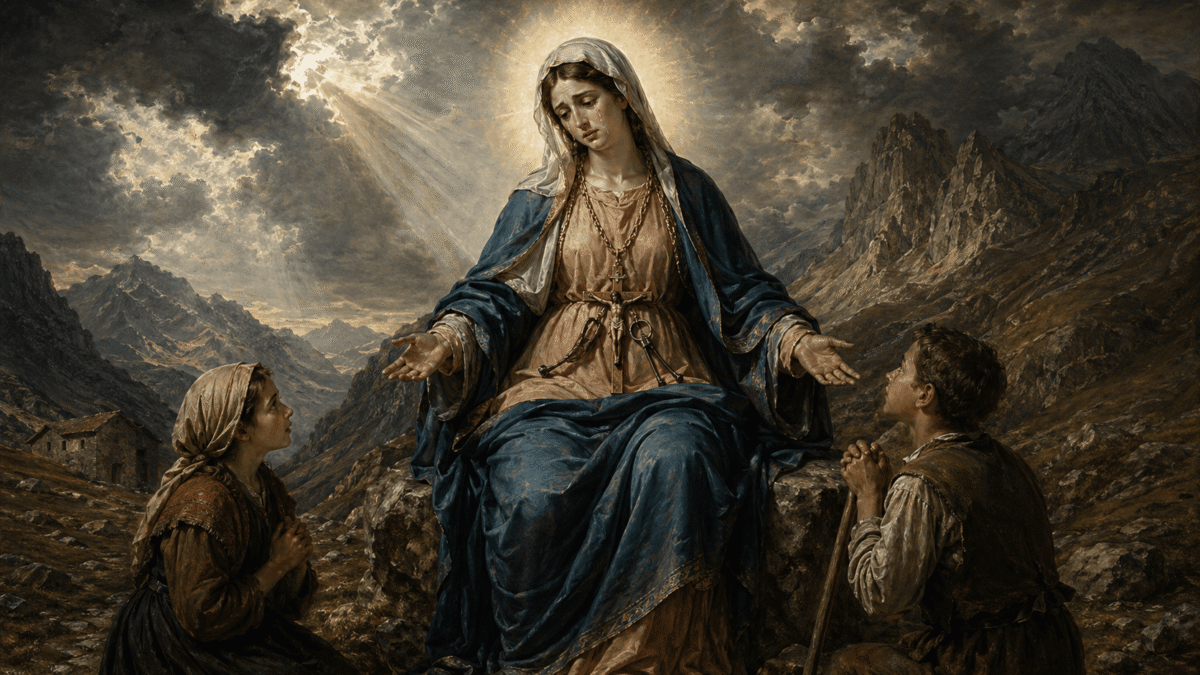
The Magnificat: Mary’s Song
Introduction
The Magnificat (Luke 1:46-55) is a hymn sung by Mary during her visit to Elizabeth. It is one of the most beautiful passages in the New Testament and the quintessential Marian poem. For a comprehensive article, see: Magnificat: The Song of MaryStructure and Content
The Magnificat has three distinct parts: (1) Mary’s personal praise to God who has regarded her humility. (2) A declaration of God’s holiness and mercy. (3) A revolutionary song, “He has brought down the mighty from their thrones, and exalted the humble. He has filled the hungry with good things, and sent the rich away empty-handed.”Place in Liturgy
The Magnificat is sung at Vespers (the evening prayer) in the Divine Office, recited daily by the Church. It is framed by its own antiphons appropriate to the liturgical season. The community stands for the Magnificat, just as they do for the Gospel, as a sign of respect.Deepen Your Studies
Explore Mariology, Theology Mariana, Marian Apparitions, and Post-Graduate Studies in Mariology.—Church Teaching
> “Magnificat anima mea Dominum, et exsultavit spiritus meus in Deo salvatore meo, quia respexit humilitatem ancillae suae. Ecce enim ex hoc beatam me dicent omnes generationes.” (Luke 1:46-48 – Vulgata Clementina, Canticle of Mary)Translation: “My soul magnifies the Lord, and my spirit rejoices in God my Savior, for he has regarded the humility of his servant. For behold, from now on all generations will call me blessed.”The Magnificat is Mary’s song, the Messianic song, the song of the poor and humble, the song of the pilgrim Church.Translation: “The Magnificat is the song of Mary, the Messianic song, the song of the poor and humble, the song of the Church in pilgrimage.”Graduate Studies in Mariology
Wishing to deepen your formation in Mariology? Discover the Graduate Studies in Mariology from Locus Mariologicus – an academic formation that combines theological rigor, spiritual life, and the living tradition of the Church.
Would you like to study Mariology seriously?
This article draws on the works of the Locus Mariologicus library. The Postgraduate Programme in Mariology takes you to the same sources with academic guidance: Scripture, the Church Fathers and the Magisterium, from the first dogma to contemporary questions.

Responses