John Paul II – Salvifici Doloris, No. 25: Mary at the Cross (1984)
Apostolic Letter Salvifici Doloris (February 11, 1984)
The Apostolic Letter Salvifici Doloris, issued on the feast of Our Lady of Lourdes, World Day of the Sick, presents the deepest synthesis of Church teaching on the Christian meaning of human suffering. Number 25 is dedicated entirely to Mary as “testimony” and “participant” in Christ’s redeeming suffering.
Pope: Saint John Paul II
Document: Apostolic Letter Salvifici Doloris, February 11, 1984
Theme: The Christian meaning of human suffering: Mary at the Cross
Latin Text (n. 25 Maria iuxta crucem)
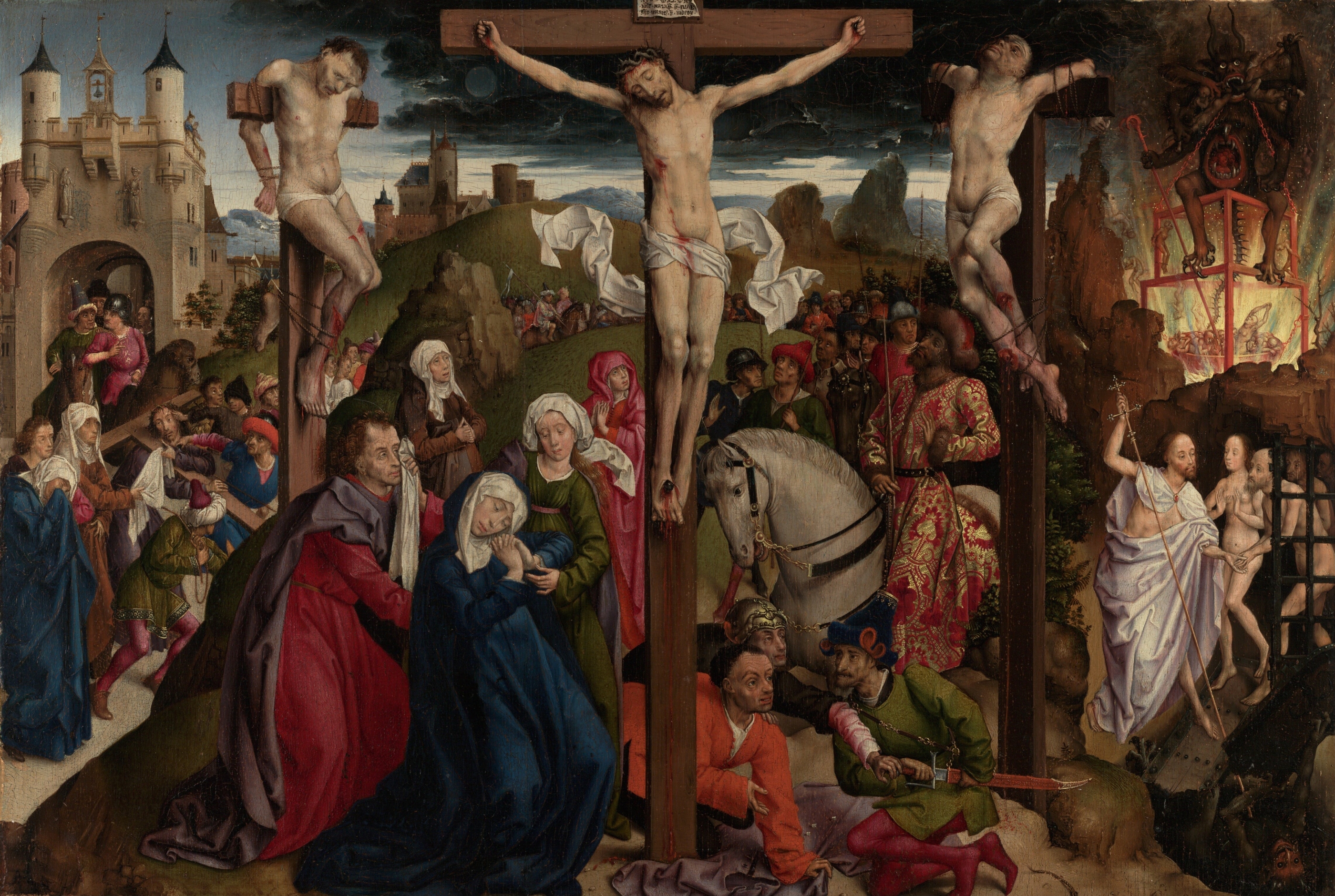
“Inter omnes testes Christi crucis stat Maria, Mater eius. In ipsa loco montis Calvariae enititur etiam in modum maxime perfectum cum salvifico Filii sui dolore consociari. Patet enim, quamvis quodammodo arcano sit ipsius mysterio penetretur, Maria proprium sui dolorem unicum experiri, qui non alia subiectivitate cum Christi dolore comparari potest, qui sui Filii erat”
Between all the witnesses of Christ’s Cross stands Mary, His Mother. In her, at the site of Mount Calvary, she strives to associate herself in a most perfect way with the salvific suffering of her Son. It is evident, even though her mystery penetrates in some arcane way, that Mary experiences a unique suffering proper to her, which cannot be compared with any other subjectivity to Christ’s suffering, which was that of her Son.
Portuguese Translation, Continuation
Mary, who suffers in her maternal condition at the Cross of the Son, is the silent but particularly eloquent testimony of the fact that human suffering participates in the redeeming suffering of Christ. Mary participates in it and already anticipates, according to a mode proper to her, the participation of the Church, bride of Christ, in “the suffering that still lacks in Christ’s tribulations” (Col 1:24).
At the foot of the Cross, at the hour of Passion, Mary was not only “witness”, she was participant: her spiritual motherhood regarding humanity is born at this hour. Mary, receiving John as son (“Mulier, ecce filius tuus”, Jn 19:26), becomes the spiritual Mother of all redeemed humanity.
The Compassion of Mary
Number 25 of Salvifici Doloris is the most theologically dense reference in recent Church teaching on the compassion of Mary. John Paul II carefully distinguishes:
- Christ redeems through his suffering. Only the incarnate Son of God can redeem.
- Mary participates in Christ’s redeeming suffering. Her participation is singular, perfect, but derived from Christ’s suffering.
- The Church completes “what still lacks in Christ’s sufferings” (Col 1:24). Every Christian can participate in this mystery; Mary is the perfect model.
Meaning for Pastoral Care of Suffering
Salvifici Doloris is the reference document for all Catholic pastoral care regarding suffering, illness, and death. By presenting Mary as a participant in Christ’s suffering, the document does not romanticize pain but rather shows that human suffering, when united to Christ through faith, can have a salvific meaning.
The Stabat Mater as Subtext
Paragraph 25 of Salvifici Doloris implicitly meditates on the Stabat Mater, the medieval poem attributed to Jacopone da Todi and approved by Pius IX as a liturgical sequence in 1876 (see post on Stabat Mater). The keywords, “iuxta crucem”, “mater”, “dolor”, resonate directly in the text of John Paul II.
Additional Reading
- Mariology
- Redemptoris Mater
- Mulieris Dignitatem
- Stabat Mater
- Postgraduate Mariology
Postgraduate Studies in Mariology
Want to deepen your formation in Mariology? Discover the Postgraduate Program in Mariology from Locus Mariologicus – an academic formation that combines theological rigor, spiritual life, and the living tradition of the Church.
Would you like to study Mariology seriously?
This article draws on the works of the Locus Mariologicus library. The Postgraduate Programme in Mariology takes you to the same sources with academic guidance: Scripture, the Church Fathers and the Magisterium, from the first dogma to contemporary questions.
Responses