“Stay with us, Lord”: Mary, master of Paschal hope.
Mary, Teacher of Pascal Hope
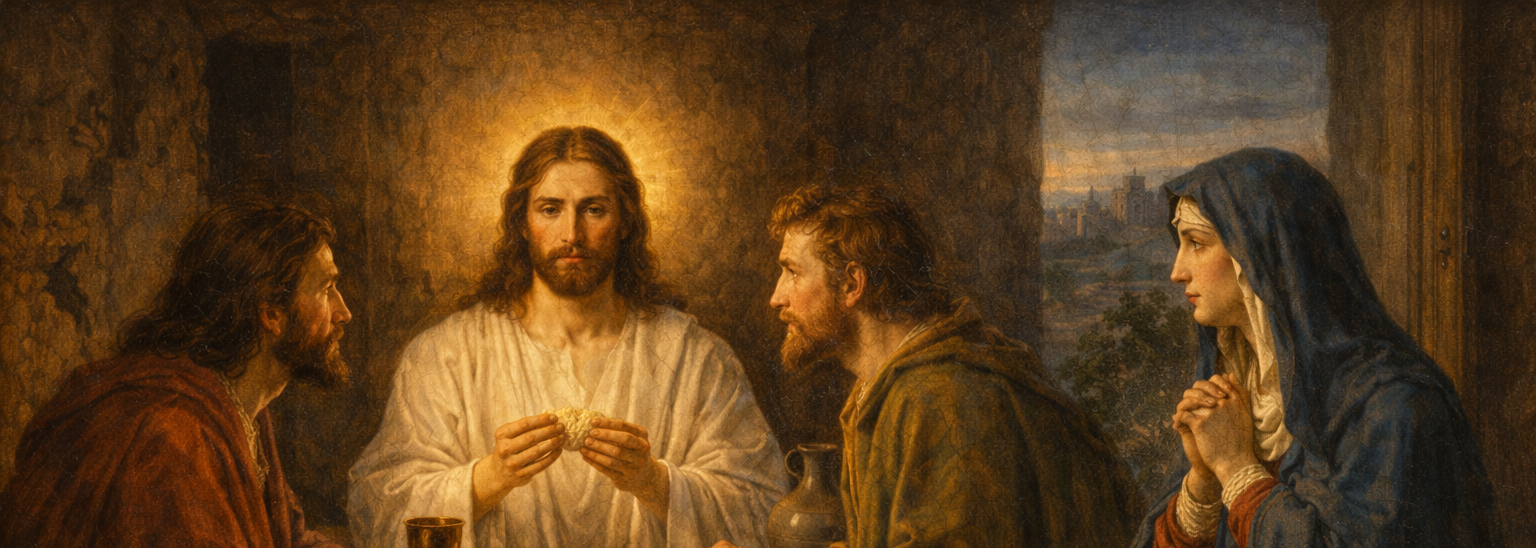
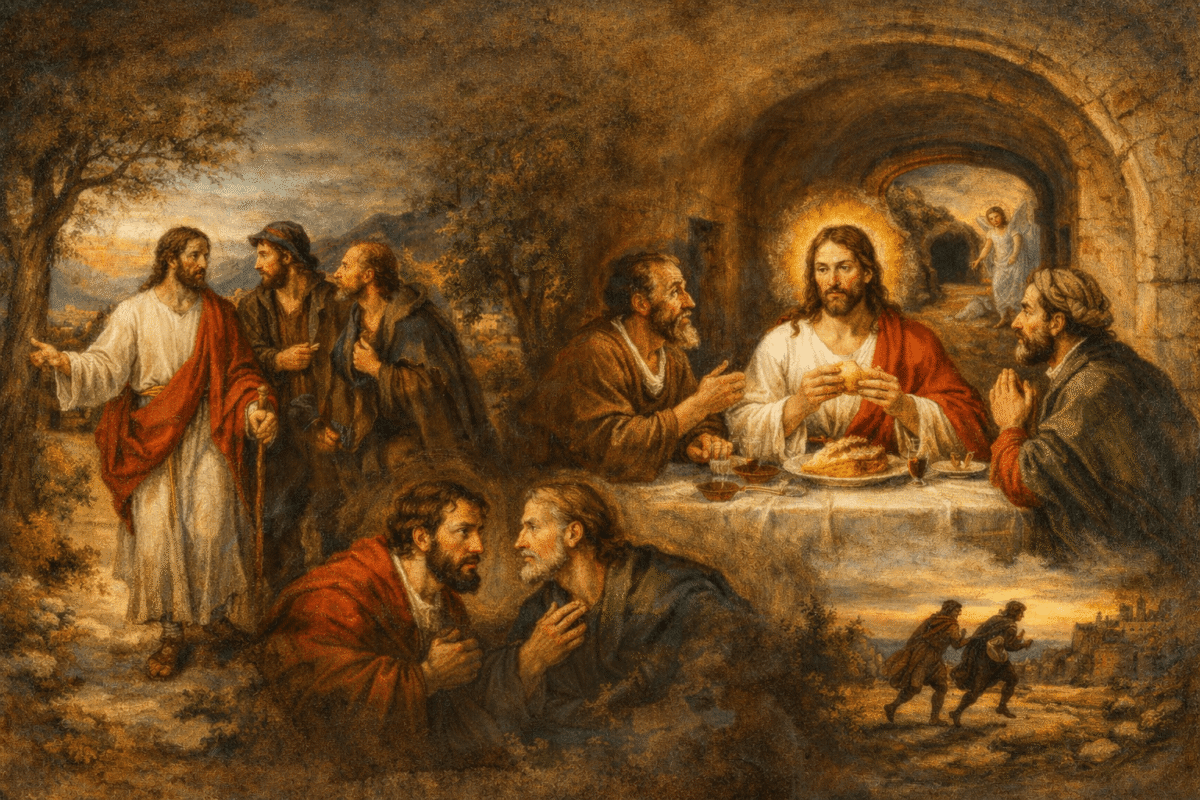
“Stay with us, Lord, for it is almost evening and the day is now far spent” (Lk 24,29). With these words, the two disciples of Emmaus ask the stranger they met on the road to remain with them. It is Easter Monday. They are leaving Jerusalem, the city of Resurrection that they still cannot recognize, when they encounter the Risen One. They did not recognize Him while walking. They recognize Him “in the breaking of bread” (Lk 24,35). And then He vanishes. They immediately return to Jerusalem. This is the journey that Mary, teacher of Pascal hope has already traveled.The image of Mary as a teacher of hope resonates throughout the liturgy of Easter Monday. The photograph that illustrates this text perfectly represents the disciples of Emmaus recognizing the Risen One, just as Mary recognized Him “in the breaking of the bread”.I. Primeira Leitura: At 2,14.22-33 – Maria Mestra da Memória PascalThe liturgy of Easter Monday proposes the first reading of Peter’s speech on the day of Pentecost (Acts 2,14.22-33). Peter proclaims: “Jesus of Nazareth, a man attested by God among you… you crucified and killed Him by the hands of the lawless. But God raised Him up, having loosed the pangs of death” (Acts 2,22-24). This *kerigma* that Peter proclaims at Pentecost has a prehistory: the days between the Ascension and Pentecost, spent in the Cenacle “in persevering prayer, with Mary”.The theological tradition, relying on the Lucan exegesis of Acts 1,12-14, understood that these days in the Cenacle were not merely ones of passive waiting. This *Maria mestra*, who had kept in her heart thirty-three years of memories of the Son, communicated to the apostles what they still did not know: “Episodes, statements, details previously unknown about the life of Jesus reached them through the school of Mary. The figure and teaching of the Master, presented by the Mother, became more penetrating and more luminous in their minds.” Peter’s *kerigma* is unthinkable without the Paschal catechesis of *Maria mestra*.II. Evangelho: Lc 24,13-35 – O Caminho que Desce de JerusalémThe Gospel of Emmaus is one of the richest texts in the New Testament. Two disciples, one named Cleopas, the other unnamed, walk from Jerusalem to Emmaus, six kilometers away. “They were talking about everything that had happened” (Lk 24,14). When the stranger asks them what they are discussing, their response is brutally honest: “We had hoped that He was the one who would liberate Israel. But with all this, three days have already passed since these things happened” (Lk 24,21). Hope in the form of disappointment.The Risen One responds with Scripture: “Beginning with Moses and all the Prophets, He explained to them in all the Scriptures what referred to Him” (Lk 24,27). It is a paschal catechesis. The Risen One interprets Scripture in light of what happened, and what happened is interpreted in light of Scripture. This hermeneutical circle is the same that Mary had lived her whole life: “She kept all these things in her heart,” rereading them in light of Isaiah, the Psalms, the Prophets. In teaching the disciples of Emmaus, the Risen One does what Mary had done in the Cenacle.III. “Ao partir do pão” – A Eucaristia como Reconhecimento PascalThe disciples recognize the Risen One “in the breaking of the bread” (Lk 24,35). This gesture, which directly refers to the Last Supper and, therefore, to the Eucharist, is the key to recognizing the presence of the Risen One. The liturgy of Easter Monday, by including this Gospel, proclaims that the Eucharist is the privileged place for encountering the risen Lord. Not vision, not miracle, not extraordinary experience: the broken bread.Mary teacher in the Cenacle, “virgin full of the Holy Spirit, model of the praying Church, model of harmony, communion and peace, docile to the voice of the Spirit, vigilant in waiting for the return of the Lord,” is the center of this recognition. The disciples who return from Emmaus arrive at the community, and the community is gathered with Mary. She is the face of the Church that waits, that prays, that keeps the memory of the Risen One to share with those who still arrive disoriented from the path.IV. Regresso a Jerusalém – A Missão de Maria Mestra“Immediately they got up and returned to Jerusalem” (Lk 24,33). This return of the disciples from Emmaus is the model for every Paschal conversion: abandoning the direction of flight, returning to the community, to the Upper Room, to the place where Mary and the apostles persevere in prayer. Luke, with his usual geographical and theological precision, associates the recognition of the Risen One in Emmaus with the return to Jerusalem: there is no authentic Paschal experience that does not lead to the community.Conclusão:On this Easter Monday of 2026, we invite you to recognize the Risen One where He promised to be: in the “breaking of bread,” in Scripture interpreted, in the community gathered with Mary as teacher in prayer. And, like the disciples of Emmaus, to return to Jerusalem, to the Upper Room, to the Church, to the mother who awaits us, to share what the heart recognized when evening was already advancing: “It is true! The Lord has risen!” (Lk 24,34).Leia também:* Coração em Brasa – Maria Emaús * A Alegria Pascal de Maria Madalena * Paz Pascal de MariaAprofundar o Conhecimento:This article is part of our extensive collection of Marian reflection. If you wish to study Mariology with academic rigor, check out our Postgraduate Program in Mariology. To learn more about the Marian Apparitions and Mariology, explore the resources of the Instituto Locus Mariologicus.Graduate Studies in Mariology
Wishing to deepen your formation in Mariology? Discover the Graduate Studies in Mariology from Locus Mariologicus – an academic formation that combines theological rigor, spiritual life, and the living tradition of the Church.
Would you like to study Mariology seriously?
This article draws on the works of the Locus Mariologicus library. The Postgraduate Programme in Mariology takes you to the same sources with academic guidance: Scripture, the Church Fathers and the Magisterium, from the first dogma to contemporary questions.
Responses