Mary’s Unshakeable Faith: Demonstration of Her Testimony and Foundation of the Church’s Faith (2026)
I. The Theological Foundation of Mary’s Faith: The Announcement
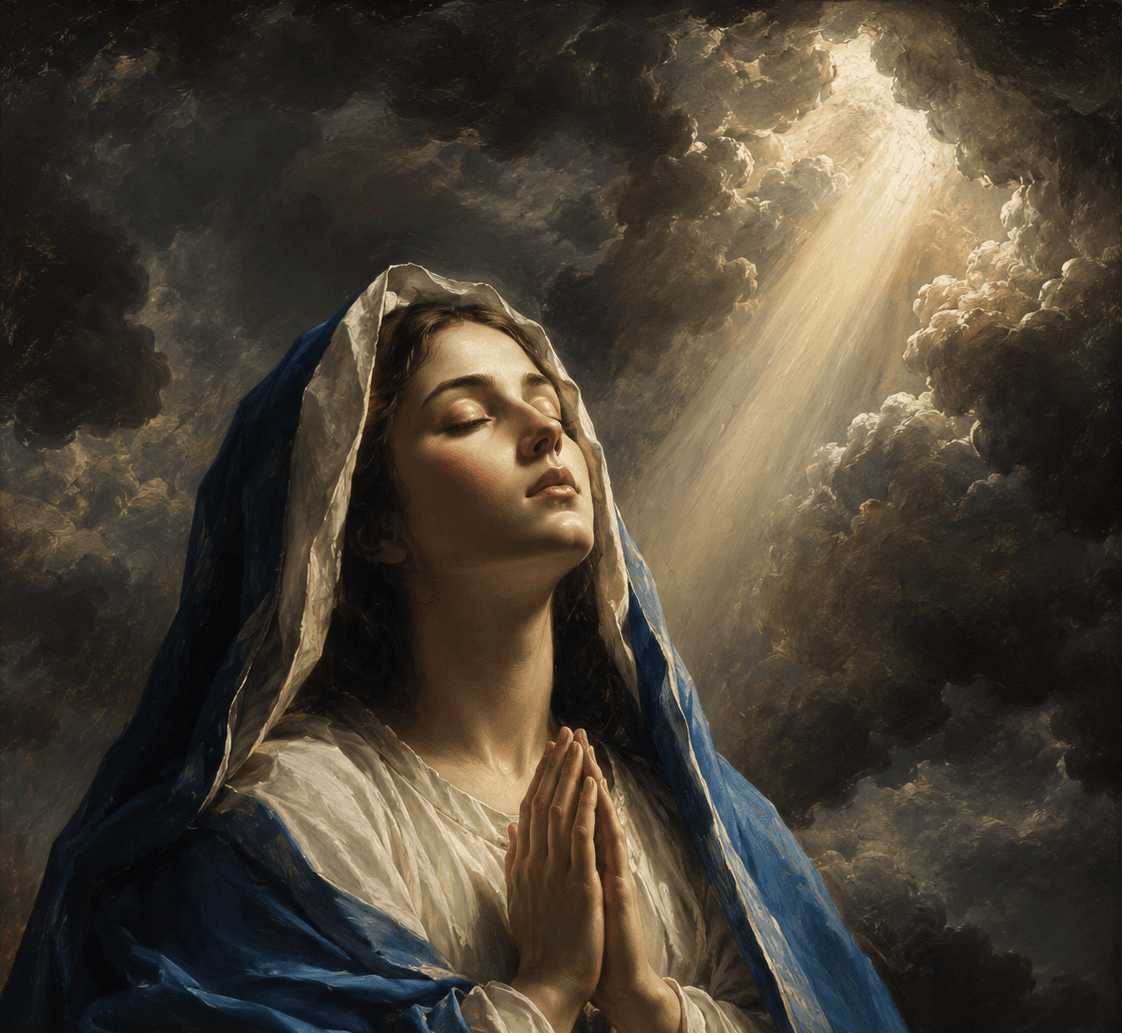
The theological foundation of Mary’s faith is rooted in the announcement narrated by Luke 1:26-38. Exegetical tradition, from Saint Justin Martyr to contemporary commentaries, has identified this text not merely as Mary’s individual consent but as an act of faith with cosmic implications: through her “yes” (the Latin fiat), humanity welcomes the eternal Word into time, and redemption becomes historical. Elizabeth, in the episode of the Visitation, formulates the theological meaning established by the Announcement: “Blessed are those who believe” (Luke 1:45).
The demonical testimony documented by Bamonte regarding the Announcement is remarkably rich theologically. On the Feast of the Annunciation in 2009, the demonic entity, constrained to reveal the reality of that moment, declared: “The Archangel Gabriel arrived. She believed. That pure soul arrived, united to the body and the second divine Person. She knew the Scriptures, she understood who was in her womb, and she preserved him.” The confession identifies three precise theological elements: the absence of doubt (“she believed”), Mary’s scriptural awareness (“she knew the Scriptures”), and the act of contemplative custody (“she preserved him”).
II. Mary’s Faith on the Cross: The Second Fiat
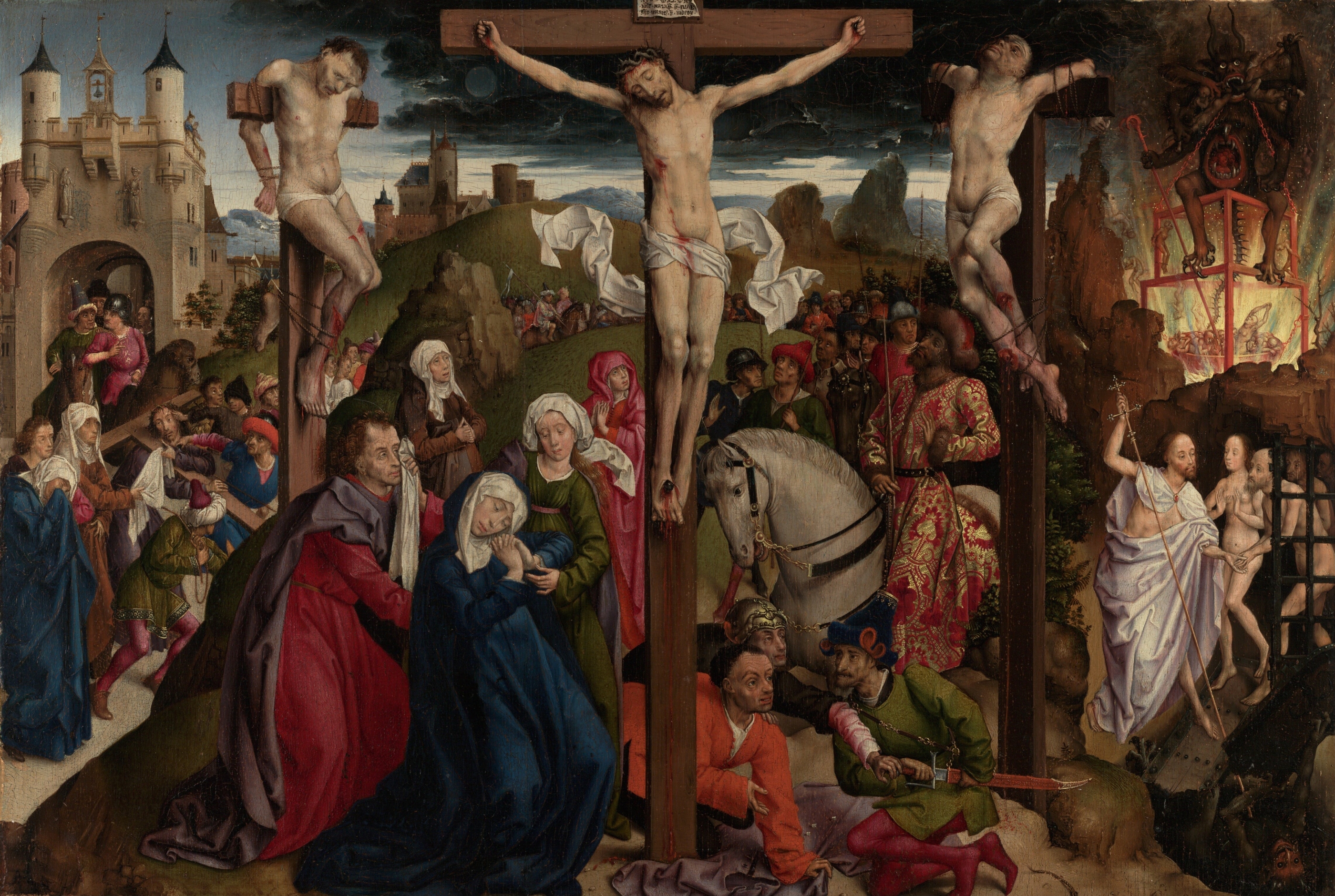
Theological tradition, from Origen to John Paul II’s Redemptoris Mater, has developed the doctrine of the “second fiat” of Mary: if her first consent was given at the Announcement regarding the Incarnation, the second was pronounced on the Cross regarding redemption. Lumen Gentium (n. 58) expresses this intuition by stating that Mary “suffered deeply with her only-begotten Son and united herself with a maternal heart to Christ’s sacrifice.” The Cross is not merely the place of the Son’s death; it is where Mary’s faith attains its most radical expression, embracing a mystery that seemed to contradict the promises she had believed.
Testemunho Demoníaco sobre a Fé de Maria
O Segundo Fiat e a Maternidade Espiritual Universal
The Bamonte records provide an extraordinarily precise testimony of this second fiat. During an exorcism ritual on Good Friday 2006, the demon, confronted with the words of the Gospel of John where Jesus entrusts his mother to the beloved disciple, declared: “In an instant she loved all her children through all generations, and she said her second yes. After pronouncing her yes to the angel, she said her yes to her Son on the cross, so that you might become her children.” This statement reveals the connection between Mary’s faith and her universal spiritual motherhood: the second fiat is simultaneously an act of faith in God’s redemptive plan and an expression of love that embraces all humanity as her family.
A Fé de Maria na Morte do Filho: Testemunho Teológico Demoníaco
The most delicate theological question related to Mary’s faith arises during the period between Christ’s death and the resurrection. When the disciples fled, and faith in the Nazarene seemed defeated by events, what happened in Mary’s soul? Theological tradition, reinforced by Hans Urs von Balthasar in his meditation on Holy Saturday, asserts that the Church’s faith remained steadfast during this time at its immaculate core, which is Mary. Von Balthasar’s expression gains surprising depth with demonic records.
During an exorcism ritual on the liturgical memorial of Our Lady of Sorrows (September 15, 2006), the demon was forced to praise Mary’s faith with words that reveal its most disturbing attribute: “Holy Immaculate. At the foot of that Cross: untouchable, unchangeable, like the purest metal. Without blemish, without the slightest doubt. She never doubted Your words. She knew he had spoken the truth and that everything served to fulfill the Scriptures she knew so well.” The hatred demonstrated by the demon in expressing these words indicates the theological depth of the theme: what the adversary fears most in Mary is not her power of intercession, but her faith, for this faith is the model and foundation of the faith of the entire Church.
O Sofrimento de Maria como Expressão da Fé: A Espada e a Oração
The tradition of the Via Matris explores the Seven Sorrows of Mary as a spiritual path parallel to the Via Crucis. In this context, Mary’s faith is not an apathetic tranquility that eliminates suffering, but a faith tested by suffering, which remains intact through it. The sword prophesied by Simeon (Luke 2:35) is not a metaphor, but an accurate description of a painful experience that pierced Mary’s soul without destroying it, for her faith endured what natural hope could not.
The Deep Contemplative Suffering of Mary: A Demonic Testimony
The records of Bamonte from Holy Friday 2009 offer a rare insight into this contemplative suffering of Mary. The demon, forced to reveal what he witnessed on the Cross, stated: “She lived her Passion within her heart. The sword pierced her heart. She was there all along, torn apart by pain yet beautiful in her pain. She shone with pain and prayer: Be done your will.”
The conjunction of “pain and prayer” is theologically accurate: Mary’s faith is not merely an intellectual assent or volitional consent but a continuous prayer that transformed suffering into an offering, confirming the logic of the sacrifice Christ was completing on the Cross.
VI. The Theological Legacy of Mary’s Unshakeable Faith
Mary’s faith received formal theological articulation in the Council and post-Council documents, framing its three essential moments: the Annunciation, the Cross, and the expectation of Pentecost. Lumen Gentium (n. 63) describes Mary as “the Virgin and Mother par excellence”, identifying her spiritual motherhood as a direct fruit of her faith: “believing and obeying, she generated in the world the very Son of the Father.” Redemptoris Mater (n. 14) further elaborates that Mary’s faith is “a gift and a conquest at once”, meaning it is both a grace received and an act of freedom sustained throughout her life.
The demonic testimony collected by Bamonte regarding Mary’s faith carries apologetic value, as such testimonies are often extracted under duress. The statement, “We tried to shake her faith, but she kept praying; she was the only one who maintained her faith in the Resurrection”, demonically echoes what Mariology teaches about Mary’s subsisting faith as the foundation of the Church’s faith during the darkness of Holy Saturday.
What the adversary confesses with hatred, the Church proclaims with gratitude. See Redemptoris Mater (John Paul II, 1987) and Lumen Gentium, nn. 58-63. A deep study of Mary’s faith is part of the graduate program in Mariology offered by Locus Mariologicus.
The doctrine concerning the faith of Mary occupies a structural place in dogmatic Mariology: it is not a matter of auxiliary piety but a constitutive dimension of the Marian mystery, with direct implications for the theology of redemption, for ecclesiology, and for the theological understanding of Calvary. The faith of Mary is not merely the initial act of consent at the Annunciation. It is a permanent disposition that patristic tradition, from Origen to Augustine, identified as the condition of possibility for the Incarnation and as the model for all Christian faith.
The most disturbing confirmation of this doctrine comes from records of exorcisms documented by Italian priest Giovanni Bamonte, in which demonic entities were compelled to reveal, with hatred and embarrassment, what the faith of Mary represents in the economy of salvation: an ontological fortress that the adversary was unable to shake, neither on Calvary nor during the three days of the Son’s death.
Responses