Through her poverty she gave everything: Mary and the total gift of herself
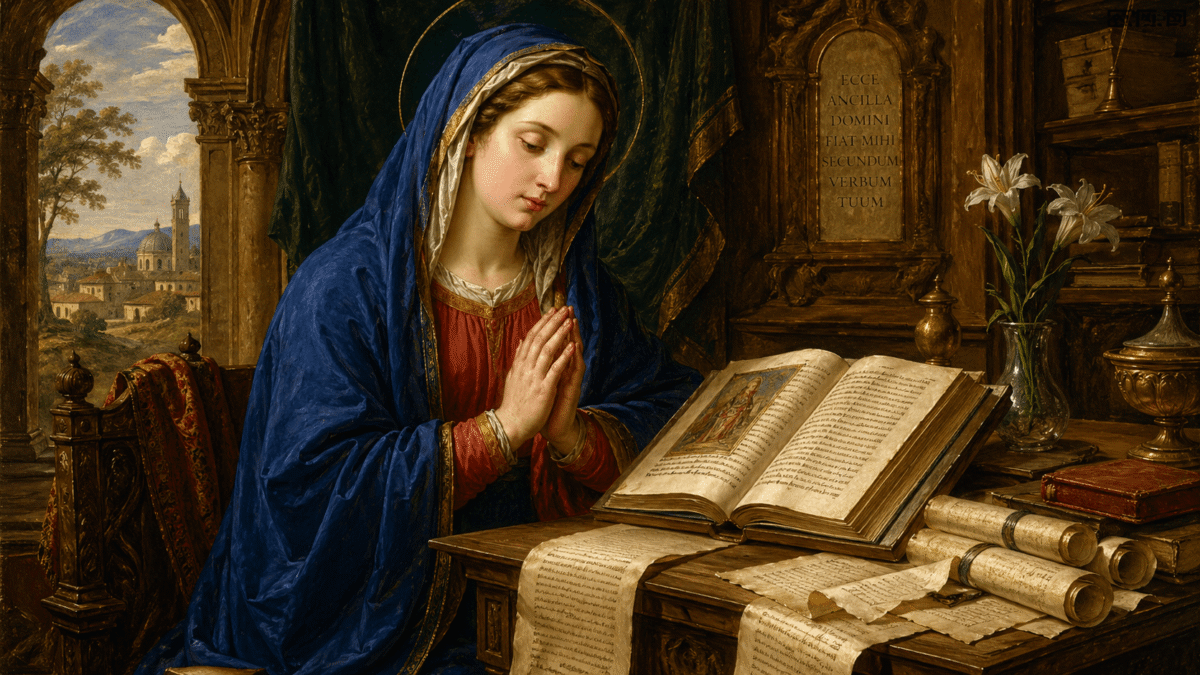
A Viúva e os Ricos: Um Modelo de Dar Integral
The episode of the widow who offers two mites in the temple treasury (Mk 12,41-44) is one of the most concise and richest in meaning in the Gospel of Mark. Jesus observes the attitude of the rich, who deposit much with apparent generosity but only what remains, while the poor widow offers “all that she had,” revealing a deep inner disposition.
“Ex Penuria Sua”: A Essência da Doação Integral
The expression “ex penuria sua” (from Latin, “from her poverty”) sums up the entire theology of integral giving. Mark highlights the contrast between the rich, who give from their surplus, and the widow, who offers everything she has. Jesus’ criterion is not the amount, but the proportion and intention: the rich gave much in absolute terms, but little in relation to their needs; the widow, on the other hand, gave little in absolute terms, but all that she had, impacting her own survival.
A Viúva como Modelo da Pobreza Evangelica
Traditionally, this episode is seen as a representation of the “evangelical poverty” proclaimed by Jesus in the Sermon on the Mount (Mt 5,3): “Blessed are the poor in spirit, for theirs is the kingdom of heaven”. The widow, with her generous offering despite her social and economic condition, embodies this spiritual poverty.
Maria: O Exemplo Supremo de Dar Integral
The figure of Mary, the Mother of Jesus, is intrinsically linked to the idea of giving everything one has. Her response to the angel Gabriel, expressing her unconditional “fiat” (yes), symbolizes total surrender to God. Just as the widow, Mary gave “all that she had” – her virginity, her life plan, her security – to follow the divine will.
“Totam Victum Suum”: O Legado da Viúva e Maria
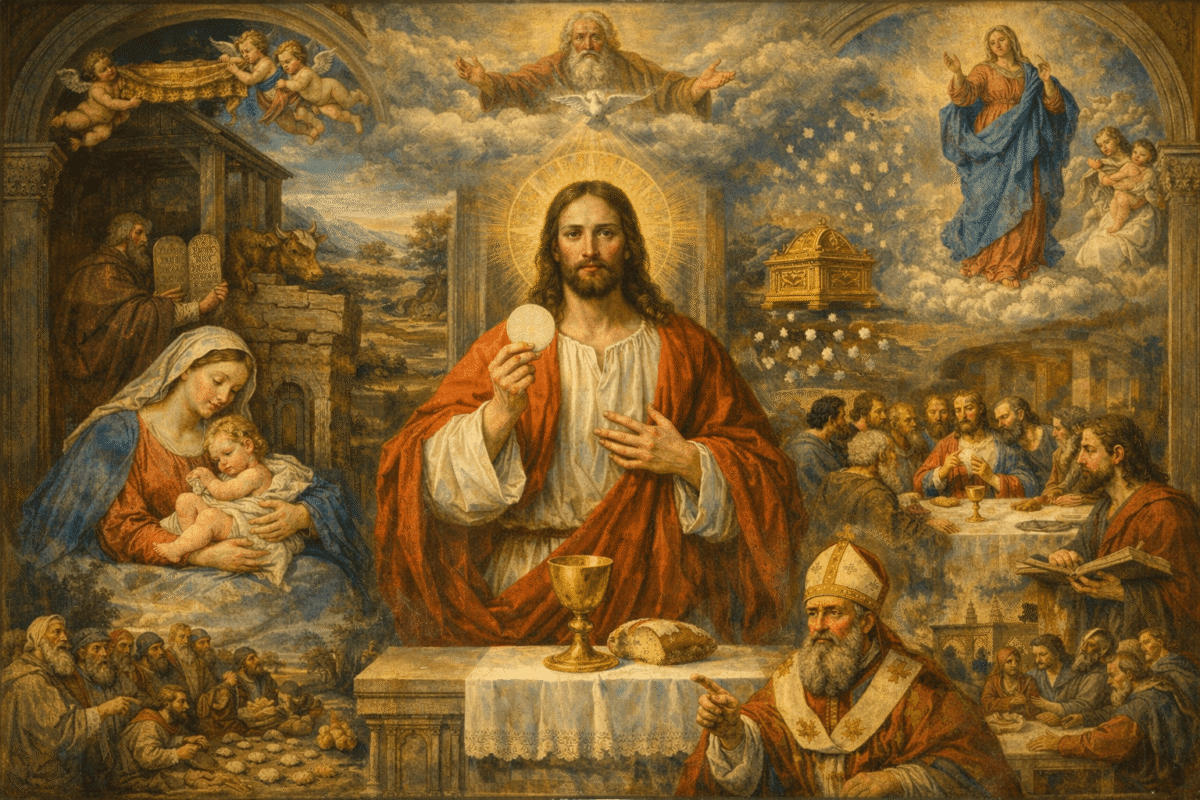
The expression “totam victum suum” (from Latin, “all of his sustenance”) refers to the widow’s offering and, symbolically, to the Bread of Life that Jesus becomes in the Eucharist. Mary, by giving God everything she had, anticipates the total offering of herself through the sacrifice of her Son, becoming the perfect model of surrender and unconditional love.
A Santidade no Cotidiano
The Second Vatican Council, in its “Lumen Gentium”, affirms the universal call to holiness, encouraging everyone to offer their talents and resources to God and others. Just as the widow and Mary did, each person can give “all they have” in any circumstance of life, becoming a living witness of divine love and generosity.
Master’s in Mariology
Wishing to deepen your formation in Mariology? Discover the Master’s in Mariology from Locus Mariologicus – an academic formation that combines theological rigor, spiritual life, and the living tradition of the Church.
Would you like to study Mariology seriously?
This article draws on the works of the Locus Mariologicus library. The Postgraduate Programme in Mariology takes you to the same sources with academic guidance: Scripture, the Church Fathers and the Magisterium, from the first dogma to contemporary questions.

Responses