Epiphany: Mary manifests the Son
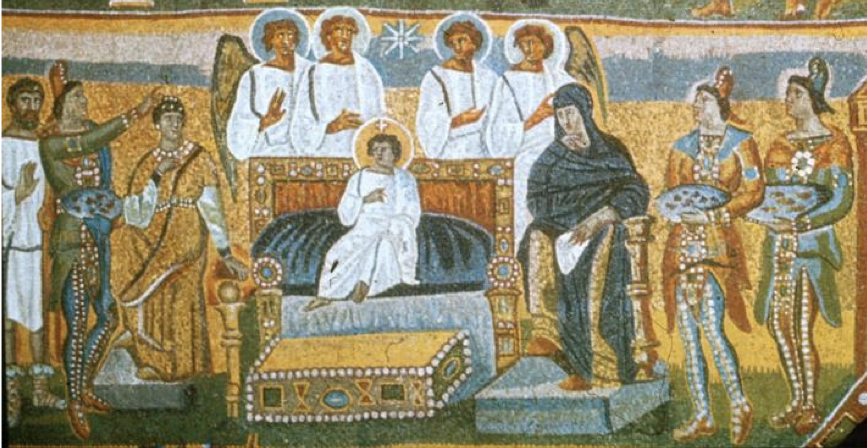
The Epiphany: Celebration of the Revelation of Christ and the Role of Mary
The Epiphany, celebrated on January 6th, is a feast rich in symbolism and theological significance, marking the public revelation of Jesus Christ as the Savior of the world. This celebration, which concludes the Christmas season, emphasizes the divinity of Christ and His role as the Light for the nations, while also illuminating the fundamental role of Mary, His Mother, in the plan of salvation.The Mystery of the Epiphany
The Epiphany, or “Manifestation,” commemorates the visit of the Magi from the East to Jesus in the city of Bethlehem, forty days after His birth. This event is described in the Synoptic Gospels (Matthew 2 and Luke 2) and represents the first public manifestation of Jesus as the promised Messiah. The Magi, guided by the star, brought symbolic gifts: gold, incense, and myrrh, representing respectively Christ’s kingship, divinity, and humanity.The Liturgy and the Role of Mary
The liturgy of the Epiphany is rich in prayers and symbols that express the divine and human nature of Jesus. The preface of the Epiphany, for example, speaks of the “assumption of mortal nature” and the gift of communicated immortality, highlighting the participation of the faithful in the divine nature through Baptism.Maria, as the Mother of God, plays a central role in this celebration. In the liturgy, she is often invoked as the “Virgin Offerer,” who presents her Son to the Temple, fulfilling Simeon’s prophecy at the event of the Presentation of the Lord (Luke 2:25-38). Her response to the prophecy, “yes, a sword will pierce your soul” (Luke 2:35), symbolizes both the pain of the Passion and the joy of the glory that is to come.### Connection between Christmas and Easter The Epiphany establishes a deep connection between Christmas and Easter, celebrating the fulfillment of the prophecies of the Old Testament. Chapter VIII of the Apostolic Exhortation “Lumen Gentium” of the Second Vatican Council emphasizes Mary’s role in this mystery, placing her at the center of the Incarnation and the revelation of Christ.### Resources for Theological Depth For a deeper understanding of the Epiphany and Mary’s role in the liturgy, the Apostolic Exhortation “Marialis Cultus” by Pope Paul VI offers valuable guidance. Additionally, the Instituto Locus Mariologicus provides excellent academic training through its Postgraduate Program in Mariology, allowing students to explore the richness of the Marian tradition and its importance in the life of the Church.The Epiphany is therefore more than just a celebration; it is a moment of reflection on the divine nature of Christ and the unique role of Mary in the plan of salvation, thus uniting the mysteries of Christmas and Easter in one single and sacred narrative.Graduate Studies in Mariology
Wishing to deepen your formation in Mariology? Discover the Graduate Studies in Mariology from Locus Mariologicus – an academic formation that combines theological rigor, spiritual life, and the living tradition of the Church.
Would you like to study Mariology seriously?
This article draws on the works of the Locus Mariologicus library. The Postgraduate Programme in Mariology takes you to the same sources with academic guidance: Scripture, the Church Fathers and the Magisterium, from the first dogma to contemporary questions.

Responses