The Lord said to me: “Mary, daughter of David and mother of the Lord”
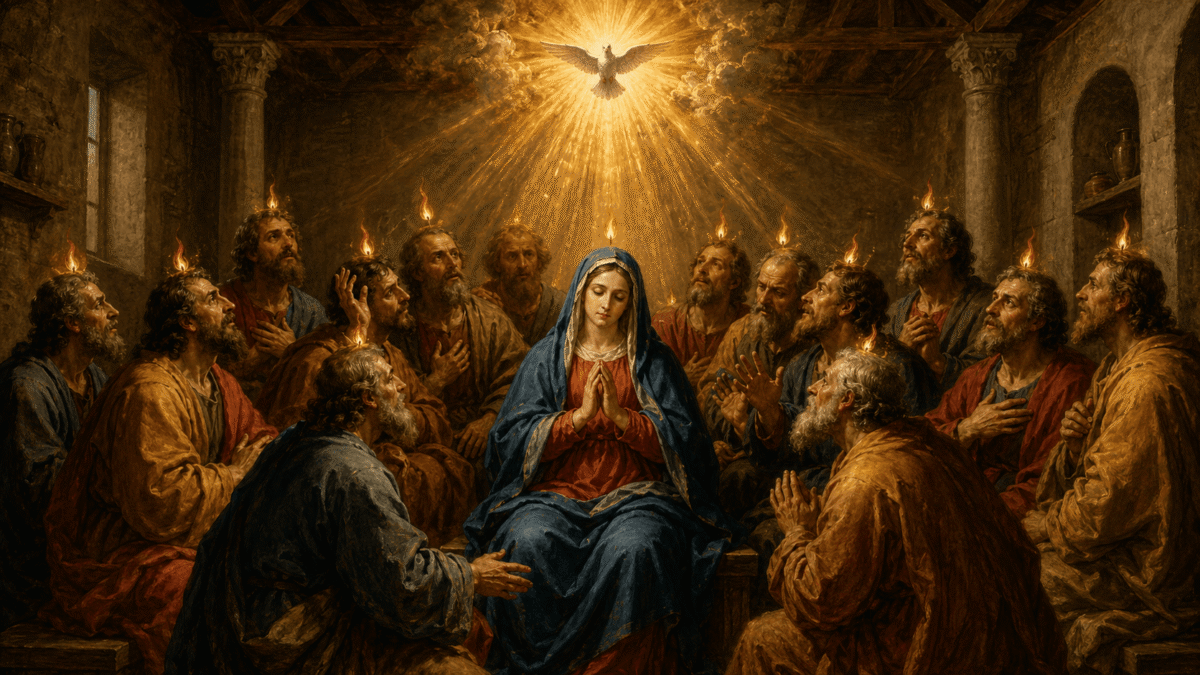
Dixit Dominus: Maria, Rainha do Universo
Introdução:
The verse “Dixit Dominus Domino meo: Sede a dextris meis…” (Mk 12,36; Ps 110,1) of Jesus, when challenging his adversaries, presents a profound theological paradox. It questions how the Messiah, being a descendant of David (human origin), can also be his Lord (divine origin). This question opens the door to understanding the unique relationship between Mary and Christ, especially through the title “Mater Domini,” or Mother of the Lord.
I. O Salmo 110 e o Messias Rei-Sacerdote:
The Psalm 110 is a central messianic text in the New Testament, quoted in several gospels (Mk 12,36; Mt 22,44; Lk 20,42-43; Acts 2,34-35;Heb 1,13; 5,6; 7,17). It describes the Lord (YHWH) addressing His Servant, identifying him as David. This dual lordship—God of Israel speaking to a descendant of David—suggests a transcendent dignity in the Messiah.
Jesus, in questioning his opponents, implies that the Messiah, being called “Lord” by David, cannot be merely his human descendant. The divinity of the Messiah is implied so that he can truly be “lord” of David.
II. Maria, Filha de David e Rainha Mãe:
The genealogy of Jesus in Matthew (Mt 1,1-17) and Luke (Lk 3,23-38) establishes his Davidic lineage. Although the New Testament does not explicitly state that Mary is also of the lineage of David, tradition and the apocryphal protoevangelia suggest this.
The title “Gebirah,” or “Queen Mother,” applied to Mary in the tradition of the Old Testament, reflects her role as an intercessor with the King, whose request is granted. This model connects to the typological figure of the royal woman who intercedes for her kingly son, as seen in 1 Kings 2:19-20.
III. “Mater Domini”: Maria, Mãe do Senhor:
The greeting of the angel to Mary (Lk 1,28) and her response (“Yes, I believe”) are the foundation for the title “Mother of God” (Theotokos). The Council of Ephesus (431) defined Mary as “Mother of God” due to the divinity of Jesus, whom she conceived.
The paradox of Mk 12,35-37 – being at the same time son of David and Lord of David – finds its resolution in the Incarnation. Mary, being human and divine, is the bridge between the divine and the human, uniting the two poles of the mystery of the Incarnation.
IV. Maria Rainha à Direita do Pai:
The “Dixit Dominus” (Ps 110,1) prophesies that the Messiah will be “seated at my right hand.” This position of highest honor is fulfilled by the risen and ascended Jesus, seated at the Father’s right. Mary, as his Mother and intercessor, shares in this glory, crowned in her Assumption into Heaven (Rev 12,1).
The Coronation of Mary, as one of the Glorious Mysteries of the Rosary, symbolizes her participation in the glory of the Son. Royal mariology expresses Christology, showing that the Queen Mother intercedes for humanity with the authority of one who is beside the Son.
Conclusão:
Mary, as the “Mother of the Lord,” embodies the paradox of Christ’s divinity and humanity. Her unique position as Mother of the Lord and Queen of the Universe reflects the ultimate glory promised to all who follow the path of Jesus.
Graduate Studies in Mariology
Desire to deepen your formation in Mariology? Discover the Graduate Studies in Mariology from Locus Mariologicus – an academic formation that combines theological rigor, spiritual life, and the living tradition of the Church.
Would you like to study Mariology seriously?
This article draws on the works of the Locus Mariologicus library. The Postgraduate Programme in Mariology takes you to the same sources with academic guidance: Scripture, the Church Fathers and the Magisterium, from the first dogma to contemporary questions.
Responses