All Saints’ Day and the Assumption
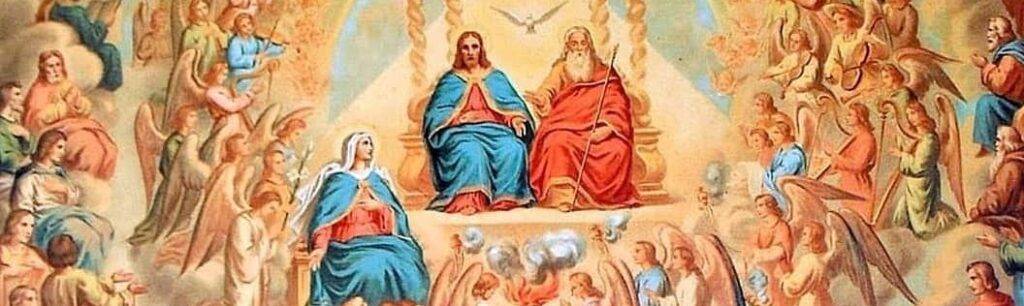
The Assumption of Mary: A Journey of Faith and Spirituality
The doctrine of the Assumption of Mary, proclaimed by Pope Pius XII on November 1, 1950, represents a milestone in the understanding of Christian faith and the veneration of the Mother of God. This article explores the history, theology, and impact of this important Marian celebration.Origins and Challenges of the Doctrine
The belief in the Assumption of Mary dates back to the early centuries of Christianity. However, its dogmatic formulation was not a simple process. Initially, popular representations of Mary were often legendary, associating her with various celestial locations. These narratives, while expressing deep devotion, lacked theological precision.The first Christians sought ways to express the intimate association of Mary with the glorious triumph of her Son, Jesus Christ. Theological reflection over the centuries developed and purified these representations, leading to the dogmatic definition of the Assumption. This process involved the collaboration of the entire Church, reflecting the collective wisdom of the Christian faith.Dogmatic Definition: Body and Soul in Heavenly Glory
The definition of the dogma of the Assumption uses careful terms to avoid the idea of a simple transfer from one place to another. Instead, it states that Mary was “assumed body and soul into heavenly glory.” This formulation emphasizes the spiritual nature of heaven, not as a physical location but as a state of perfection and communion with God.The Assumption represents the culmination of Mary’s earthly life, where she is elevated to full union with Christ and with the angels. It is a celebration of victory over death and sharing in eternal glory. The dogmatic definition ensures that the memory of Mary is maintained with dignity and theological precision in the Catholic tradition.Relation to All Saints’ Day
The feast of the Assumption is closely linked to the celebration of All Saints, which occurs the following day, November 2nd. While the Assumption honors Mary’s bodily ascent into heaven, All Saints celebrates the universality of God’s people and the communion of saints in eternal life.Pope Paul VI, in his apostolic exhortation “Marialis Cultus,” emphasized the importance of placing Marian feasts within the context of the mystery of Christ. The Assumption, therefore, is not merely an homage to the Mother of God but also a reflection on the victory of life over death and communion with the Creator.Contemporary Impact and Meaning
The dogmatic definition of the Assunção had a profound impact on the spiritual lives of the faithful. It offers a deeper understanding of the nature of heavenly glory and Mary’s relationship with Christ. The feast of the Assumption continues to be a moment of contemplation, prayer, and celebration of Marian faith.In the contemporary era, reflection on the Assumption can encourage Christians to seek a spiritually elevated life, imitating the purity and holiness of Mary. Furthermore, the doctrine reinforces the importance of the memory of the saints and the communion of the faithful in eternal life.Advanced Study
For those interested in deepening their studies on Mariology and Marian Theology, there are several options: – Mariology: A field of study that explores the doctrine and veneration of Mary in the Christian tradition. – Marian Theology: Focuses on the theological understanding of Mary, her position in the economy of salvation, and her relationship with Christ. – Marian Apparitions: Investigates the various appearances of Mary throughout history and their implications for faith. – Postgraduate Studies in Mariology: An advanced academic program that offers an in-depth exploration of Marian theology and its applications in the life of the Church.The Assumption of Mary is a rich and complex theme, inviting the faithful on a journey of faith, contemplation, and celebration. By exploring its history and theology, we can deepen our understanding of the Mother of God and her role in the mystery of salvation.Graduate Studies in Mariology
Wishing to deepen your formation in Mariology? Discover the Graduate Studies in Mariology from Locus Mariologicus, an academic formation that combines theological rigor, spiritual life, and the living tradition of the Church.
Would you like to study Mariology seriously?
This article draws on the works of the Locus Mariologicus library. The Postgraduate Programme in Mariology takes you to the same sources with academic guidance: Scripture, the Church Fathers and the Magisterium, from the first dogma to contemporary questions.
Responses