Clement of Alexandria: hope in the formation of the true gnostic
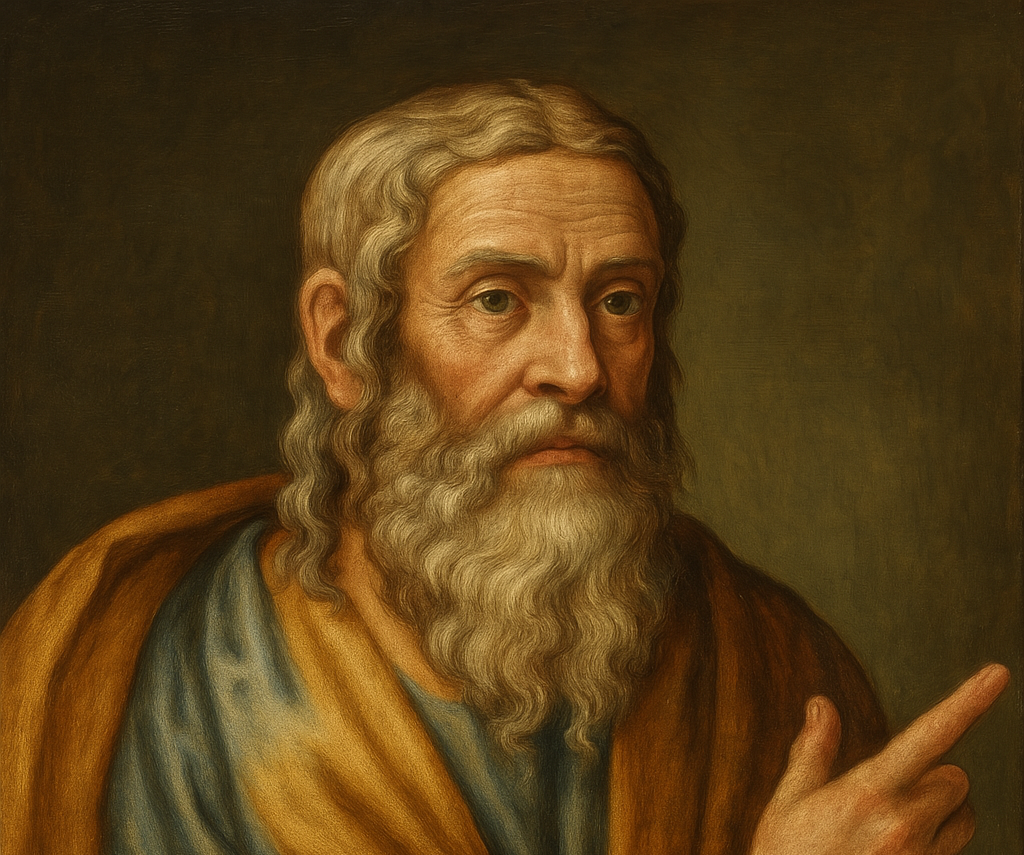
Clement of Alexandria, one of the Church Fathers, offers a profound and multifaceted vision of hope within Christian spirituality. His work, particularly the Stromata, reveals a sophisticated understanding of the role of hope in the life of the faithful, from baptism to gnostic realization. This article explores Clement’s perspective on hope, highlighting its importance throughout the path of holiness.
A Esperança e a Tradição Cristã
Hope, for Clement, is a dynamic virtue that transcends mere expectation. He positions it as a crucial link between initial faith and perfect love, influencing the entire spiritual journey of the Christian. This view is consistent with the philosophical and biblical traditions that shaped his thought, including Plato, the Stoics, and Sacred Scripture.
Dimensões da Esperança em Clemente
Clemente distingue duas dimensões na esperança:
- Escatológica: Envolve a expectativa futura da bem-aventurança, onde o fiel almeja a realização completa do Reino de Deus.
- Presente: Refere-se à realização antecipada do bem, onde a esperança se manifesta como uma confiança firme em Deus que transforma a vida diária do fiel.
A Esperança e o Caminho Espiritual
Clement describes a spiritual path that begins with baptism and culminates in the realization of gnosis. Along this journey, hope plays fundamental roles:
- Foco no Divino: O fiel, desde o início, deposa sua esperança em Deus, evitando ídolos mundanos (Stromata 4, 160).
- Arrependimento e Paciência: A esperança está ligada ao temor inicial e à paciência, guiando o indivíduo através do processo de purificação e autodomínio (Stromata 2, 108; 4, 41).
- Integridade Espiritual: A esperança não é isolada da fé e do amor. Ela os complementa e eleva, permitindo que o fiel avance em direção ao amor perfeito (Stromata 5, 14; 7, 77).
- Comunhão Eclesial: Apesar de sua busca pela perfeição individual, o gnóstico permanece em comunhão com a Igreja, compartilhando a esperança comum de todos os fiéis (Stromata 7, 78).
A Esperança e o Gnóstico Perfeito
The perfect gnostic, according to Clement, is not someone who completely transcends the ecclesiastical community but rather an individual who attains a higher degree of communion with God. Even in this advanced state, the gnostic still “places all hope” in God (Stromata 7, 67). This hope is not static but a living and dynamic trust in the Divine, which guides him in his quest for supreme truth and love.
Conclusão: A Esperança como Virtude Integradora
The perspective of Clement of Alexandria on hope reveals an integrating virtue that permeates the entire spiritual path. He does not treat it as an abstract concept but as a living force that sustains the progress of the faithful. Hope, in his view, is fundamental to the transformation of Christian life, from baptism to gnostic realization and beyond.
To explore more deeply the Marian theology and the associated hope, it is recommended to read the Encyclical *Redemptoris Mater* by Pope John Paul II, which offers valuable insights into the relationship between the Virgin Mary and redemption through hope.
Graduate Studies in Mariology
Do you wish to deepen your formation in Mariology? Discover the Graduate Program in Mariology from Locus Mariologicus – an academic formation that combines theological rigor, spiritual life, and the living tradition of the Church.
Also see: Patristic Mariology: The Fathers of the Church and Mary (2nd-8th Centuries)
📖 Seriously interested in studying this? Check out the Graduate Program in Mariology from Locus – a rigorous academic formation for theologians, priests, religious, and laity.
Responses