Canean Wedding and Calvary Archaeology and Truth
Wedding at Cana
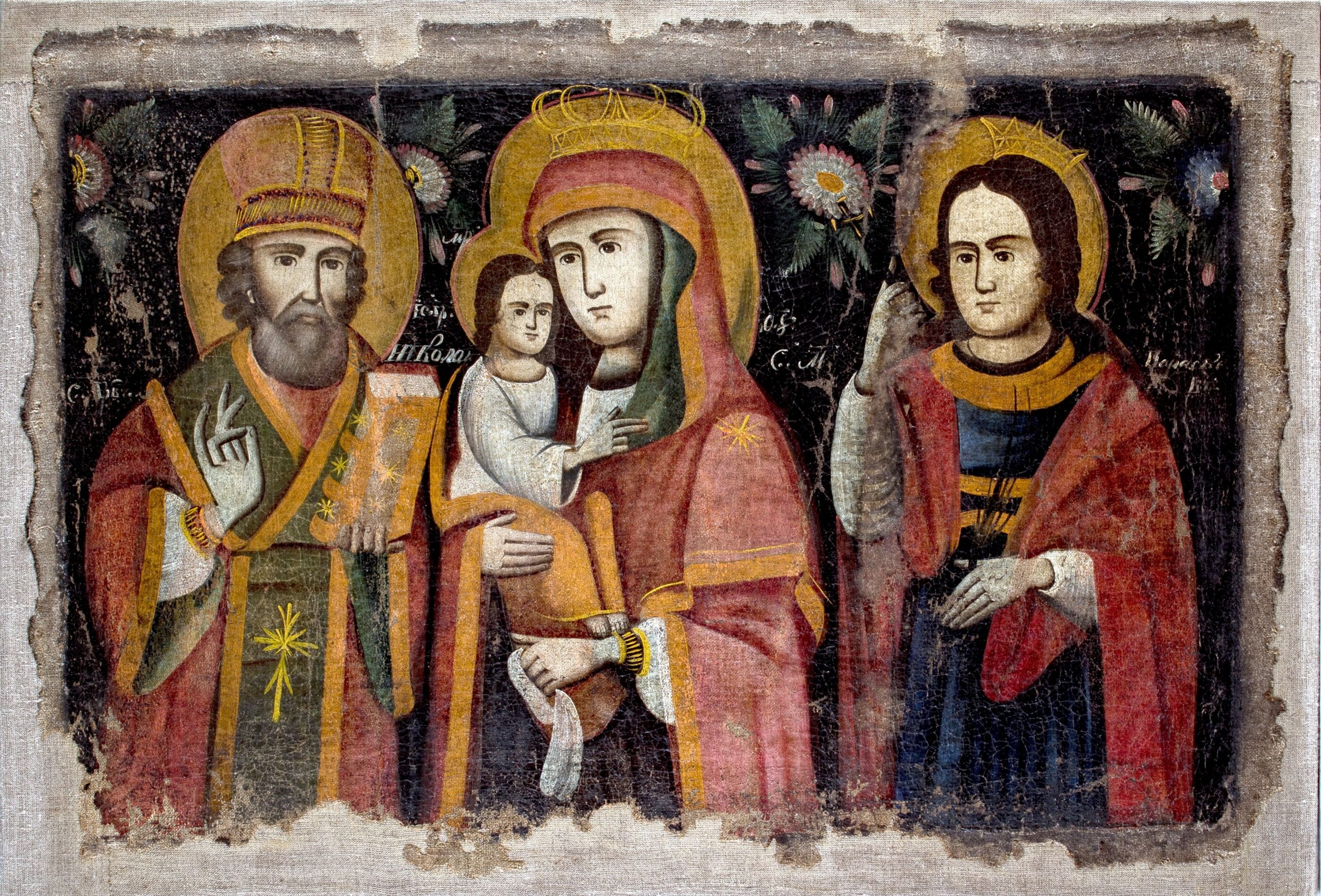
Let us consider Cana, also associated with the memory of Jesus’ first miracle, in which His Mother was present. Three locations vied for the honor of being the evangelical setting of Jn 2,1-12: Khirbet Qana, Khirbet Kenna, and Kefr Kenna. Recent criticism has identified Cana with Kefr Kenna. Studies on still visible architectural elements, occasional excavations, regular archaeological campaigns, ceramics, numismatics, mosaics found, and Byzantine literature contribute to this identification.The evangelical Cana dates back to the Bronze Age and endures to this day, still inhabited and located on the road between Nazareth and Tiberias. Jesus’ period is attested at the site with a coin of Herod I and another of Titus from the years 80-81. There is also a jar with a spherical body and well-fired walls. The best-documented period is that of the third-fourth centuries. There are two vast buildings, separated by a corridor leading to a courtyard paved with stones of various sizes. The walls are built with beautiful stones featuring a prominent smooth bossage, likely reused. These buildings were probably visible until the eighteenth century.Bellarmino Bagatti dated the main building to the third century, comparing it with elements reused in the Franciscan church or others discovered occasionally. For the scholar, this is a Judeo-Christian synagogue parallel to that of Nazareth. Evidently, there were three types of columns: large, medium, and small, used for the matroneum and ornamentation. There were two types of cornices and three doors on the facade. Finally, there were mosaics with floral motifs in a cross, common in Judeo-Christian sites, and a marble fragment from an altar table with its small supporting column, indicating its Christian nature. On it, probably, the Lord’s Table was preserved, as in Nazareth and, as we shall see, in Tabgha. Nearby, Christ participated in the Wedding at Cana.A famous Aramaic inscription speaks of a “tábula,” referring to the pure meal and the ‘azkarat. Other occasional discoveries have allowed the reconstruction of the history of Mount Karm er Ras, inhabited since the Hellenistic period, where elements of a second synagogue and a cave were found where Jews prayed and danced. Presumably, in Cana there were two neighborhoods and two synagogues, one Jewish and another Judaeo-Christian, as in other places.Calvary
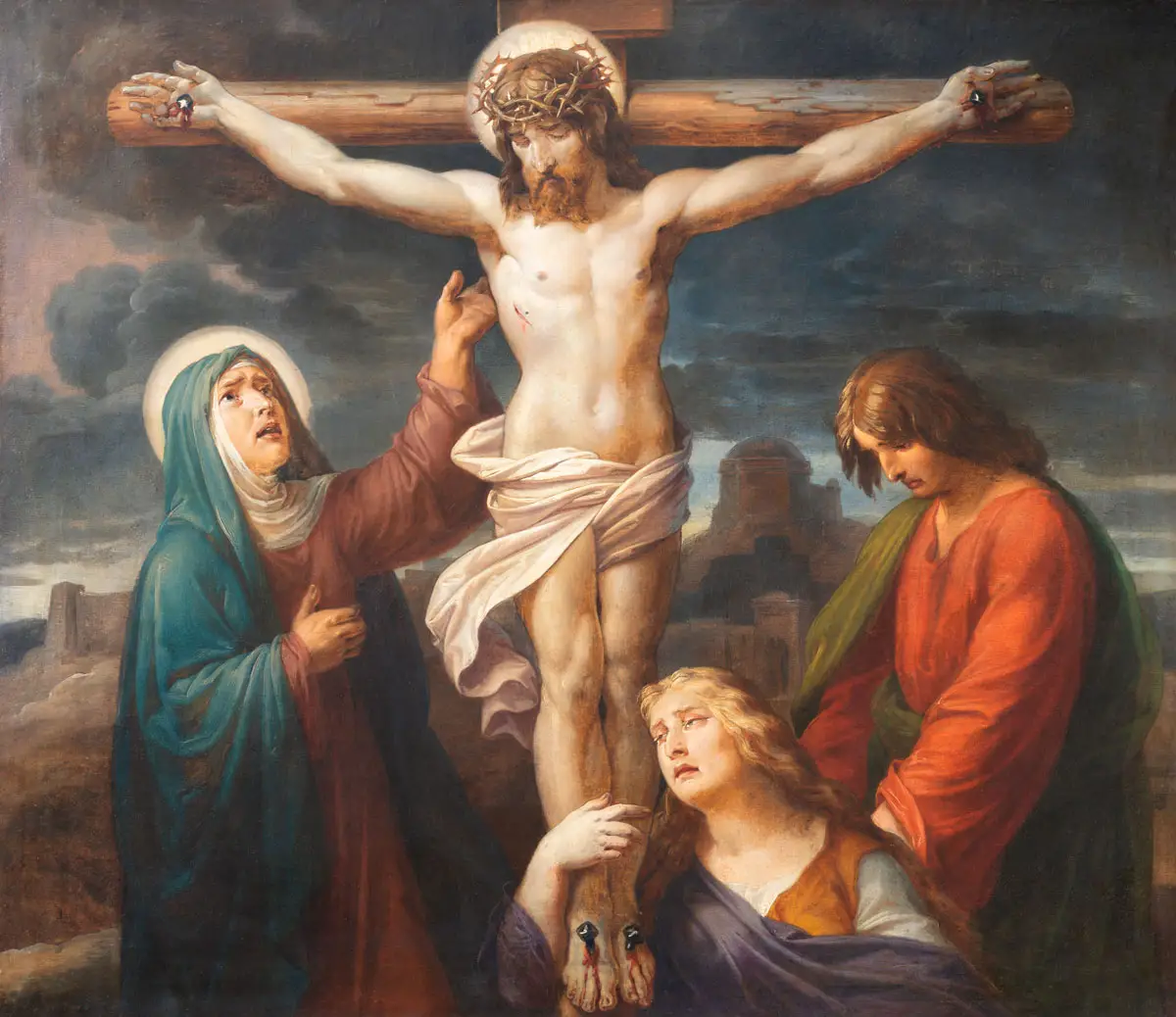
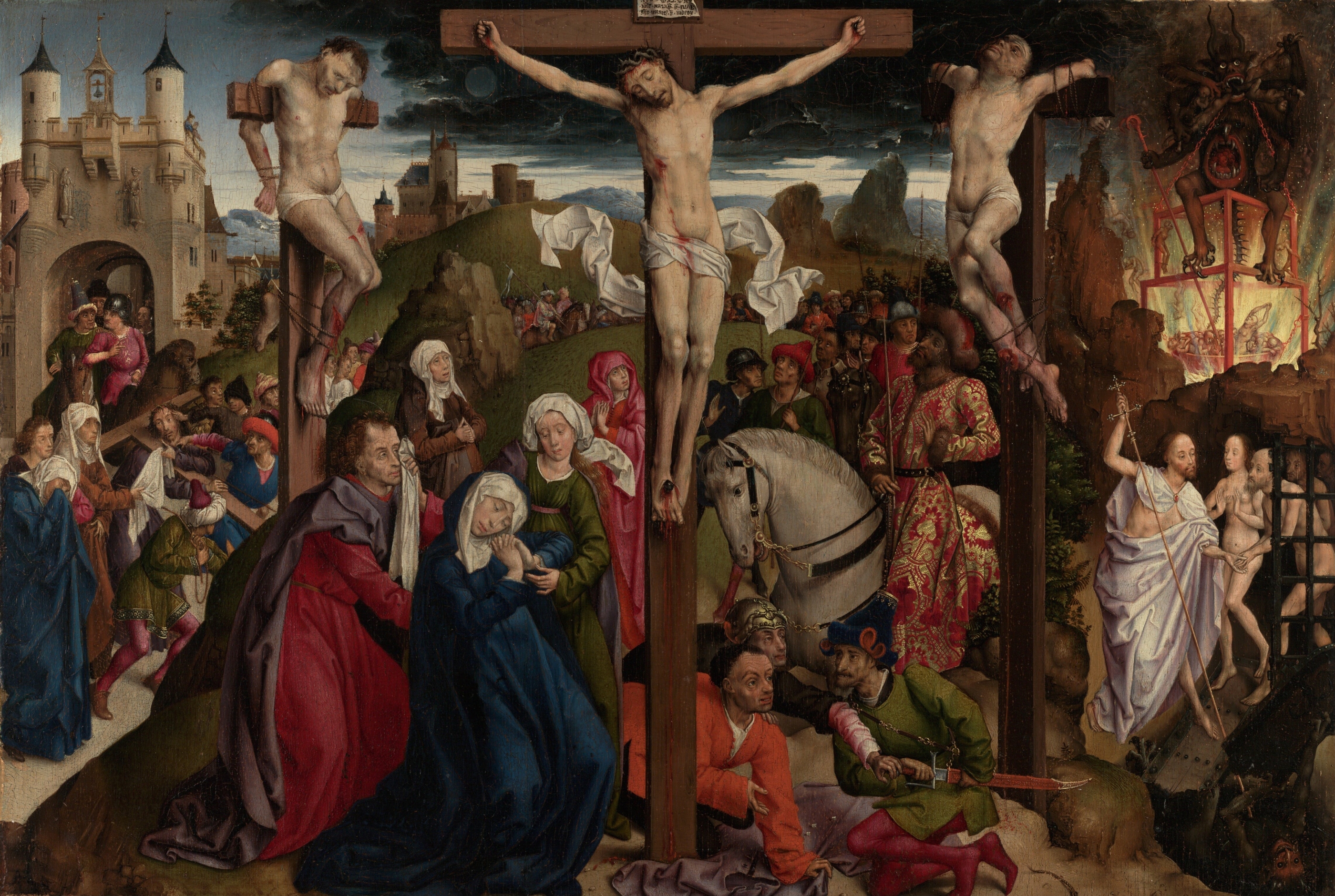
Now, let us focus on the sites of Christ’s Death, where Maria was also present, namely Golgotha with the Holy Sepulchre. N. Avgad identified the gate crossed by Jesus to reach the place of his suffering, called the Garden Gate. It was located where the Second Wall separated from the First and led into a space between them, in the corner where there was a quarry that protected the Second Wall to the west. Here, Herod the Great planted a garden, but the workers left intact a very fragile stone block, not levelable, which was precisely Golgotha, upon which several debris accumulated, transforming it into a skull-shaped hill, from which comes its Hebrew and Latin name (Calvary). To the north of Calvary there was a private garden with some aristocratic tombs carved into the rock, among which that of Joseph of Arimathea became Christ’s occasional sepulcher. This was carved into the living rock. Composed of an antechamber and a burial chamber with a long shelf in the funeral niche, the tomb was closed by a circular stone, rollable along a kind of track.The surrounding graves attest to the veracity of the location: a cemetery with Jewish tombs and sarcophagi. A tomb today under the Coptic monastery. A burial area under the Syrian chapel, now cut in half by the Constantinian Basilica. Such tombs existed before 42 AD, when Herod Agrippa I (37-44) incorporated them into the city with the Third Wall, effectively preventing the creation of new sepulchers. At the time of Jesus, therefore, Golgotha was outside the city.For a period, scholars spread the theory that this was not possible, then Charles Gordon identified the Holy Sepulchre at the site of the es-Sahra hill, with the so-called “Garden Tomb”, which today is no longer considered by anyone. The area has been extensively excavated. The Mount of Golgotha, carved from a single block of rock five meters high and six wide, is visible on the surface covered in mosaics and divided into two chapels by columns.The five-aisled basilica was built later. On the eastern side, it was preceded by an atrium accessible from the ancient forum through three doors, some parts of which are still preserved in the Russian Monastery of the Muristan, which once served as a hospice for pilgrims. The current layout is cruciform, corresponding to the church erected and consecrated in 1149. It connected the Rotunda to a Romanesque church that also included Calvary.Mary’s Presence at the Wedding at Cana and at Calvary
Regarding Mary’s presence at these wedding festivities and at Calvary, consult Pope John Paul II’s encyclical *Redemptoris Mater*, which offers profound theological insights into these significant events.Graduate Studies in Mariology
Wishing to deepen your formation in Mariology? Discover the Graduate Studies in Mariology from Locus Mariologicus, an academic formation that combines theological rigor, spiritual life, and the living tradition of the Church.
Responses