Mary in the Bible: from Genesis to Revelation

Mary in the Bible: From Genesis to Apocalypse
The foundation of Mariology is biblical. The testimonies of the New Testament about the mother of Jesus, read in chronological order, allow us to see how the inspired authors recognized the person and role of Mary throughout salvation history: from her prefigurations in the Old Testament to her maternal mission regarding Christ and the Church.Paul: The First Marian Testimony of the NT
The first Marian reference in the New Testament is found in Galatians 4:4 (c. 49-57 AD): “When the fullness of time had come, God sent his Son, born of a woman, born under the law.” The mention of Mary is subtle, almost incidental, but extremely significant. “Born of a woman” positions Mary as the mediator of the incarnation of the Son of God in humanity. The “fullness of time” marks the definitive stage of the redemptive plan: Christ is the apex (omega) of the salvific plan. Exactly at this culminating point stands Mary, who clothes the Son with our flesh and blood (Heb 2,14). Galatians 4:4 represents only the beginning of Marian doctrine, developed throughout the other books of the New Testament.Mark: Mary and the True Family of Jesus
Mark refers to the mother and brothers of Jesus in Mark 3:20-21.31-35: they come to “take him” because “he is out of his mind.” Jesus responds: “Whoever does the will of God, that person is my brother, sister, and mother.” Modern exegesis demonstrates that this text is not anti-Marian. Mark describes the initial phase of Mary’s faith: a mother humanly concerned about her son’s fate. The evangelist’s deeper purpose is to show that even carnal kinship with the Lord is insufficient to follow him with the proper dispositions. To be a true family member of Jesus, one must “do the will of God” (Mk 3,35). Luke will expand this idea, showing that Mary traveled this path exemplarily.Matthew: The Genealogy and the Virgin Conception
Matthew begins his gospel with the genealogy of Jesus (Mt 1,1-17), highlighting four women: Tamar, Rahab, Ruth, and Bathsheba. Each of them performed providential actions for the lot of Israel. Matthew thus suggests that the conception of Jesus by Mary represents a new phase, indicated by the actions of these women. The genealogy culminates in Mt 1,16: “No, Joseph was not the father of Jesus… but, Joseph, husband of Mary, from whom was born Jesus called Christ.” The virgin conception, operated by the Holy Spirit (Mt 1,18-20), is the “new creation”: Jesus is the new Adam, and the womb of Mary is the new virgin earth from which the Spirit shapes the head of the new humanity. Matthew re-reads Isaiah 7:14 in light of fulfillment: “Behold, a virgin shall conceive and bear a son” (Mt 1,22-23).Luke: From the Annunciation to Pentecost
Luke is the Marian evangelist par excellence. The Annunciation (Lk 1,26-38) presents Mary as the “daughter of Zion”: the angel’s announcement takes up the prophetic oracles of joy directed at Jerusalem (Zeph 3,14-17; Zech 2,14-15), which Luke transposes to the person of the Virgin. In Nazareth, God fulfills in advance the promises made to Abraham and his descendants (Lk 1,49a.54-55). In the Visitation, Mary brings Christ to Elizabeth and John, becoming the model of every Christian mission. The Magnificat is her prayerful response, a synthesis of the spirituality of the poor of Israel.In childhood, Luke highlights Mary’s meditative faith: “she kept all these things in her heart” (Lk 2,19.51). The Fathers saw in this expression the apostolic source for the events of Jesus’ human incarnation. Simeon’s prophecy points to the drama of the Son’s mission: “a sword will pierce your soul” (Lk 2,35). In Acts 1,14, Mary is present in the Upper Room with the apostles awaiting Pentecost: the Annunciation and Pentecost share the same language of the Spirit that “comes down upon” and the “power of the Most High,” demonstrating that Mary and the Church are moved by the same pneumatic dynamism.John: Cana and the Cross
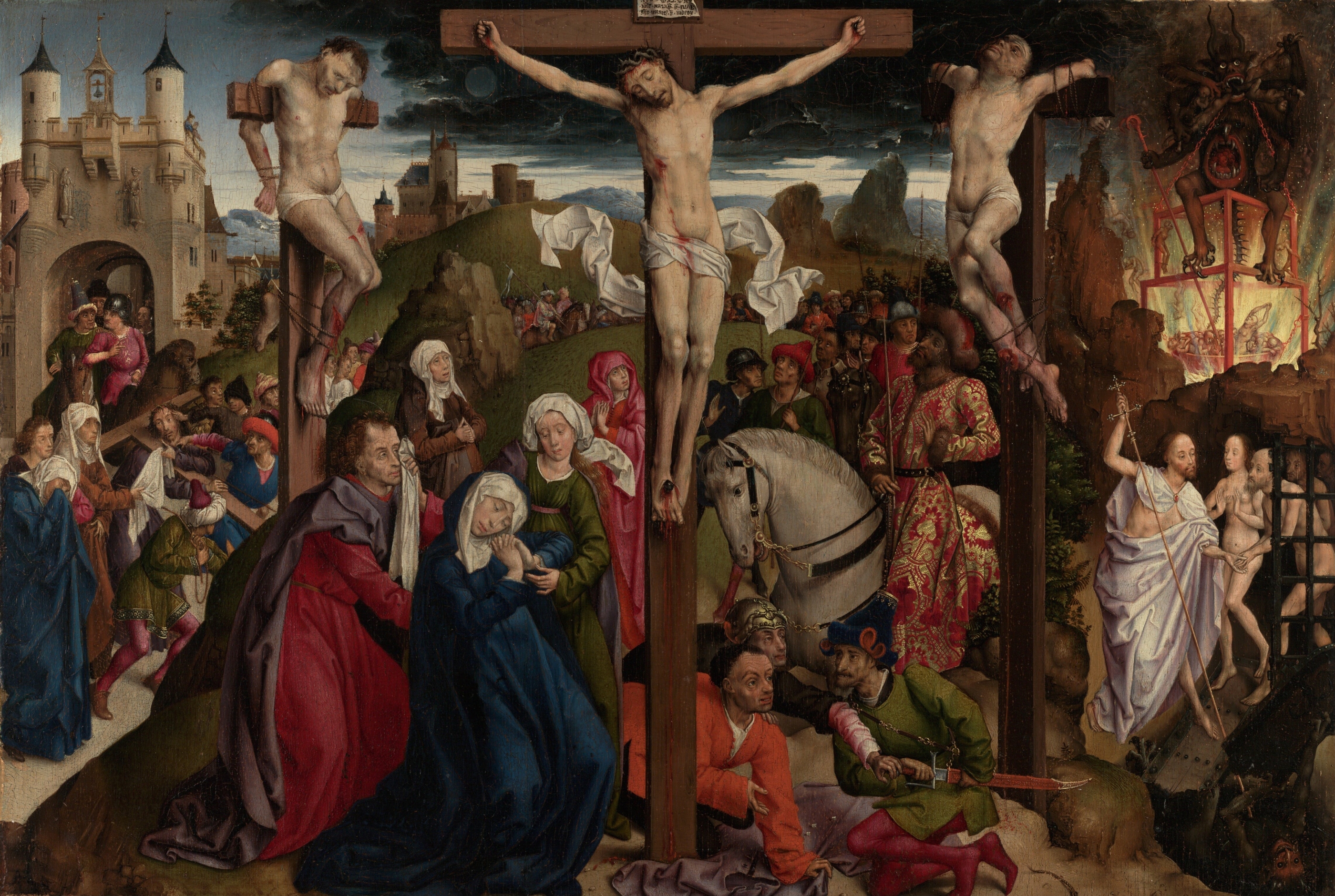
John records Mary only twice, but at crucial moments: the wedding at Cana (Jn 2,1-12) and the Cross (Jn 19,25-27). These two episodes form a great inclusion: in both, Jesus calls Mary “woman” and the hour of his mission is present. At Cana, Mary intercedes: “They have no more wine.” Jesus’ response (“What does this have to do with me, woman? My hour has not yet come”) is not a refusal but a postponement of the sign. Mary replies: “Do whatever he tells you” (Jn 2,5), words that summarize the program of Christian life. The first miracle of Jesus awakens the incipient faith of the disciples. At the end of the episode, Mary, her brothers, and the disciples form one group around Jesus: the messianic community united in faith.On the Cross (Jn 19,25-27), Jesus says to His mother: “Woman, behold your son,” and to the beloved disciple: “Behold your mother.” Here is the biblical foundation of the title Mary, Mother of the Church. The “great vision” of Revelation (Rev 12) shows a Woman clothed with the sun, with the moon under her feet and a crown of twelve stars on her head, in labor pains, pursued by the dragon. Contemporary exegesis sees this Woman as the People of God of the Old and New Testaments: she brings forth the Messiah in history and is persecuted by Satan. However, the mariological interpretation extends to see in the Woman the pilgrim Church and, in the Assumption, the eschatological destiny of all the People of God.Magisterium of the Church
“Ipsa conteret caput tuum (Gn 3,15): haec prophetia ‘Proto-evangelium’ vocatur et in Maria adimpletur iuxta traditionem patristicam.” (Cf. Second Vatican Council, Dogm. Const. Lumen Gentium, n. 55)She will crush the head of the enemy (Gn 3,15): this prophecy is called the “Proto-gospel” and is fulfilled in Mary according to the patristic tradition.Graduate Studies in Mariology
Wishing to deepen your formation in Mariology? Discover the Graduate Studies in Mariology from Locus Mariologicus – an academic formation that combines theological rigor, spiritual life, and the living tradition of the Church.
Would you like to study Mariology seriously?
This article draws on the works of the Locus Mariologicus library. The Postgraduate Programme in Mariology takes you to the same sources with academic guidance: Scripture, the Church Fathers and the Magisterium, from the first dogma to contemporary questions.
Responses