The archaeology of Bethlehem’s house
The Archaeology of Bethlehem and the Birth of Mary and Jesus
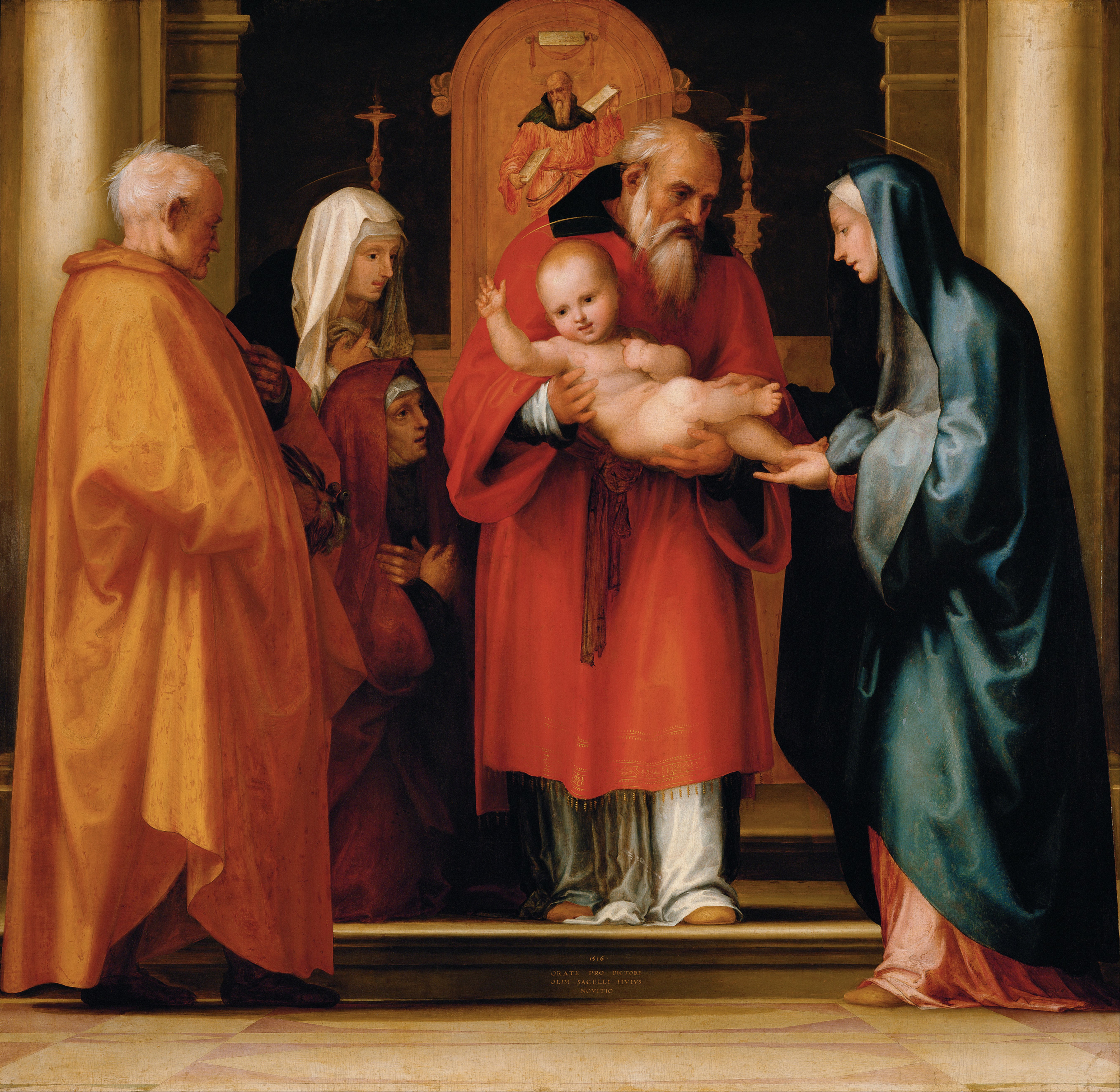
There are reliable references to the narrative of Matthew (cc.1-2) and Luke (2, 1-40) about the Birth of Jesus in Bethlehem. In these sources, the place of Birth is described as a house, a manger, and a cave. Matthew mentions a house where the Holy Family lived before the Adoration of the Magi and the subsequent Flight to Egypt. Luke emphasizes that the Holy Family was in Bethlehem only because of the Census of Quirinius and that their Firstborn was born in a manger, as there was no room in the guest room for the visitors. From this, it can be deduced that the house where they stayed belonged to relatives and that, due to the Census itself, also had other guests, who evidently left soon after fulfilling the census formalities, while the Holy Family remained in the city at least until the Presentation of the Child in the Temple and for the Purification of the Mother (unless Joseph wanted to re-establish his residence in Bethlehem, as suggested by Matthew), until receiving the unexpected visit of the Magi, followed by the Flight due to the unexpected persecution of Herod. This coincides with the news of the Bethlehemite origin of the House of Joseph, being he of Davidic birth. It also coincides with what is attested by Jn 1,11 and 7,5, where it is read that the people closest to Christ, evidently through blood ties, “his own,” did not recognize him, attributing to his Mother the most marginal place in the already poor dwelling to give birth, despite the care that the state of pregnancy would have deserved. The news of the manger is highlighted by Luke, as he sees in it the fulfillment of two messianic prophecies of the Old Testament: Is 1,3 and Ob 3,2 according to the LXX. In the Protoevangelium of James, a very interesting historical source, although apocryphal and not free from legendary overlays, we read that the Holy Family, going to Bethlehem for the Census, halfway there, at the fifth mile from Jerusalem, between the territories of the tribe of Judah and the tribe of Benjamin, near Rachel’s Tomb, in a deserted place, in the area of Ephrathah, had to stop because Mary had reached the moment of childbirth. This occurred in a cave, defined as subterranean and dark.
We should deduce that the house of the Davidics in Bethlehem was somewhat outside the settlement and that some of its rooms were adapted from natural caves. The Palestinian Fathers harmonized the data, and Justin united the manger with the cave. In the same line followed Origen. Eusebius harmonizes Bethlehem with Ephrathah.
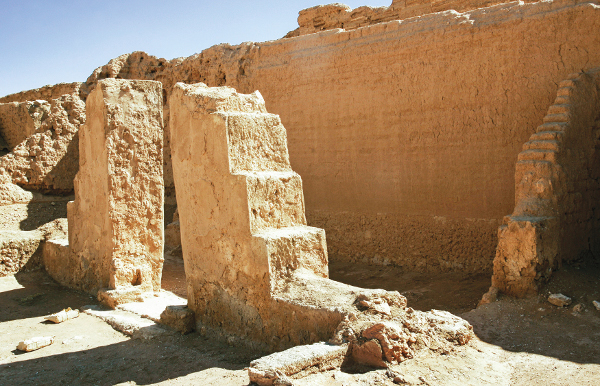
Archaeology has provided the appropriate evidence, as readers familiar with New Testament issues already know. Above all, it is worth mentioning that even in Nazareth houses have been found that inform us very well about their layout at the time of Christ. The famous “House of the Capitals,” discovered by Father Viaud, has four rooms, separated by a central corridor that divides the guests’ area from the owner’s area. Here are the family room and the storage space. In the other part, a small entrance hall and the living room, attached to an oven and a cave, used as a stable for the animals. Evidently, the house, the cave, and the manger can be easily identified, with the last two terms indicating a natural environment with a dual function of use. Luke, in fact, speaks of the katályma, that is, the guests’ room, and not of a public inn, for which in 10:34 he uses the appropriate term. Precisely this room was connected to the cave functioning as a stable.
This house-cave-stable was a place of worship for the Judeo-Christians, who established there a domus ecclesiae. This worship is mentioned by Justin. It was desecrated by Hadrian, who, in the context of eradicating Jewish worship, also persecuted the Judeo-Christians, replacing the celebration of a pagan mystery with that of the Christian one. He erected a temple in honor of the lamentations of Venus and the apotheosis of Tamuz-Adonis, with an adjacent sacred grove. This is attested in literary sources by Origen, Jerome, and Cyril. However, as attested by Origen himself, the veneration for the Cave of the Nativity continued. The same news is given by Eusebius, even before the place was re-Christianized. After one hundred and eighty years of desecration, the site was recovered by Constantine, who, after the inspection carried out at the site by his mother Helena (248-329) in 326, built a basilica with a polygonal apse, a central altar topped by a baldachin, columns separating the naves, and a platform in front of the presbytery, from which one descended into the cave, whose manger was covered with precious materials. The height of splendor was reached with Justinian, who, after the damage inflicted on the Constantinian buildings by the Samaritan rebellion of 529, built a basilica that, in general lines, still exists today.
Surviving the devastation of the Persians in 614, due to the representation of the Magi, their compatriots, in the mosaic at the entrance, and the fury of El-Hakim for having been used as a mosque to venerate the birth of the prophet Isa Ben Yousuf (Jesus Son of Joseph), Bethlehem also avoided the Crusader plunder with a wise surrender to Tancred on his march to Jerusalem. The Crusaders embellished the church and annexed an Augustinian convent. The Basilica of the Nativity then assumed the appearance of a fortress that it still retains today. One enters through a single low doorway, as the three portals were walled up to prevent profanations with horseback entries by infidels.
After the dark narthex and beyond a decaying door, one enters the majestic Basilica of the Nativity. At the place where Mary gave birth to Baby Jesus, there is a stone manger, considered the holiest point of the complex. Around the basilica, there are various chapels that tell different aspects of the Birth of Christ and the life of the Virgin Mary.
Deepen your studies: explore Mariology, Marian Theology, Marian apparitions and the Postgraduate in Mariology.
To deepen your reflection on Mary and the historical context of Bethlehem, consult Pope John Paul II’s Encyclical Redemptoris Mater.
Post-Graduate Program in Mariology
Want to deepen your formation in Mariology? Discover the Post-Graduate Program in Mariology from Locus Mariologicus – an academic formation that combines theological rigor, spiritual life, and the living tradition of the Church.
Responses