On the Rosary: The Perspective of the Holy Fathers.
Introdução
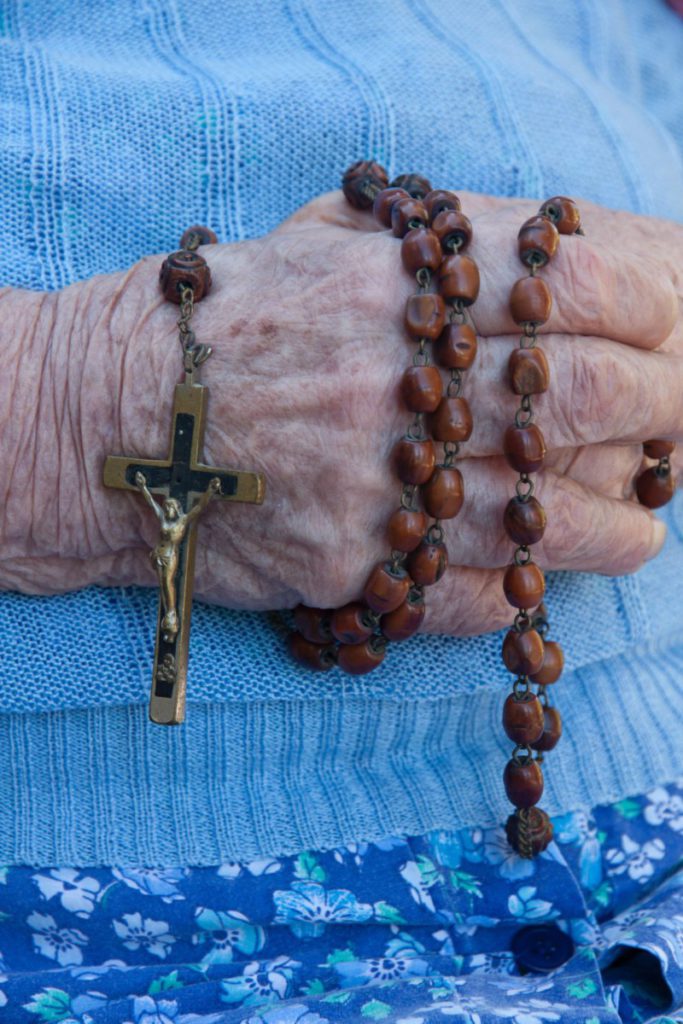
Over the centuries, the Holy Fathers have never ceased to reference the Rosary, highlighting its importance in the life of the Church. This article seeks to explore the evolution of understanding about the Rosary through the contributions of various popes, from Pius V to John Paul II.
Pio V (1566-1572)
Saint and Dominican, Pius V is known as the “Pope of the Rosary.” In 1569, with the bull *Consueverunt Romani Pontifices*, he defines the Rosary as:
“…a pious way of praying to God, an easy way that everyone can perform, which consists in praising the Blessed Virgin by repeating the angelic greeting one hundred and fifty times, as many as the psalms of David, dividing each decade with the Lord’s Prayer, along with certain meditations that illustrate the entire life of Our Lord Jesus Christ.”
Pio V enfatizou o Rosário como uma oração poderosa para superar dificuldades, calamidades e perigos, acessível a todos.
Gregório XIII (1572-1585)
The successor of Pius V, Gregory XIII, with the bull Monet Apostolus (1573), established the solemn feast of the Rosary on the first Sunday of October. Subsequent papal documents reinforced the importance of the Rosary, granting privileges and indulgences to confraternities dedicated to prayer.
Clemente VIII (1592-1605)
Pope Clement VIII, in his bull Salvatoris et Domini (1593), reaffirmed the value of the Rosary in extirpating heresies and preserving peace among Christian princes. He emphasized that the Rosary is “like an exaltation of the Catholic faith”.
Leão XIII (1878-1903)
Pope Leo XIII had a significant influence on the crystallization of the Rosary in the Christian prayer experience. In 12 encyclicals and two apostolic letters, he explored rosarian themes, encouraging the recitation of the Rosary to overcome aversion to sacrifice and suffering, and to contemplate the mysteries of the life of Christ, Mary, and the Saints.
Pio XI (1922-1939)
Pius XI, in his encyclical Ingravescentibus malis (1937), invites to prayer of the Rosary in the hour of danger, especially to the “Queen of Heaven,” to arouse evangelical virtues and revive hope and charity.
Pio XII (1939-1958)
Pio XII dedicou uma encíclica e oito cartas ao Rosário, descrevendo-o como:
“…synthesis of the entire Gospel, meditations on the mysteries of the Lord, the evening sacrifice, the crown of roses, the hymn of praise, the family prayer, the compendium of Christian life, the sure pledge of heavenly favor, the prison for the hope of salvation.”
João XXIII (1958-1963)
John XXIII, in opening the Second Vatican Council, also emphasized the importance of the Rosary in several encyclicals and speeches. In Grata Recordatio (1959), he speaks about devotion to the Rosary during the month of October, describing it as “an excellent way of meditated prayer”.
Conclusão
The journey through history reveals the constant importance of the Rosary in Christian spirituality, shaped and enriched by saints and popes over the centuries. For a deeper understanding, explore John Paul II’s encyclical Redemptoris Mater on Mary in the mystery of Christ and the Church.
Graduate Studies in Mariology
Would you like to deepen your formation in Mariology? Discover the Graduate Studies in Mariology from Locus Mariologicus, an academic formation that combines theological rigor, spiritual life, and the living tradition of the Church.
Learn how to pray the Rosary in our guide: How to Pray the Rosary, step by step.
Would you like to study Mariology seriously?
This article draws on the works of the Locus Mariologicus library. The Postgraduate Programme in Mariology takes you to the same sources with academic guidance: Scripture, the Church Fathers and the Magisterium, from the first dogma to contemporary questions.
Responses