The voice of silence and the waters of fear: Isaiah 19, Romans 9, and Matthew 14

Quote:
Lord, if it is you, bid me come to you on the water. (Mt 14:28)
Text:
The nineteenth Sunday of Ordinary Time in Year A weaves together three texts exploring human fragility and God’s subtle presence. 1 Kings 19:9a.11-13a recounts the theophany at Mount Horeb: God is not found in the destructive wind, earthquake, or fire, but in a gentle, silent voice. Romans 9:1-5 presents Paul in constant anguish for Israel, who received God’s greatest gifts yet closed themselves off to the Messiah. Matthew 14:22-33 narrates Jesus walking on the water and Peter, daring to follow, sinking with fear. The three texts depict a similar dynamic: God is present where least expected, faith grows in silence not spectacle, and fear is the temptation that sinks those already walking.
I. First Reading: 1 Kings 19:9a.11-13a
Elias, fleeing from Jezebel, arrived at Mount Horeb, God’s mountain, exhausted and disillusioned. The Lord said to him, “Go stand on the mountain before the Lord, for the Lord is about to pass” (1 Kings 19:11). First came a violent wind that shattered the rocks: “But the Lord was not in the wind.” Then an earthquake: “But the Lord was not in the earthquake.” Next fire: “But the Lord was not in the fire.” And then, after the fire, a gentle voice, a soft whisper, a delicate sound. When Elias heard it, he covered his face with his mantle. The theophany at Horeb corrects Elijah’s expectations: the prophet who had brought down fire from heaven (18:38) discovers that God is not the God of spectacle but the God of subtle presence. Mature faith does not seek impressive signs; it learns to recognize God in the voice that noise drowns out.
II. Second Reading: Romans 9:1-5
Paul offers a deeply personal confession: “I tell the truth in Christ, I am not lying; my conscience bears witness in the Holy Spirit” (Rom 9:1-2). The cause is Israel: his brothers according to the flesh. The list of what Israel received is impressive: “adoption as children, the glory, the covenants, the law, the worship, the promises, the patriarchs, and above all, Christ himself, born from Abraham according to the flesh” (v. 4). Paul does not condemn Israel; he weeps for them. Paul’s sorrow is not despair but love for his brothers who reject the gift they do not recognize. This pain challenges the disciple: how does one respond when witnessing others sink, like Peter in the Gospel?
III. Gospel: Matthew 14:22-33
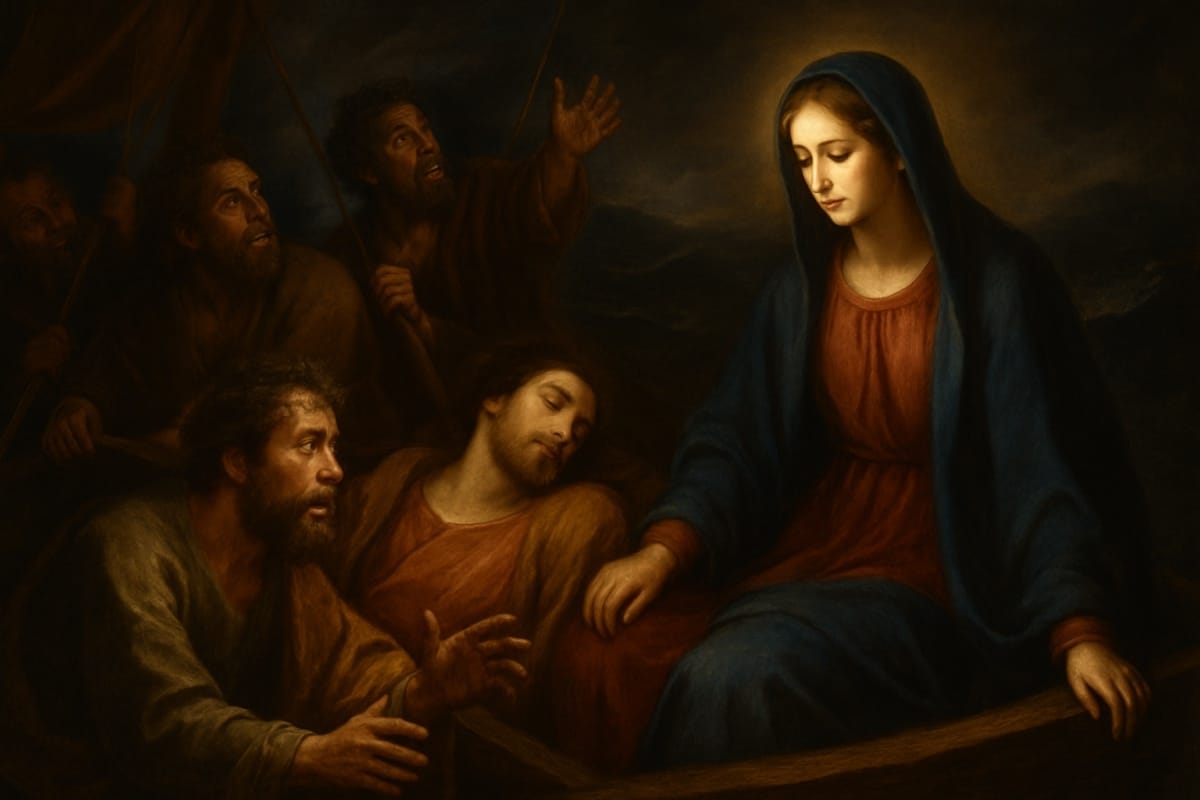
After the multiplication of the loaves, Jesus sends the disciples to get into the boat and goes up onto the mountain to pray. Alone. At the fourth watch of the night, he comes to them walking on the sea. The disciples are terrified, thinking it is a ghost. Jesus says: “Have courage, it is I. Do not be afraid” (Mt 14,27). Peter responds with an audacious proposal: “Lord, if you are, command me to come to you on the water” (v.28). Jesus says: “Come.” Peter steps out of the boat and walks on the water. But when he sees the strong wind, he gets afraid and begins to sink: “Lord, save me!” (v.30). Jesus immediately reaches out His hand, grabs him, and says: “O man of little faith, why did you doubt?” (v.31). When they get back into the boat, the wind calms down. Those in the boat worship him: “Truly you are the Son of God” (v.33). Peter did not fail for lack of courage: he dared to ask the impossible and dared to step out of the boat. He failed when he shifted his gaze from Jesus to the wind. The fear did not come from outside: it came from within, when his attention was diverted.
IV. Mary and the voice of silence
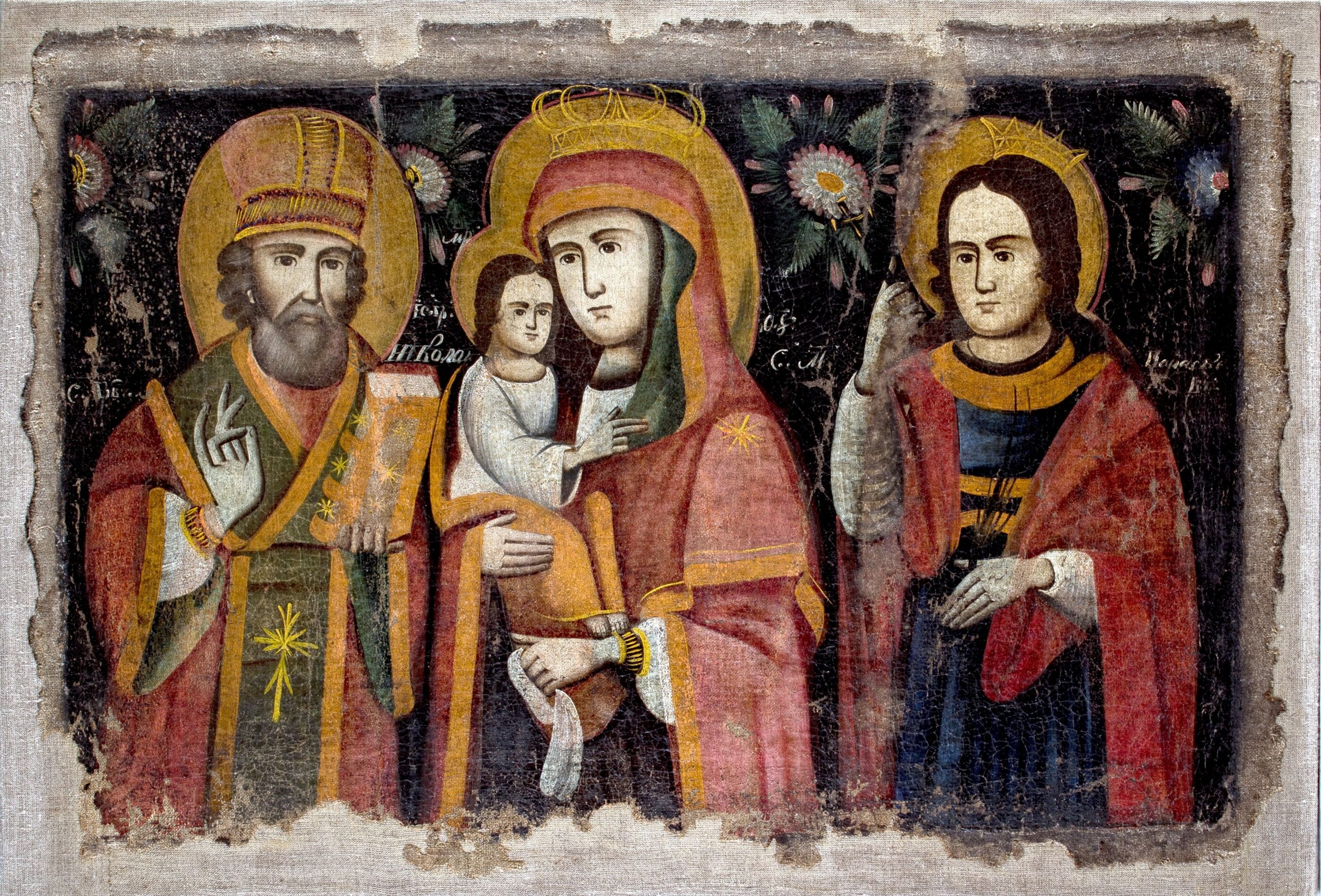
The theophany in 1 Kings 19 takes place in silence: God is not in the wind or fire, but in the gentle breeze. Mary, in tradition, is the figure of silence in which God speaks. Luke repeats twice the same gesture: “Mary kept all these things and pondered them in her heart” (Lk 2,19. 2,51). Mary’s meditation is not passivity; it is the attention that detects the voice of silence when the world makes noise. Peter sank when he looked at the wind; he shifted his focus from the Lord to the spectacle. Mary never shifted her focus: neither when the angel announced the impossible, nor when Joseph wanted to repudiate her, nor when Herod pursued the Son, nor when the Cross drew near. Mary’s faith is not the absence of fear; it is the refusal to let fear take the place that belongs to God. Paul weeps for Israel in Romans 9, and this sorrow is mariological: Mary, daughter of Israel, represents the response that Israel was called to give and that she gave on behalf of all. Her “yes” at the Annunciation is the voice of silence that responded to the silent voice of God.


Responses