Star of the Sea: Mary as the Star of the Sea in Christian tradition
Stella Maris is one of the oldest Marian titles in Western Christian tradition. The image of Stella Maris, Mary as Star of the Sea, spans centuries of Marian spirituality, hymnody, and iconography. This study on Stella Maris traces the patristic and medieval origins of the title and demonstrates how Stella Maris became a central reference point for popular Catholic piety.
“A star shall rise from Jacob, and a staff shall spring up from Israel” (Num 24:17), “A star shall arise from Jacob, and a scepter shall spring up from Israel”
I. The fairest wisdom that the sun: The oracle of the Book of Wisdom
The seventh chapter of the Book of Wisdom presents one of the most radiant descriptions in all Scripture about the luminous beauty of divine wisdom: “She is the splendor of eternal light, a spotless mirror of God’s works and the image of his goodness… She is fairer than the sun and surpasses every constellation of stars. Compared with light, she is brighter. For light yields to night, but evil does not conquer wisdom” (Wis 7:26-30). This characterization, applied by Christian tradition to the eternal Word, identified with divine Wisdom, also opened a way for its derived application to Mary, mother and dwelling place of the incarnate Wisdom. Mary reflects the Son’s light like the moon reflects the sun’s light. And among the cosmic images chosen by Christian tradition to describe this reflected luminosity of Mary, none has had such spiritual and iconographic success as that of Star of the Sea (Stella Maris), a title that spanned centuries and sailed through all the seas of Christian history from late antiquity to the present day.
II. Stella maris: The history of the title in its patristic and medieval origins
The origin of the title Stella Maris is debated by liturgical and spiritual historians. The most widespread tradition attributes it to Saint Jerome, in his Liber Interpretationis Hebraicorum Nominum, written around 390. Jerome, while etymologizing Mary’s Hebrew name (Miryam), offers several possibilities, including “stilla maris,” “a drop of the sea,” an interpretation that fits into the rabbinic tradition of the name alluding to the bitterness of the sea (in Hebrew, mar means “bitter”). A later copyist, misreading “stilla” as “stella” (star) due to homophonic graphic error, made this change. While from a philological standpoint this is an error in transmission, from a theological perspective it became a happy inspiration: the title “Star of the Sea” took root in Christian devotion with such solidity that it became one of the most frequent epithets for Mary in the entire Western tradition. The liturgical hymn Ave Maris Stella, dating from the 8th to 9th centuries, finally codified the title in the Church’s liturgical heritage. Saint Bernard of Clairvaux, in the 12th century, wrote a celebrated homily on the Missus Est where he says: “Look at the star, invoke Mary… If the winds of temptation arise, if you crash against the rocks of tribulation, look at the star, invoke Mary. If the waves of pride, ambition, slander, envy overwhelm you, look at the star, invoke Mary… Following her, you will not be lost. Praying to her, you will not despair. Thinking of her, you will not err. Sustaining you, she will not let you fall. Protecting you, she will give you no cause for fear. Guiding you, you will not tire.” This Bernardine text became the spiritual reference point for all doctrine on Mary as Star of the Sea.
III. The star that guided the magi: The light that leads nations
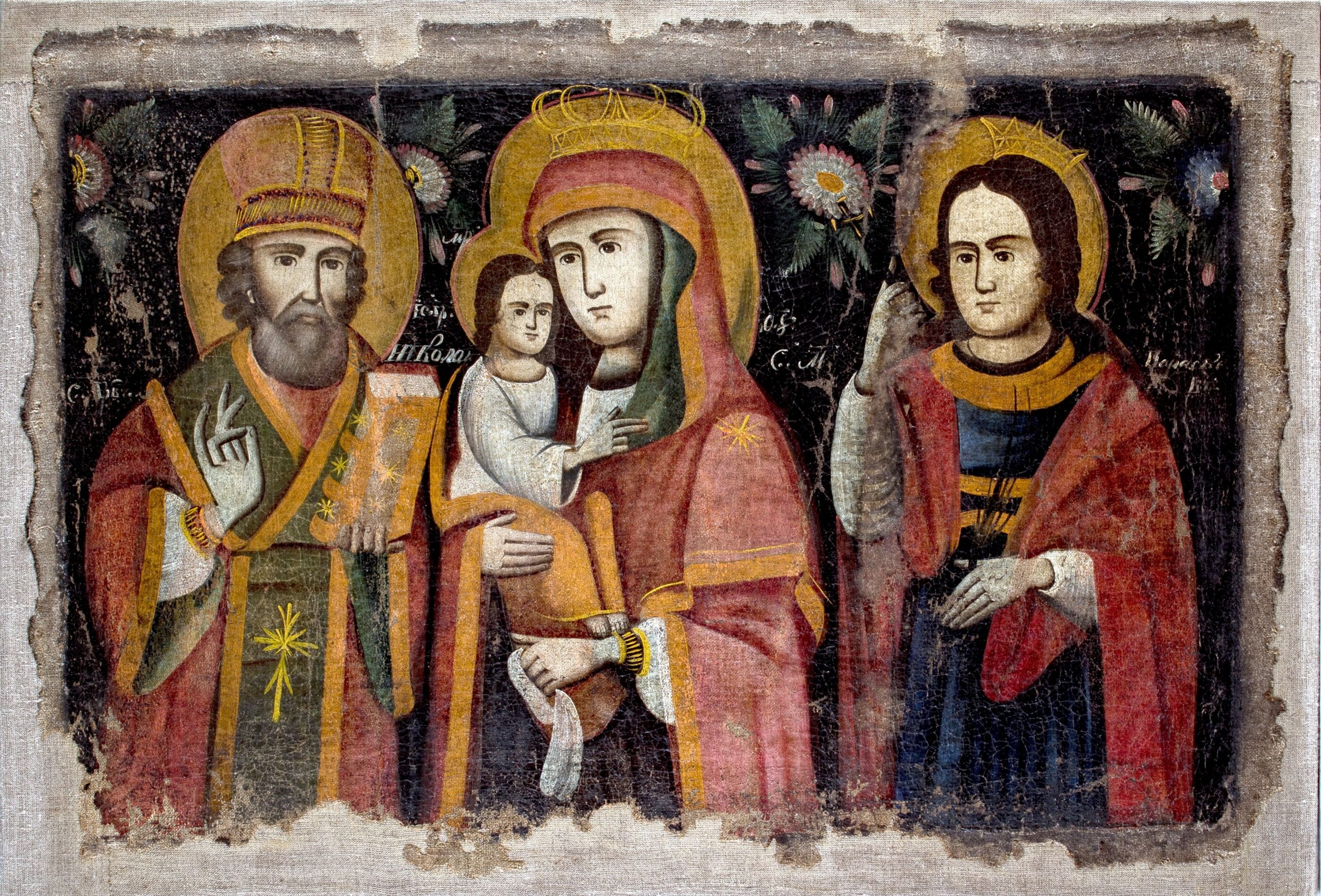
The Gospel of Matthew, accompanying this meditation, narrates the arrival of the Magi from the East following a star. “When Jesus was born in Bethlehem of Judea, in the time of King Herod, behold, magi from the east came to Jerusalem, asking: ‘Where is the king of the Jews who has been born? For we have observed his star at its rising and have come to worship him'” (Mt 2:1-2). The star that the Magi followed is in ancient Christian exegesis simultaneously a cosmological sign and a theological symbol. It leads pagans to the discovery of the Word incarnate, and points to where Mary keeps the Savior of the world in her arms. This biblical passage founded, over the centuries, the reading of Mary as Star guiding pagans to Christ. It is no coincidence that Christian iconography often depicts Mary with one or several stars on her mantle, especially on her shoulders or forehead: she is, in the economy of grace, a stellar sign that leads those far away to the discovery of the Son. All Marian missiology, particularly that developed in the 19th and 20th centuries around the title of Mary as Star of Evangelization, finds its biblical foundation in this scene of the Magi: the star they saw in the East and which led them to Bethlehem is the prototype of every guiding function of Mother of God in the life of the missionary Church.
IV. Stella maris and the pilgrim Church: The theology of Marian guidance
The Mariological category of Stella Maris condenses into a single image several dimensions of Marian theology: Mary as reflection of the Son’s light, Mary as safe guide in human pilgrimage, Mary as cosmic sign that leads the lost, Mary as fixed point in the spiritual firmament amidst the turbulent movements of history. The Second Vatican Council, when presenting the Church as “the pilgrim people of God” (Lumen Gentium 48), opened space for the rediscovery of Mary’s guiding function in this pilgrimage. The Church navigates through the sea of time history, exposed to storms of ideologies, persecutions, internal crises. And in each of these storms, a believer can raise his or her eyes to Stella Maris and find in it a fixed reference that prevents them from getting lost. This Marian guidance does not replace the compass of revelation nor the rudder of magisterium; it complements them with the maternal presence that makes human navigation more humane. Sailors in the Mediterranean Sea during the Middle Ages, who relied on Stella Maris before each voyage, and Azorean navigators who took this devotion to the Southern Atlantic Ocean, and contemporary Christian faithful who continue to invoke Mary as a guide for their lives, all participate in the same intuition: there exists in the spiritual firmament a maternal star that never fades away, and its light is the reflection of the Light she generated. Whoever follows the star will always reach the Son. And there ends every navigation.
Graduate Studies in Mariology
Desire to deepen your formation in Mariology? Discover the Graduate Studies in Mariology from Locus Mariologicus, an academic formation that combines theological rigor, spiritual life, and the living tradition of the Church.
Would you like to study Mariology seriously?
This article draws on the works of the Locus Mariologicus library. The Postgraduate Programme in Mariology takes you to the same sources with academic guidance: Scripture, the Church Fathers and the Magisterium, from the first dogma to contemporary questions.

Responses