Stay in my love: Mary and the dwelling place in Christ’s love
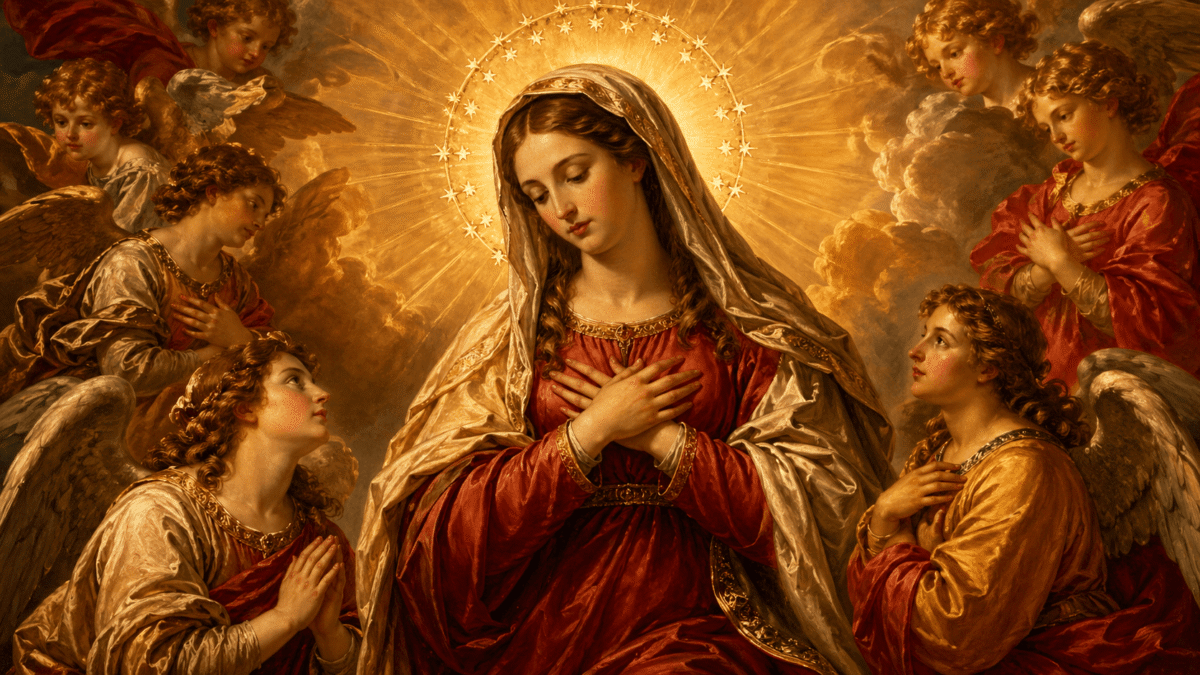
Mariologia: Permanecer no Amor de Cristo
Introdução:This text explores the biblical concept of “abiding in love,” highlighting its central significance in Christian life and its profound connection with Mariology, particularly through the figure of Mary.I. “Permanecer no amor”: a estrutura da vida cristãThe Greek word *menéin*, translated as “to remain,” is a key element in the Gospel of John, appearing 40 times. It does not refer to staticity but to the persistence of a deep and stable relationship. The verse Jn 15,9-10 states that the disciples must remain in the love of Christ just as He kept the commandments of the Father.The theology of grace emphasizes that this “remaining” is not possible by human strength but requires sanctifying grace, a participation in the intratrinitarian love of God. The distinction between *eros* (affection) and *agape* (ontological love) is crucial for understanding the verse.II. Maria: Permanecendo no amor até o fimThe life of Mary can be read as a journey of “remaining in love” that grows ever deeper. From her Fiat at the Annunciation to her steadfast presence at Calvary, Mary demonstrates an unshakable fidelity to the love of God.– **Annunciation:** The initial “remaining” of Mary is marked by the total acceptance of God’s will, demonstrating a love that transcends circumstances. – **Hidden Life in Nazareth:** The silent and dedicated life of Mary in the city demonstrates a more radical “remaining,” based on daily fidelity to the love of Christ without seeking recognition. – **Calvary:** In the darkest moment, Mary remains in love, overcoming the scandal of the Cross and spiritually sustaining her Son.III. Modelo trinitário do amor: “Como eu guardei…”Jn 15,10 establishes a parallel between the relationship of Jesus with the Father and that of the disciples with Him. Loving as Jesus loved means participating in the dynamic of Trinitarian love, keeping the commandments and remaining in His love.The Mariology connects here, for Mary, in her unique relationship with the Father, Son and Holy Spirit, is a real participation in the life of the three Divine Persons.IV. Alegria do amor: “Para que a minha alegria esteja em vós”Jn 15,11 promises that remaining in the love of Christ leads to complete joy. Mary, with her deep joy despite trials, is the model of genuine Christian joy.The Franciscan tradition, the charismatic movement, and other evangelization movements recognize the importance of joy as a fruit of “abiding in love,” inspired by the figure of Mary, who experienced perfect joy in God.Referências:S. Louis Mary de Montfort, *True Devotion to the Blessed Virgin* John Paul II, *Redemptoris Mater* St. Ignatius of Loyola, *Spiritual Exercises* H. U. von Balthasar, *First Glance at Adrienne von Speyr* C. Spicq, *Agapè in the New Testament*Graduate Studies in Mariology
Wishing to deepen your formation in Mariology? Discover the Graduate Studies in Mariology from Locus Mariologicus – an academic formation that combines theological rigor, spiritual life, and the living tradition of the Church.
Would you like to study Mariology seriously?
This article draws on the works of the Locus Mariologicus library. The Postgraduate Programme in Mariology takes you to the same sources with academic guidance: Scripture, the Church Fathers and the Magisterium, from the first dogma to contemporary questions.

Responses