No one can come: Mary and the attraction of the Father
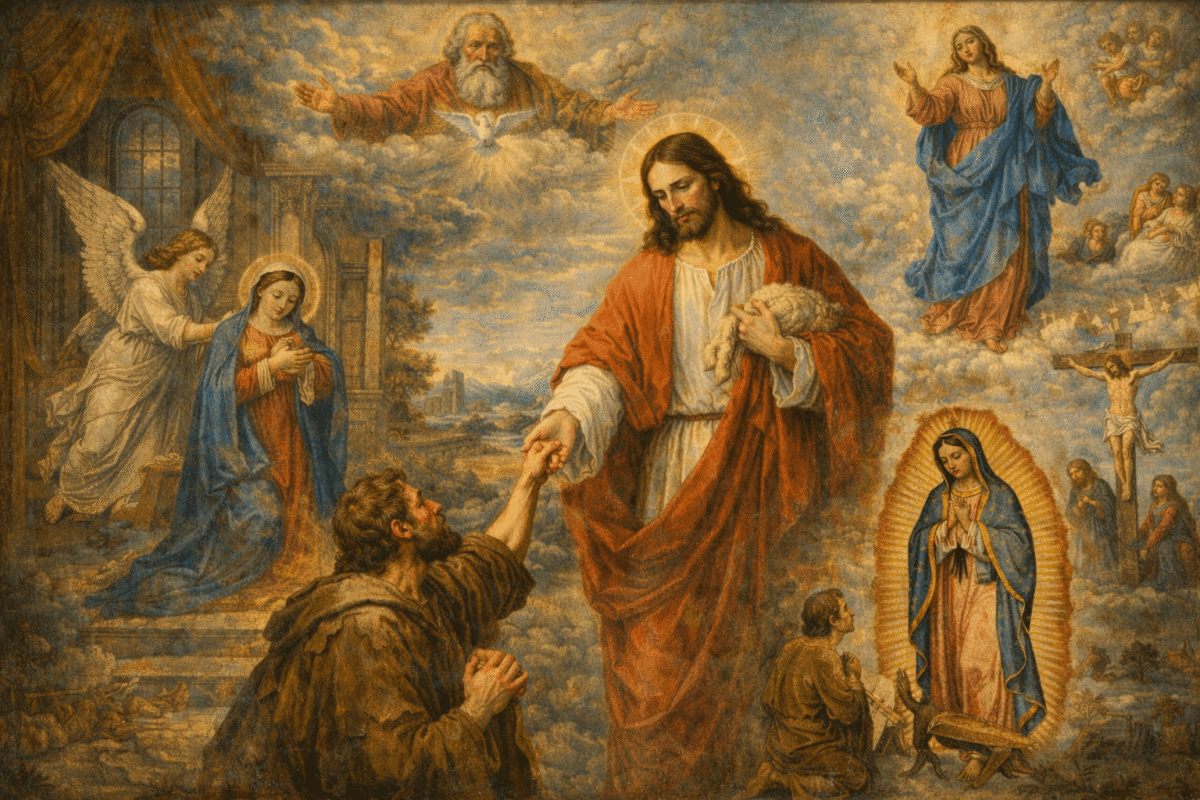
Mariology: The Divine Attraction and the Human Response
Introduction
The sentence of Jn 6:44 offers a profound perspective in Johannine theology, highlighting the concept of “attraction” by the Father as a fundamental condition for all faith. This article explores the idea of “drawing” in the Fourth Gospel, its relation to human freedom, and its implication in Mariology, especially in the Immaculate Conception and the role of Mary as *Mater Ecclesiae*.I. The Verb “To Draw” in the Fourth Gospel
The Greek verb *helkein*, present in Jn 6:44, 12:32, and 21:6-11, describes a movement of divine force and magnetism that invites and guides human beings to the Son. Patristic theology interprets this “drawing” as the action of grace that precedes and enables faith.Augustine of Hippo, in a famous sermon, associates this concept with the Virgilian principle “*trahit sua quemque voluptas*”, suggesting that each human being is drawn by their pleasure, whether spiritual or material. However, the supreme pleasure, which attracts irresistibly, is the vision of God, the Supreme Good. The grace of faith is this desire for the Supreme Good infused into the human heart.II. The Immaculate Conception: Fullness of Grace
The dogma of the Immaculate Conception states that Mary was preserved from original sin due to the foreseen merits of Christ. This is not a matter of negative protection but of positive fullness. Mary was created with the maximum capacity to respond to the Father’s attraction.The greeting of Gabriel to Mary, “*kecharitomene*” (full of grace), indicates a lasting state of grace, present since the moment she was endowed with this grace. The Franciscan tradition, from Alexander of Hales to Duns Scotus, defends the Immaculate Conception based on the logic of the fullness of grace, arguing that the Son of God would choose a mother perfectly attracted by the Father.III. *All Taught by God*: The Instinct of Faith
Jn 6:45 states that all will be taught by God, quoting Isaiah 54:13. This inner teaching is the “*instinctus fidei*”, the supernatural instinct of faith. Mary, as *Seat of Wisdom*, received a unique understanding of the divine mysteries through a continuous process of meditation and assimilation.IV. Mary *Mater Ecclesiae*: The Missionary Attraction
The promise of Jn 12:32, where Jesus promises to draw all to Himself when He is lifted up, finds fulfillment in the mission of the Church. Mary, as *Mater Ecclesiae*, is at the heart of this mission of universal attraction. The apparitions of Our Lady of Guadalupe are a powerful example of this, leading to the mass conversion of millions of Mexican indigenous people.The contemporary Mariology emphasizes the missionary and ecclesial dimension of Marian devotion, showing that Mary, by being deeply drawn to the Father, becomes the instrument to draw others to the Son and to the Father.Graduate Studies in Mariology
Wishing to deepen your formation in Mariology? Discover the Graduate Studies in Mariology from Locus Mariologicus, an academic formation that combines theological rigor, spiritual life, and the living tradition of the Church.
Would you like to study Mariology seriously?
This article draws on the works of the Locus Mariologicus library. The Postgraduate Programme in Mariology takes you to the same sources with academic guidance: Scripture, the Church Fathers and the Magisterium, from the first dogma to contemporary questions.

Responses