Mary and the Incarnation of the Word
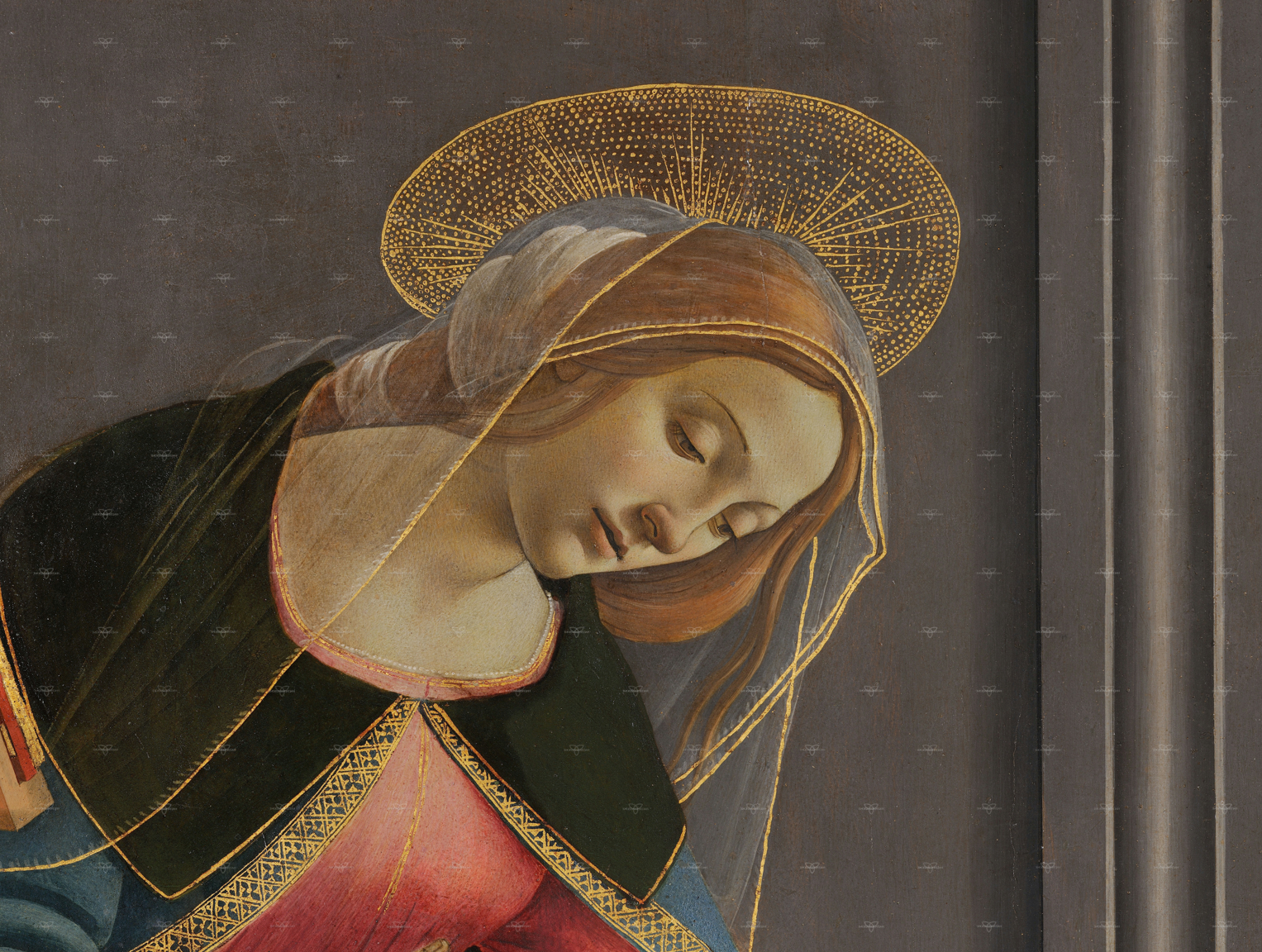
What is the value of the world compared to life? And what is the value of life, if not to be given? And why do we torment ourselves, when it is so simple to obey?The wise observation, with a Gospel flavor, presented in the famous work ‘The Annunciation to Mary’ by the French poet and dramatist Paul Claudel (1868-1955), captures the crucial point of Luke’s incomparable narration about the message delivered to the Virgin of Nazareth in Luke 1:26-38. We wish to meditate on the Gospel text that reveals the mystery of Mary’s calling and has the power to prepare our lives for God’s unexpected events.
The formal dimension of the text
The passage about the announcement of Mary’s conception is exclusive to the Gospel of Luke. In the narrative of Jesus’ early earthly life, this account stands as the second panel, following the announcement to Zechariah in Luke 1:5-25. If we consider what is declared in the prologue (Lk 1,1-4), where the sources of the text are mentioned, we must infer that among the eyewitnesses from the beginning, the narrator refers to Mary. Behind this passage, it is legitimate to assume that her testimony lies. However, Mary’s testimony, as per Luke 2:19 and 2:51, is nothing other than the result of treasuring things in her heart. Therefore, we do not find the details of a chronicle in the text but the fruit of the reflection that Mary conducted throughout her life, in light of the events concerning the Son. The text thus presents itself deeply interwoven with the pure “marian” testimony, of a contemplative nature.In addition, the pericope reflects the literary genre of announcements of prodigious births, such as those of Ishmael (Gn 16,11-12), Isaac (Gn 18,1-15), Samson (Judg 13,1-25), Samuel (1 Sm 1,9-18), the Messiah (2 Sm 7,14. Is 7,14-17) and the Baptist (Lk 1,5-25). However, the biblical account that best approximates ours is that of Gideon’s calling in Judges 6:11-24. The episode begins with the messenger’s greeting, who addresses the called one with an honorific title. Gideon does not understand the greeting and questions its content. The angel then communicates a first message consisting of assigning a task: “I send you” (v. 12). Gideon expresses his inadequacy but is encouraged by God’s promise.The uniqueness of Mary’s calling
In the case of Mary, the situation is different. The angel Gabriel not only announces to her the virginal conception but also specifies the role she will play: “You will give birth to a son and you shall name him Jesus” (Lk 1,31). This exception is proof that God, unlike all sinners who always want to impose conditions, can count on a “yes” given a priori to everything imaginable and unimaginable. Here we are at the heart of pure divine predilection, which makes Mary full of every favor.The reason for this choice, however, is not in Mary but in God. He is the first to be mentioned in verse 26: he sends Gabriel. To Him must be attributed the initial movement of grace that fills Mary. If we were to inquire into the reasons for this prevenient act of grace, we would find an answer in Isaiah 43:4: “Because you are precious in my eyes, you are honored and I love you”.Therefore, the choice of God is all of Mary’s life, the unexpected predilection of God upon her is the total horizon of her life. If the Precursor is all voice, Mary is all call, all desired, all full of favor. In this way, from what God accomplishes in Mary, it appears that vocation is the word we should love most, for it is the sign of how important a creature is in the eyes of God. It is the index of approval before Him, of our fragile life.The Turmoil and Response of Mary
After the greeting, there arises turmoil (Lk 1,29). Unlike Zechariah, the turmoil of Mary in verse 29 is not produced by the vision itself, but by the grand words heard, considered disproportionate to the recipient. It is the turmoil of the spirit that is humble and aware of its own lowliness (Lk 1,48). Therefore, it is not a matter of fearing the vision, for before it, it is stated that Mary “pondered within herself” (v. 29).Mary is in the delicate situation of being a virgin already betrothed, according to Jewish custom, who still lives in her own house but with the prospect of marriage. She knows the Scriptures, compared to Gabriel’s words, feels exposed to one of the most difficult human situations, sanctioned in Deuteronomy 22:23-27 with death. Mary’s question does not arise from doubt or inadequacy. It comes from the clear premonition that this message is placing her in a dramatic situation.We are not far from Jesus’ stay in Gethsemane, where the same Luke presents Jesus consoled by an Angel (Lk 22,39-46). The Mother before and the Son after feel in fullness the weight of the responsibilities demanded and feel crushed: “Mary asks, the Son bleeds”. If one does not take this context into account in light of Scripture and the agony of Jesus, one cannot understand the extraordinary greatness of this Daughter of Zion, who risks death but consents to God.Additional Resources
– Explore Mariology, Marian Theology, Marian Apparitions, and the Postgraduate Program in Mariology at Locus Mariologicus. – Consult the Encyclical Redemptoris Mater by Pope John Paul II on the role of Mary in the Incarnation of the Word of God.Graduate Studies in Mariology
Desire to deepen your formation in Mariology? Discover the Graduate Studies in Mariology from Locus Mariologicus – an academic formation that combines theological rigor, spiritual life, and the living tradition of the Church.
Would you like to study Mariology seriously?
This article draws on the works of the Locus Mariologicus library. The Postgraduate Programme in Mariology takes you to the same sources with academic guidance: Scripture, the Church Fathers and the Magisterium, from the first dogma to contemporary questions.

Responses