“Do whatever he tells you”: Mary at Cana (John 2:5)
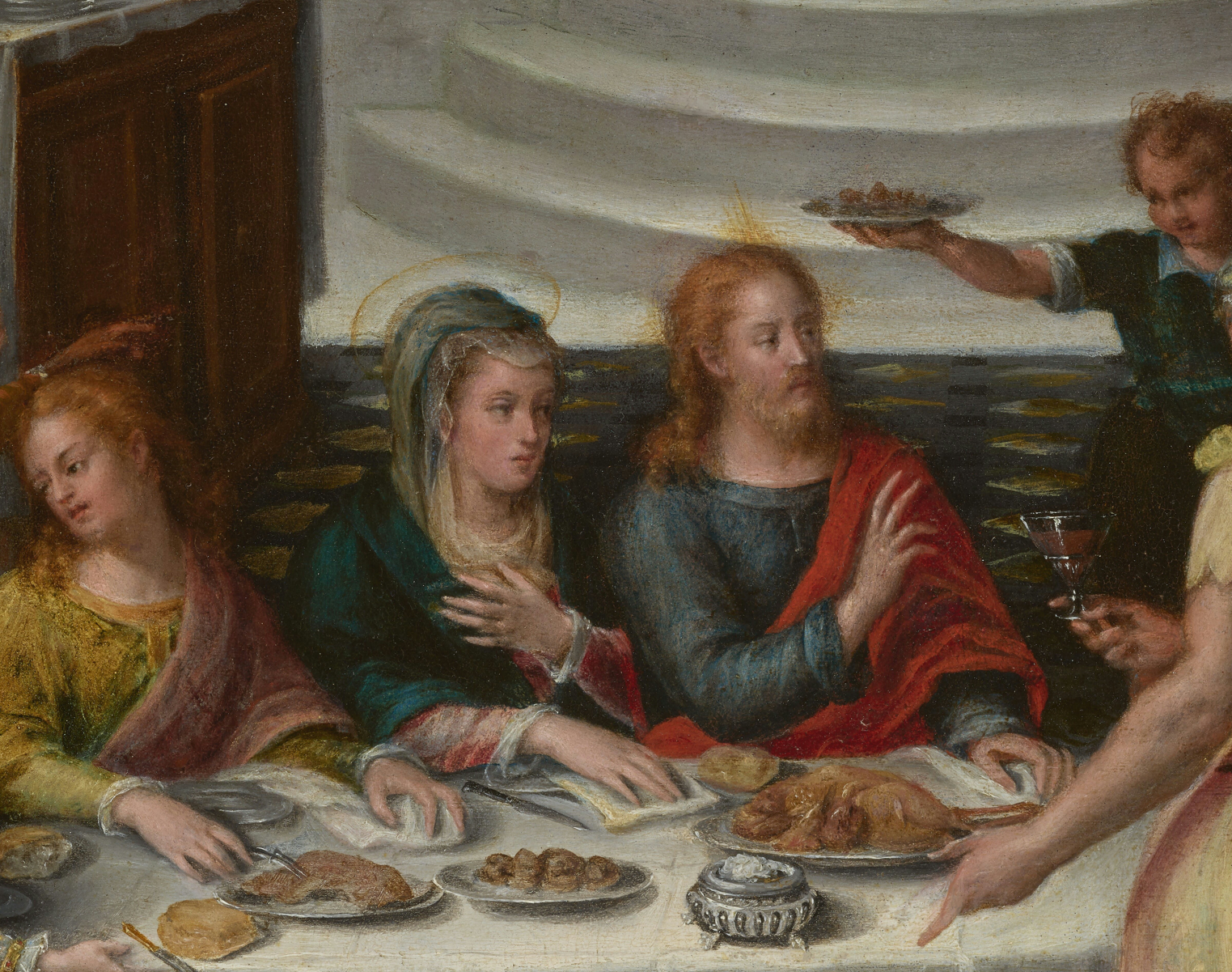
«Fazei tudo o que ele vos disser» (Jo 2,5) são as últimas palavras de Maria registadas no Evangelho de João, e as únicas que dirige à humanidade. Ditas nas Bodas de Caná, durante o primeiro sinal de Jesus, estas palavras sintetizam toda a missão de Maria: apontar para Cristo e conduzir à obediência à sua palavra.«Fazei tudo o que ele vos disser» (Jo 2,5): são as únicas palavras que Maria dirige à humanidade em todo o Evangelho de João. Pronunciadas no banquete de Casamento de Caná da Galileia, estas palavras resumem toda a espiritualidade mariana: Maria não fala de si mesma, não reivindica nada para si, não pede atenção. Aponta para o Filho e diz: «Fazei o que ele vos disser». É o programa mariano em sete palavras. Neste artigo analisamos o contexto do episódio de Caná (Jo 2,1-11), o significado das palavras de Maria, e o papel de intercessora que ela exerce junto ao Filho.Within the Gospel of John, the episode of the wedding at Cana in Galilee (2:1-11) holds particular significance. Its importance is immediately underscored by the fact that it occurs three days after the encounter with Nathanael (1:43-51) and, therefore, seven days after the encounter with John the Baptist (1:28). At Cana, thus concludes the first “workweek” of Jesus: it is possible to assume that, in analogy with the week of creation described in the Book of Genesis, the seventh day is designated for manifesting in a special way the glory of God, author through Christ of the new creation.The verse 11 emphasizes that we are before the first of the “signs” (semeia) performed by Jesus. These signs, more than miraculous acts intended to demonstrate power, have the function of arousing faith in people regarding Jesus, revealing before their eyes that He is the Son of God in whom the last times, the times of salvation, are fulfilled.This is one of the rare passages in the Gospels where, outside of the accounts of Jesus’ childhood, Mary appears. In the IV Gospel, precisely, the Virgin is present only on two occasions: here at Cana and again at the cross (19:25-27). As we shall see shortly, these two episodes are closely related and mutually illuminate each other, as revealed especially by the reference to Jesus’ “hour.”Interestingly, the spouses are never mentioned directly, except for the final dialogue between the master of ceremonies and the groom, who, however, unlike the servants, plays no active role in the narrative. The true protagonists of the story are Jesus and His Mother.Mary is the one who initiates the action when she points to His Son and says: “they have no wine.” She anticipates a problem that others seem not to have noticed until then. The Virgin anticipates everything and everyone, and this foreknowledge of the situation drives her to act. The problem of that family does not leave her indifferent, so she decides to intercede: a verb that literally means “to walk in between.” Mary places herself in the middle between the spouses and Jesus, exposing herself personally, because she “knows” that Jesus can do “anything.”The seemingly dry response of the Son is full of meaning. The term “Woman” in no way implies disrespect. Instead, beyond evoking Hellenistic usage, it frames Mary in her symbolic role. Just as in ancient Scripture the woman symbolizes the people of Israel with whom God desires to unite in marriage through the Covenant, now the Virgin personifies all humanity, the new Israel, with which Christ intends to become the eternal spouse.The mystical marriage between Jesus and humanity will be celebrated on the cross, where Mary will again be called “Woman” (19:26). The cross will serve as the nuptial altar and marital bed because there the love of Christ for men will reach its zenith. In this passage, the maternal-filial relationship between Mary and Jesus combines with the conjugal relationship between humanity, represented by the Virgin, and Christ, the mediator of a new and eternal covenant.Now we can understand the enigmatic words of Jesus: “My hour has not yet come”. The theme of the “hour” is recurrent in the Gospel of John, where it generally indicates the supreme revelation of the glory of God that will be fulfilled on the cross. The Son’s hour will occur on Good Friday, the culmination of his loving self-giving to sinful humanity. Therefore, the “hour” has not yet come: the signs that Jesus performs during his ministry cannot anticipate it but only announce it, preparing people to recognize the “sign of signs” which is his death and resurrection.The reader learns to receive Jesus and Mary in their personal and family life, to experience that if they become permanent guests among us, even seemingly desperate situations can open up to greater joys. Often, our Marian devotion remains only on the surface. We turn to Mary to ask for all kinds of graces, but then we keep ourselves distant from the Lord Jesus, who acts in a special way in the Word and in the Sacraments.The Virgin of Nazareth does not wish to be the end of our prayer but only a means that leads us to the Son. It is Christ who intervenes, while She is more like the one who intercedes, addressing Jesus in our name. The reader learns to make Mary the blessed bridge that leads us to the Son, directing our heart toward Him, the sole Savior of the world.On the words of Mary at Cana and their Mariological significance, consult the Encyclical “Redemptoris Mater” by Pope John Paul II.
Graduate Studies in Mariology
Wishing to deepen your formation in Mariology? Discover the Graduate Studies in Mariology from Locus Mariologicus: an academic formation that combines theological rigor, spiritual life, and the living tradition of the Church.
Would you like to study Mariology seriously?
This article draws on the works of the Locus Mariologicus library. The Postgraduate Programme in Mariology takes you to the same sources with academic guidance: Scripture, the Church Fathers and the Magisterium, from the first dogma to contemporary questions.
Responses