Assumption of Mary: Mariological perspective
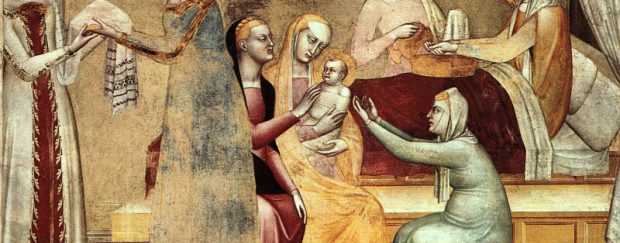
Can we discuss the Nativity of Mary without resorting to ecclesiastical Tradition? It is not something biblical, but historically, if Jesus is truly human, He owes His humanity to a true mother and a true father from a story located in space and time that has its roots in another narrative: the birth of Mary.
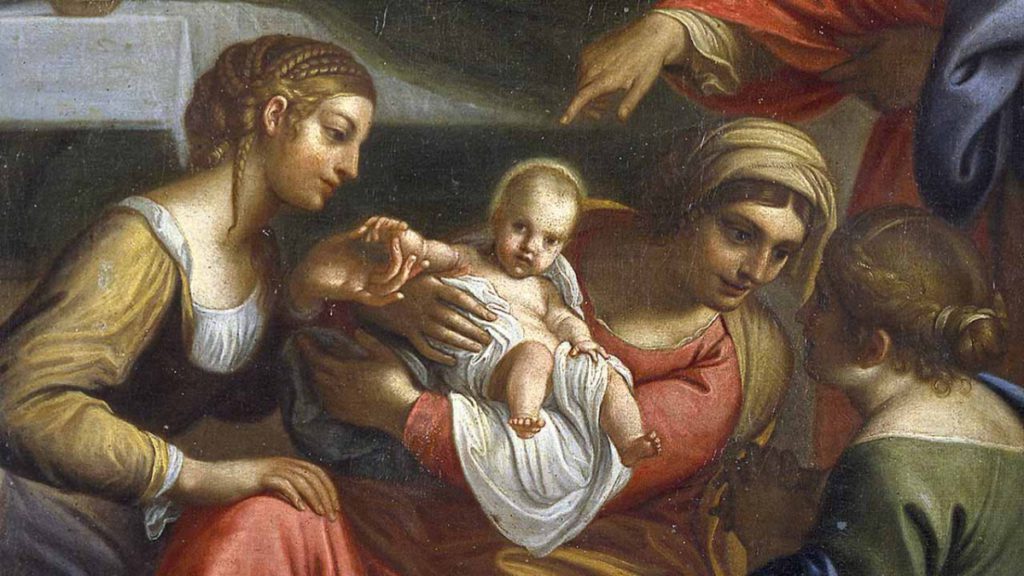
This simple yet provocative reasoning suggests that the understanding of the Word of God and the history of salvation is linked to characters and narratives without face, history, death, or hope. In Jerusalem, a holy city for the Hebrews, where the memory of the Old Covenant is celebrated in the Temple and where the New Covenant is represented, we find the key to understanding the Nativity of Mary. The typologies present in the feasts and sanctuaries structure the liturgical language of this holy city.
História da Natividade de Maria
The earliest indications of the celebration of the Nativity of Mary date back to the fifth century, and it was introduced in Constantinople in 555 with a hymn composed by Romanos the Melodist (d. 560). In the Latin Church, the feast entered the liturgical calendar during the pontificate of Pope Theodore (642-649).
For the Ancient Church, a liturgical feast was a memorial. Thus, the Nativity is seen as the fulfillment of the messianic oracles of the prophets and the preparations of the Old Covenant. The liturgy, centered on Christ’s Pasch, celebrates all the events that led to this salvific moment, involving the Mother, the Apostles, and the Church of Jerusalem in a cosmic narrative of salvation.
Maria e o Reino do Messias
The Nativity of Mary is read in the light of the fulfillment of biblical prophecies. Jesus, as the son of David, owes his legal filiation to Joseph, although it is not known whether Mary was a descendant of David or of a priestly lineage. However, an intriguing fact remains: blessings were transmitted through male blood, but in Jesus’ family, four women played significant roles.
The liturgy of the Nativity evokes various readings: from the Prophet Micah on the birth of the Ruler of Israel; from the Letter to the Romans on predestination and divine filiation; and from the Gospel of Matthew, which quotes Isaiah 7:14: “Behold, a virgin shall conceive and bear a son. He will be called by the name Emmanuel, which means: God is with us”.
Significado litúrgico e teológico
The Nativity of Mary is intimately linked to the liturgical architecture of the Church. The dedication of the Basilica of the Nativity on December 25, along with the Koimesis (Dormition) of Mary on August 15, marks the nativity-revelatory cycle that culminates in Easter and connects to the Byzantine Liturgical Year beginning on September 1.
For a deeper understanding of the theology of Mary’s Nativity, John Paul II’s Encyclical “Redemptoris Mater” offers valuable insights into Mary in the fullness of time and in the history of salvation.
Explore more about Mariology, Marian Theology, Marian Apparitions, and the Postgraduate Program in Mariology to deepen your studies.
Graduate Studies in Mariology
Would you like to deepen your formation in Mariology? Discover the Graduate Studies in Mariology from Locus Mariologicus, an academic formation that combines theological rigor, spiritual life, and the living tradition of the Church.
Would you like to study Mariology seriously?
This article draws on the works of the Locus Mariologicus library. The Postgraduate Programme in Mariology takes you to the same sources with academic guidance: Scripture, the Church Fathers and the Magisterium, from the first dogma to contemporary questions.

Responses